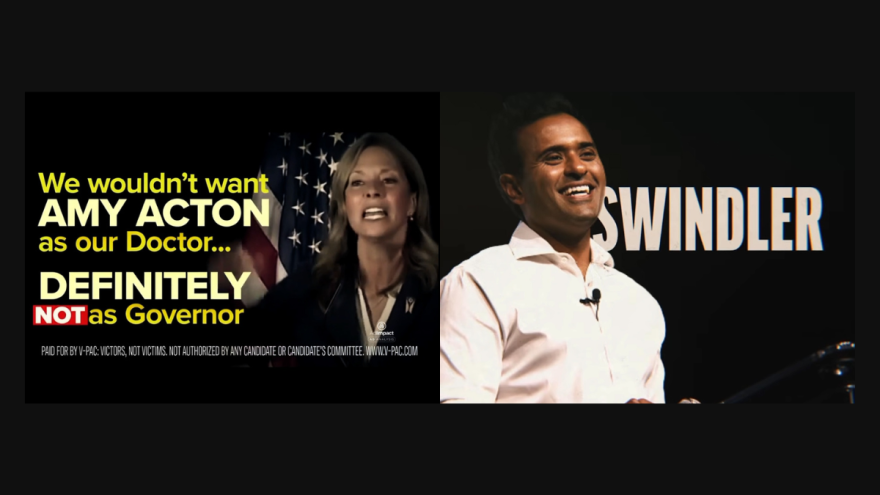
The Political Fallout of the Ramaswamy Ad Campaign
In the final stretch of the 2026 Ohio gubernatorial race, the campaign of Vivek Ramaswamy ignited a firestorm of bipartisan condemnation by airing an attack ad featuring Donna Arthur, the estranged mother of his opponent, Amy Acton. The advertisement, which brought decades-old family trauma into the center of a high-stakes election, surfaced on social media in mid-October. According to Wikipedia, the mother and daughter have not seen one another since a 1978 courthouse encounter following the custody loss of Acton after her stepfather, Cledith Arthur, was charged with raping her.
While Vivek Ramaswamy is busy spewing garbage and lies, I'm focused on lowering costs and making life better for Ohioans. Watch our new ad now. pic.twitter.com/9oZj7aajdy
The controversy began on October 19, when Ohio political blogger D.J. Byrnes, writing as “The Rooster,” published the video on social media. Byrnes had obtained the recording through a political message-testing survey conducted by the polling firm Dynata. What followed was a swift and intense public reaction that forced a debate over the boundaries of modern political campaigning.
A Shift in Campaign Tactics
While the Ramaswamy campaign initially defended the strategy, confirming they produced the ad and announcing plans to spend $4 million to broadcast it, the backlash proved difficult to ignore. High-profile Ohio Republicans, including John Husted and Frank LaRose, publicly denounced the move. By October 22, Governor Mike DeWine joined the chorus of critics, calling for the advertisement to be pulled from the airwaves.
Despite the internal party friction, Ramaswamy found support from national figures. Both President Donald Trump and Vice President JD Vance signaled their approval of the ad, encouraging the campaign to maintain its course. The campaign’s broader approach—which included repeated questioning of Acton’s mental wellness and claims that she had exaggerated her childhood abuse—was frequently labeled as “ugly” by political observers. Ultimately, the campaign ceased airing the ad in late October after approximately $1 million had already been spent.
The Cost of Negative Campaigning
The impact of this strategy extended beyond public discourse and into the institutional response of the press. The Plain Dealer, Cleveland’s largest newspaper, took the rare step of reversing its long-standing policy against candidate endorsements. The editorial board threw its support behind Amy Acton, explicitly stating that the ad “reveals a failure of judgment that Ohio cannot afford in its governor.”

For the average voter, the incident serves as a stark reminder of how personal history is increasingly treated as a weapon in electoral contests. While negative campaigning has long been a staple of American politics, the utilization of estranged family members to challenge an opponent’s narrative represents an escalation that has left many, across the political spectrum, questioning the future of civil discourse in the state.
As the election cycle closes, the question remains whether the strategy damaged Ramaswamy’s standing among independent voters who traditionally hold the balance of power in Ohio. While his base remained energized by the support of national figures like Trump and Vance, the alienation of long-term Republican officials and the editorial shift in major media outlets suggest a potential long-term cost to the campaign’s brand. The data from the Sabato’s Crystal Ball analysis underscores the shifting landscape, as the race moved to “Leans Democratic” amid the controversy.
The episode also highlights the role of new media in political accountability. Byrnes’s discovery of the ad through a private polling survey demonstrates how quickly internal campaign research can now be intercepted and amplified, effectively stripping campaigns of the ability to control the release of controversial messaging. What was intended to be a surgical strike against an opponent’s credibility instead became a defining moment of the race, forcing both candidates to contend with the visceral public reaction to the ad’s content.
Whether this specific controversy will serve as a cautionary tale for future campaigns or as a blueprint for the “ugly” style of politics seen in 2026 remains to be seen. For now, the fallout serves as a clear indication of where the threshold for public tolerance currently sits.
Keep reading

Keys Weekly Celebrates Teacher and Coach Helena Bursa
Helena Bursa Reflects on 28 Years of Teaching and Community in the Keys For nearly three decades, Helena...

Scott Colom appears poised to unseat Cindy Hyde-Smith in MS Senate race
Mississippi Senate Race Remains Uncalled as Ballots Continue to Tally As of Wednesday afternoon, the U.S. Senate race...

Iron Mountain Blue Spruce Selected as Michigan State Christmas Tree
The Riccio Family Spruce Heads to the Capitol A 64-foot blue spruce that has watched over an Iron...

Flood Watch Issued for Southeastern Massachusetts Amid Heavy Rain
Southeastern Massachusetts Braces for Heavy Rain and Potential Flooding A flood watch is in effect for parts of...