NPR reported Thursday on a new documentary, I Play Rocky, that reframes the 1976 classic by placing cinematographer Garrett Brown and his Steadicam at the center of the film’s most enduring image.
The film, directed by Peter Farrelly, argues that Brown did not merely record Sylvester Stallone’s training montage but choreographed the audience’s perspective, turning a sprint up the Philadelphia Museum of Art steps into a shared triumph. “He’s not just holding a camera, he’s telling a story,” Farrelly said.
Brown, wearing the prototype strapped to his chest with a fiber-optic viewfinder on his head, ran backward up those steps in 1976. “You have to be immune to embarrassment to try out inventions like that,” he told NPR.
“It has a harness instead of being in your hands,” Brown tells NPR about his Steadicam. “And at the business end of that arm is a so-called gimbal, so that any angular thing that I did not get through to the camera.” “I can only imagine what that looked like,” he chuckles.
The device earned Brown an Academy Award in 1978. Its gimbal arm isolated the camera from the operator’s body movement, replicating the inner-ear stabilization of human vision. “We don’t see it bouncing like that. We see it smooth,” Brown said, contrasting the Steadicam with the jerky handheld work of the French New Wave and the cumbersome dollies that preceded it.

The invention arrived after a week locked in a hotel room in 1974. Brown tested it with “30 impossible shots” around Philadelphia, including his future wife Ellen running the museum steps — footage that appears in the new documentary. Those tests won him the job on Hal Ashby’s Bound for Glory (1976) before Rocky.
Those test shots caught the attention of filmmakers.
Brown’s path to the camera was indirect. He formed the folk duo Brown and Dana with Alfred Dana Arioli in college, recording “It Was a Very Good Year” two years before Frank Sinatra’s Grammy-winning version. A car crash en route from a Winnipeg gig and the arrival of the Beatles ended the music career. “We looked at each other and thought: ‘we are toast,'” Brown reminisced.
They even sang and recorded the song “It Was a Very Good Year” two years before Frank Sinatra’s version won a Grammy. “We were pretty good. Then the Beatles came out.”
He sold cars while teaching himself filmmaking, later shooting live-action segments for Sesame Street and inventing a “dog’s eye view” dolly for commercials. After Rocky, Stanley Kubrick recruited Brown for The Shining (1980), using the Steadicam to glide behind Danny Torrance’s tricycle. For Return of the Jedi (1983), Brown walked a redwood forest at less than one frame per second; sped up, it became the 100 mph speeder-bike chase.
Brown also came up with new ways to shoot commercials. “I did invent a weird, wonderful dog’s eye view dolly,” he says. That intrigued the hell out of me.” And he found handheld cameras too jerky. We see it smooth.”
Brown later invented the Skycam for live sports, plus the Mobycam and Divecam for underwater coverage. He insists the Steadicam remains a human instrument. “It takes a very skilled human to operate — something that could never be done realistically by AI,” he said.
Farrelly emphasized Brown’s artistic judgment: “Garrett Brown was smart enough and savvy enough and artistic enough [that] he didn’t just shoot him going up the stairs, he followed him around and we got to be part of it as an audience.”
Keep reading
Fifth Circuit Lifts Injunction Blocking Mississippi Age-Verification Law for Nine Major Platforms
A federal appeals court on Thursday refused to keep Mississippi's age-verification law on ice, meaning nine major platforms...

NYC, LA, Chicago Weigh Breaking Up With Google Search Over AI
New York City, Los Angeles and Chicago are weighing a breakup with Google Search after the company told...

Conservation Law Foundation Notifies EPA of Lawsuit Over Great Bay Estuary Pollution
Eelgrass coverage in New Hampshire's Great Bay Estuary has dropped roughly 80% since 2024, a collapse researchers at...
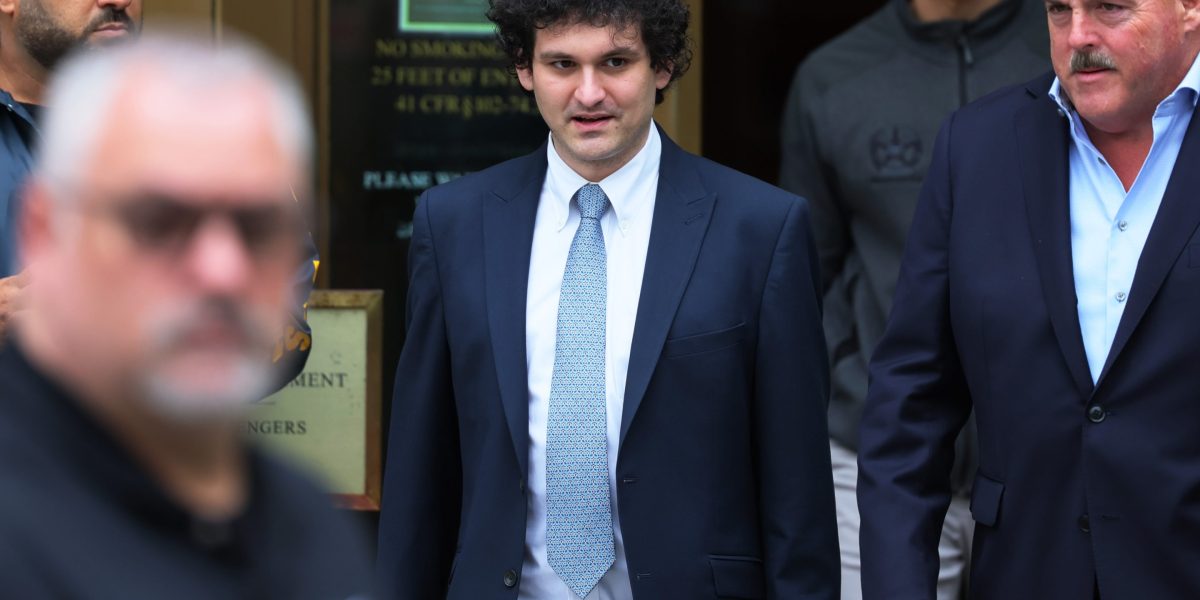
FTX’s $500M Anthropic Stake Now Worth $48B After Direct Listing, Enriching 37 Buyers
Anthropic shares opened Thursday at $111.50, handing a $48 billion paper gain to 37 investor groups that bought...