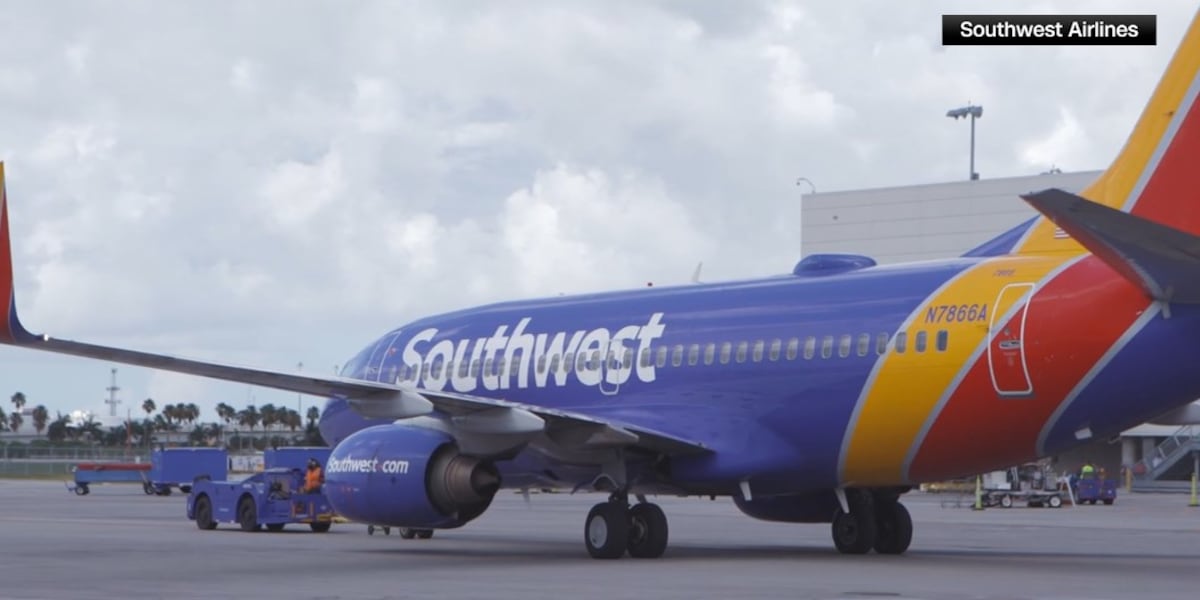
For the 175 passengers and six crew members aboard Southwest Airlines flight 746 on May 25, 2024, a standard journey from Phoenix to Oakland turned into a jarring lesson in mechanical fragility. The Boeing 737 MAX 8 began a rhythmic, swaying motion—a phenomenon known in aviation as a “Dutch roll”—at 34,000 feet, and again after descending to 32,000 feet. While the flight crew managed to land the aircraft safely, the incident triggered a two-year federal investigation that has now laid bare a series of missed warnings and procedural gaps. As reported by AZFamily, the National Transportation Safety Board (NTSB) concluded on Thursday that the root cause was significant structural damage to the tail, sustained on the ground nine days before the flight ever took off.
A Storm in New Orleans and the Damage Left Behind
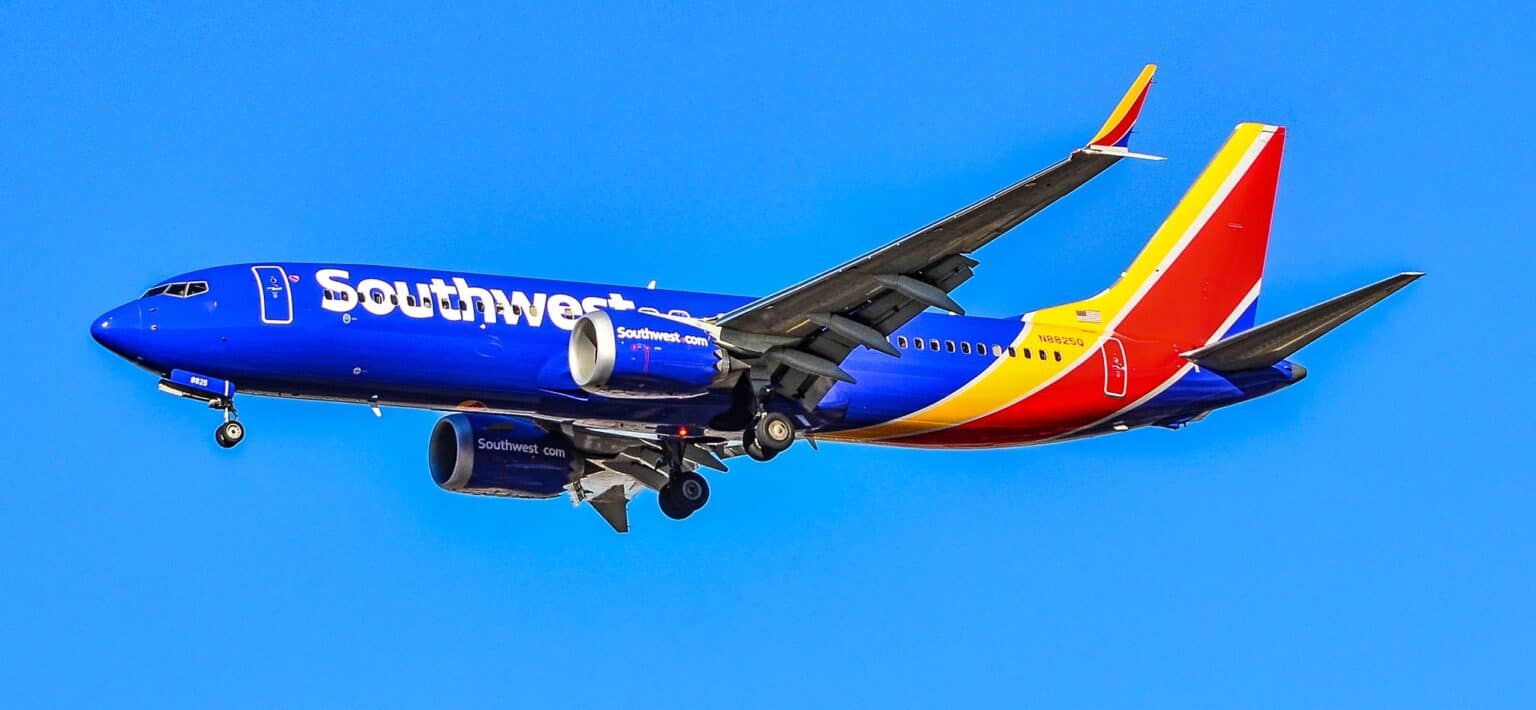
The sequence of events began on the night of May 16, 2024, at New Orleans International Airport. As a squall line swept through the area, the aircraft—registered as N8825Q—was parked on a remote stand. According to the NTSB’s final report, the jet was subjected to wind gusts reaching approximately 84 mph. Because the 737’s rudder lacks a mechanical gust lock, these extreme winds likely forced the rudder to swing violently, damaging the internal ribs that support the standby rudder power control unit (PCU).
NTSB issues final report on the May 2024 rudder control system anomaly on Southwest Airlines (SWA) flight 746 during flight between Phoenix Sky Harbor International Airport (PHX) and Metro Oakland International Airport (OAK). https://t.co/BfyG5fnLXw pic.twitter.com/8g6x3LfFkn
AeroCorner notes that while the main rudder PCU is designed to damp gusts, the standby system has no such protection, leaving the internal structure vulnerable to the force of the New Orleans storm. Crucially, neither Boeing’s maintenance manual nor Southwest Airlines’ internal processes at the time required an inspection after such an event, unless specific criteria—like an aircraft moving while chocked—were met. The damage remained hidden, and the jet returned to service, flying 38 times over the following week without a reported anomaly.
Maintenance Oversights and the Path to the Dutch Roll
The opportunity to identify the failure arrived on May 23, 2024, during a scheduled maintenance check in Houston. Investigators found that the standby hydraulic test, which requires a mechanic to observe the rudder’s movement, was signed off as passed. However, retrospective analysis of hangar video revealed that the rudder moved to the right but failed to return to the neutral position, a clear indicator of the underlying structural failure that had gone unnoticed.
By the following day, the flight crew began to notice issues with the “yaw damper,” an automated system tasked with keeping the tail stable. They eventually disabled the system, unaware that the rudder itself was physically compromised. When the Dutch roll occurred on May 25, it was the culmination of these missed signals. The NTSB report, which can be accessed through the agency’s official investigation docket, highlights that the combination of Boeing’s manual, which lacked a specific wind-speed threshold for inspections, and Southwest’s lack of a notification system for parked jets in high winds, created a “blind spot” in safety protocols.
The NTSB concluded that the rudder anomaly began with wind damage suffered while the jet sat parked in a thunderstorm nine days earlier. The NTSB also faults a maintenance check that should have caught the damage, a Boeing manual with no wind speed trigger for a post-storm inspection, and the lack of an adequate Southwest process to flag parked jets caught in extreme wind. — AeroCorner
The Economic and Operational Stakes
For the aviation industry, this incident highlights the tension between standard maintenance cycles and the increasing frequency of extreme weather events. The “so what” of this investigation is not just about one flight; it is about how airlines and manufacturers define “extreme weather.” When a plane is parked on a remote stand, it is essentially an unmonitored asset. If the industry relies on manual inspections triggered only by visible movement or obvious damage, the risk of “latent failures”—damages that remain dormant until the aircraft reaches cruise altitude—remains high.
Critics of the current regulatory environment often point to the complexity of the Boeing 737 MAX series, arguing that the integration of automated systems like yaw dampers can sometimes mask mechanical failures until they manifest as flight control anomalies. Conversely, maintenance advocates argue that requiring inspections for every gust of wind would lead to unsustainable operational delays, grounding aircraft unnecessarily and disrupting travel for thousands of passengers. The NTSB’s findings suggest a middle ground: better data integration between airport weather stations and airline maintenance control centers, ensuring that ground crews are alerted when their fleet has been exposed to specific wind thresholds.
As the NTSB closes its investigation, the focus shifts toward whether these identified gaps in maintenance manuals and airline protocols will lead to broader industry-wide policy changes. For now, the successful landing of flight 746 serves as a stark reminder of how small, unnoticed mechanical fractures can manifest into significant in-flight events when the systems designed to detect them fall short of the reality on the tarmac.
Related reading

6 High-Yield Holdings to Build a Tax-Free Roth IRA Paycheck
Generating $5,450 in monthly tax-free income requires a precise, high-yield strategy that navigates the intersection of tax code...

Blue Compass RV Acquires Cheyenne Camping Center in Iowa
Blue Compass RV Expands into Quad Cities Blue Compass RV has acquired Cheyenne Camping Center, a family-owned dealership...

Florida Defies National Blue Wave to Protect Conservative Principles
Florida’s Conservative Pivot Amid a National Blue Tsunami As the dust settles from the November 3, 2026, general...
Pinball Castle Brings Retro Gaming Resurgence to Berkeley Springs
From Server Racks to Pinball Cabinets in Berkeley Springs In the quiet Appalachian town of Berkeley Springs, West...