Pace University’s English Department will host its annual Writing Awards Ceremony and Writers Festival on May 3, recognizing student achievements across creative writing, journalism, literary criticism, linguistics, and film studies. The event, as detailed by the university’s official department announcements, serves as the primary showcase for students enrolled in English and Film and Screen Studies (FSS) courses who have distinguished themselves through their academic and creative portfolios.
Honoring Faculty Legacies Through Student Excellence
The ceremony highlights the department’s commitment to fostering literary talent by distributing awards supported by endowed funds. These funds honor former distinguished faculty members who helped shape the department’s academic reputation: Sarah H. Willis, Richard Gill, Gerard Cannon, James Rose, and Curtis Owens. By linking current student work to these historical figures, the department maintains a direct connection between its pedagogical past and the contemporary voices emerging from its classrooms.
Beyond discipline-specific honors, the festival features the presentation of the David A. Bickimer Promise of Learnings / Academy of American Poets Prize. This award, established at Pace by the renowned poet John Ashbery, remains a focal point for the university’s poetry community, recognizing an outstanding student poet selected through a competitive process. The LGBTQA and Social Justice Center will also present the Kelly Herbert Writing Award, highlighting the festival's role in showcasing diverse student perspectives.
University Magazine Launches New Issue with Live Readings
The festival serves as more than an awards presentation; it acts as a platform for the official launch of the new issue of APHROS, the university’s literary magazine. Editors of the publication will present the latest collection, followed by readings from selected APHROS contributors. The event concludes with an open segment where student and guest writers present their own work, transitioning the festival from an academic ceremony into a live literary performance.
The day’s proceedings offer a concentrated look at the output of the university’s humanities programs. For students, the festival provides a rare opportunity to bridge the gap between classroom-based writing and public presentation, a transition essential for those pursuing careers in publishing, media, or creative arts. As the department prepares for the May 3 event, the focus remains on the synthesis of legacy-backed scholarship and the current, evolving work of the student cohort.
Related reading
2027 State Tax Competitiveness Index: Rankings and Analysis
State Tax Competitiveness Index Ranks How 50 States Structure Tax Codes How state governments structure their tax codes...

Lower Columbia Women’s Soccer Advances to NWAC Quarterfinals via Penalty Shootout
Red Devils Punch Quarterfinal Ticket After 110-Minute Stalemate and Nine-Round Shootout Postseason soccer rarely offers anything resembling comfort,...

Marketing Lead – United Football League (UFL) – Pawtucket, RI
Pawtucket Marketing Lead Position Opens Within the United Football League The United Football League is searching for a...
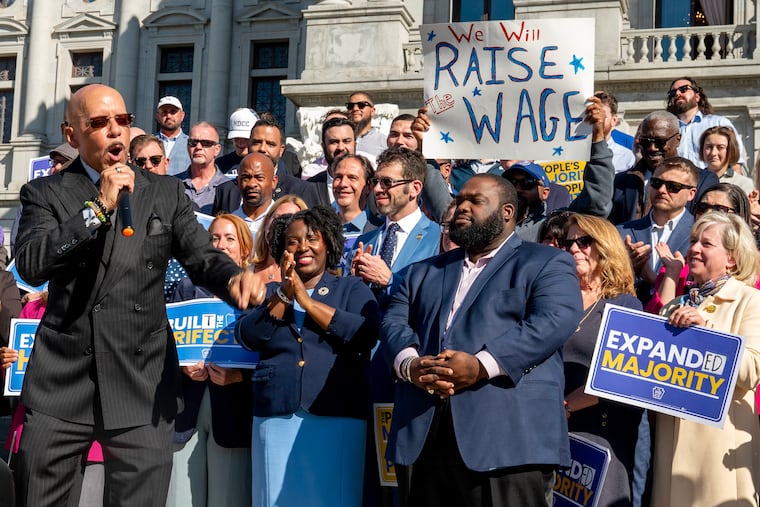
Democrats in Harrisburg Poised to Fund Philly Priorities
Democrats Take Harrisburg Steering Wheel as Philadelphia Eyes Funding For the first time in more than 30 years,...