
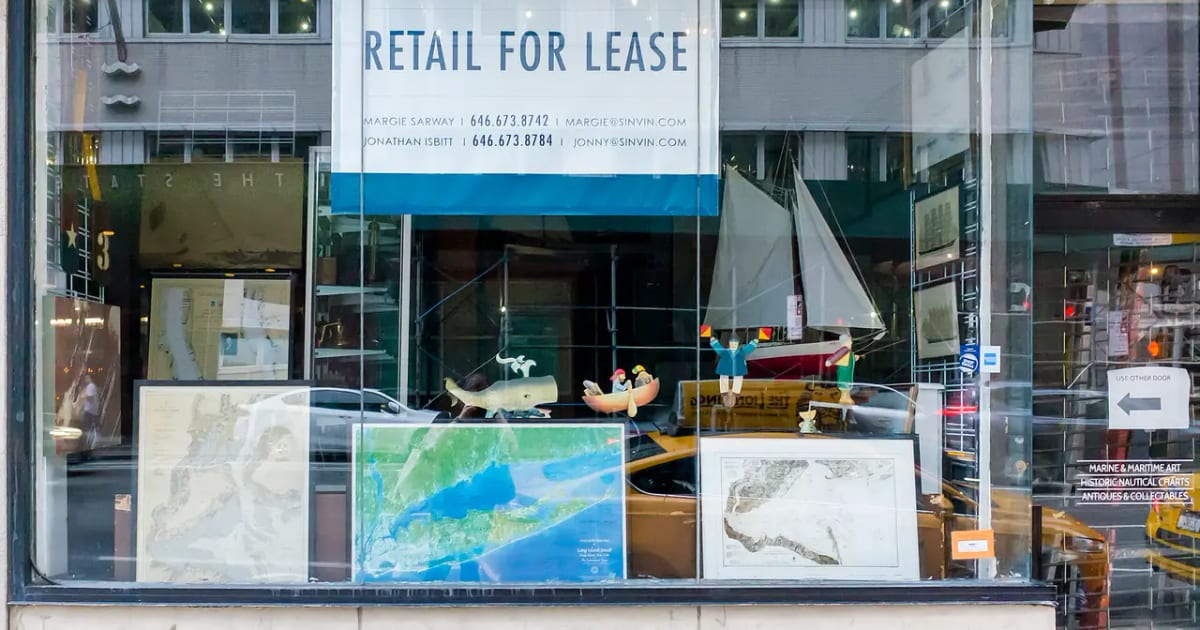
More than 16,000 New York City storefronts sat empty at the end of September, pushing the vacancy rate to its highest level in over two years just as the holiday shopping season begins.
The citywide vacancy rate reached 11.32% — 16,047 of 141,744 street-level storefronts — up from 11.26% three months earlier but down from 11.66% in September 2023, according to a new Storefront Vacancy Dashboard launched Wednesday by Comptroller Mark Levine. The rate remains above the pre-pandemic level of 10.5%, amNewYork reported.
“Thriving commercial corridors are essential to the health of New York City’s economy and neighborhoods,” Levine said in a statement to amNewYork. “In many ways, New York City has recovered since the pandemic, but the comeback has been uneven, with storefronts sitting empty in many communities that deserve bustling activity.”
Closures outpace openings for 12 straight quarters
The dashboard shows that small business closures surpassed openings in each of the first three quarters of 2026, with a net loss of 205 between July and September alone. For the first nine months of the year, the city recorded 7,146 small business closures and 6,547 openings, a net loss of 599, amNewYork’s analysis found. That compares with a net loss of 371 in the same period of 2025 and 521 in 2024.
Across all storefront businesses including chains, closures have outnumbered openings for 12 consecutive quarters. Just 1,996 small businesses opened between July and September, the lowest quarterly figure since the dashboard’s records began in late 2023. The comptroller’s office generally classifies small businesses as independent operators with fewer than five locations citywide, and notes a closure does not necessarily mean a company went out of business.
Uneven recovery across boroughs
Manhattan continues to have the highest vacancy rate at 13.12%, though down from 15.91% three years ago. It was the only borough where the rate fell in the latest quarter.
Brooklyn’s rate reached 12.68%, now less than half a percentage point behind Manhattan, compared with a 3.6-point gap three years ago. Queens climbed to 9.8% from 8.27% three years earlier — the largest increase of any borough. The Bronx and Staten Island posted the lowest rates at 8.23% and 8.13% respectively.
Five neighborhoods still show vacancy at or near 20%: the Financial District and Tribeca in Manhattan; Ocean Hill and East New York in Brooklyn; and Old Astoria-Hallets Point in Queens.
| Borough | Q3 2026 vacancy rate | Change from 2023 |
|---|---|---|
| Manhattan | 13.12% | Down from 15.91% |
| Queens | 9.8% | Up from 8.27% |
| The Bronx | 8.23% | Relatively stable |
| Staten Island | 8.13% | Up 0.40 points this quarter |
What’s sitting empty
Former restaurants account for the largest number of vacant storefronts with an identified prior use — 1,799 spaces citywide — though the vacancy rate for restaurant spaces (8.4%) is lower than for furniture and home goods stores (15.8%) or clothing stores (13.5%). Levine’s June report, Who’s Minding the Storefronts?, found vacancies cluster: storefronts within 250 feet of an empty one had a 15.4% vacancy rate versus 11% citywide.
Holiday outlook dims
The data arrives days before Black Friday and Small Business Saturday. A Manhattan Chamber of Commerce report released Monday projects in-store retail and restaurant sales in the borough will be flat or decline up to 1% this November and December after inflation, with steeper declines of 2% to 3.5% expected in Harlem, East Harlem, Washington Heights and Inwood, where foot traffic has fallen 5.5% to 9.2% over the past year. Retail employment across Manhattan remains 21.2% below 2019 levels.
“The people who run our storefronts are doing everything right,” Jessica Walker, president and CEO of the Manhattan Chamber of Commerce, said in the report. “They are open, they are hiring when they can, and more of them are starting businesses than at any time in four years. What is failing them is the cost of staying open.”
The chamber gave the small business operating environment an overall grade of C-minus and, for the first time since its report card began in May, a failing grade for the cost of doing business, citing rising insurance and utility costs. It estimates that if one in five Manhattan households redirected $300 of planned holiday spending to neighborhood businesses, it would bring about $47 million into those businesses.
Policy response
The latest figures come four months after Mayor Zohran Mamdani unveiled his OPEN for Small Business package — more than 50 regulatory reforms aimed at reducing costs and bureaucratic hurdles.
Walker welcomed the package in July but cautioned it was only a first step: “Fifty is a strong start on a list of six thousand,” she told amNewYork, referring to the number of regulations Mamdani has said small businesses must navigate. The mayor pledged during his campaign to halve small business fines and fees, though the July package did not establish a timeline for that target.
His office also manages the issuance of city bonds, monitors credit ratings and debt levels, and serves as fiduciary to the five public pension funds covering more than 700,000 current and former employees.
In addition to fiscal stewardship, Levine’s role encompasses reviewing all city contracts for integrity and fiscal compliance, settling claims on behalf of or against the city, and setting and enforcing prevailing wage and living wage laws on public works and city contracts.
The chamber is now calling on the city to pause new fees, enforcement sweeps and regulations affecting small businesses until January, and to require economic impact assessments before new regulations take effect.
The dashboard, which relies on street-level surveys by Live XYZ and will be updated quarterly, counts a storefront as vacant only when no business occupies it; spaces that are temporarily closed or marked “coming soon” count as occupied, so the comptroller’s office warns the rates may be underestimates.
Worth a look

Friedman: Predators No Longer Favorites to Land Edvinsson as Red Wings Trade Talks Stall
Elliotte Friedman of Sportsnet said Tuesday that the Nashville Predators are no longer the favorites to acquire restricted...
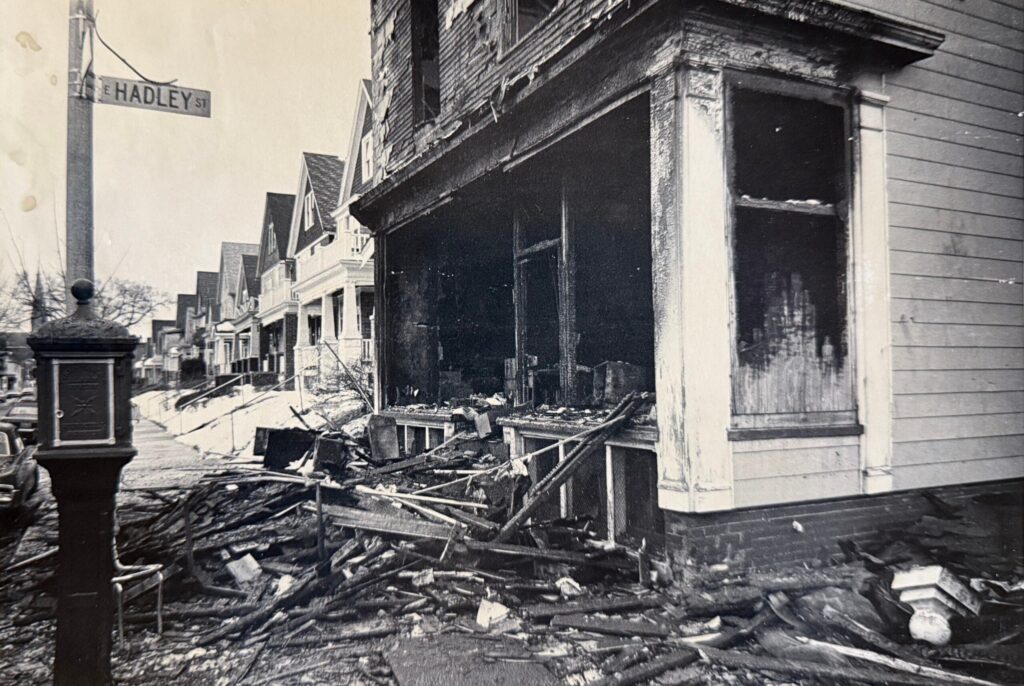
New Book by Aurore Sibley Covers the Bugle American Firebombing
Six people — including a 20‑month‑old baby — escaped a firebomb that gutted the Bugle American’s Milwaukee offices...

Baltimore Man Convicted on All Counts in 2025 Greenmount Avenue Quadruple Shooting, Faces Five Life Sentences
A Baltimore jury convicted Broderick Young on all counts Wednesday in the March 2025 quadruple shooting on Greenmount...

Kentucky Bourbon Production Hits Lowest Levels Since 2019, KDA Says
Kentucky distillers filled 2.13 million bourbon barrels in 2025, a 30% drop from the previous year and the...