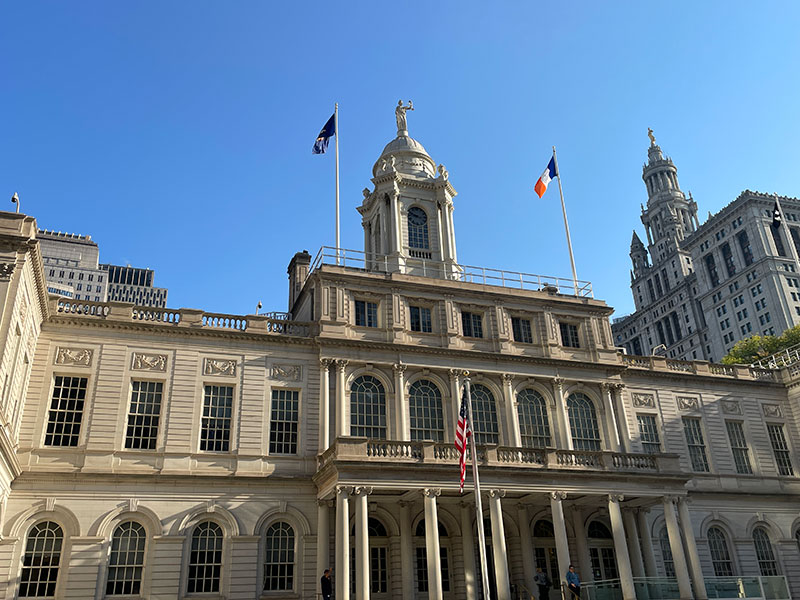
Mayor Zohran Kwame Mamdani applauded the passage of all five ballot proposals advanced by the Commission on Government Efficiency, declaring that New Yorkers had voted for “a government that moves as fast as they do,” nyc.gov reported.
The sweep gives the administration a mandate to cut the red tape that has long slowed small businesses, housing construction, and street safety projects across the five boroughs. Each measure targets a specific bottleneck in city government, from an eight-month wait for outdoor dining permits to a maze of 40 approvals spread across 18 agencies for housing construction.
Five Proposals, One Mandate for Speed
The five charter amendments passed with proposals developed by the Commission on Government Efficiency, known as COGE. “Tonight, New Yorkers voted for a government that moves as fast as they do,” Mamdani said. “From opening outdoor dining faster to speeding up street safety projects to accelerating housing production, we are cutting red tape that will directly address the affordability crisis and help New Yorkers stay in the city they love. Now comes the work of turning these votes into results.”
Ann Cheng, the commission’s executive director, said the proposals reflected direct input from residents. “In hearing after hearing, briefing after briefing, conversation after conversation, we heard that New Yorkers—from those who depend on City services to the City workers who deliver them—want government to work faster,” Cheng said. “I am grateful for all that the hardworking members of the COGE team did to develop these proposals and educate voters about them, and I look forward to seeing how these changes will improve the lives of working New Yorkers.”
Patrick Gaspard, the commission’s chair, framed the vote as the culmination of a participatory process. “New Yorkers informed these ballot proposals from the very beginning. Now, New Yorkers have made clear that they should be law,” Gaspard said. “These reforms will help build more affordable housing, speed up the outdoor dining application process, streamline contracting and street safety projects and put our City on firmer financial footing.”
Eight Months Becomes Two
The individual measures promise concrete time savings. Question 1 cuts the outdoor dining application process by 75%, from eight months to two months, saving small businesses up to $1,800 in application costs and thousands of dollars in staff time while speeding up approvals for accessible entrance ramps by two months. Question 2 reduces administrative burdens on contractors, saving small businesses and nonprofits up to 30 days in the city contracting process.
Question 3 fast-tracks street safety projects, including bike lanes, by at least 33% and unlocks more than $200 million in potential city revenue through the sale of small surplus lots and unused air rights over city-owned landmarks. Question 4 consolidates 40 approvals from 18 separate offices and agencies into one place to speed up housing construction. Question 5 establishes a rainy-day savings target of 12% of total tax revenue to strengthen long-term fiscal stability.
From Hearing Rooms to Palm Cards
The commission built its case through extensive public engagement. COGE held 10 public hearings attended by more than 1,200 New Yorkers and received hundreds of pieces of public testimony before finalizing the proposals in July. Afterward, the commission conducted hundreds of briefings reaching more than 9,000 New Yorkers across all five boroughs, according to Mirage News, which confirmed the same figures reported by the city.
The education campaign also included an online resource hub, canvassing, public service announcements, digital ads, and the distribution of more than 87,000 palm cards through community organizations, alongside digital voter engagement and registration efforts in the weeks before Election Day.
The real test begins now, as city agencies must implement these structural changes while maintaining oversight. “We are grateful to all the New Yorkers who made their voices heard on these critical proposals throughout every step of the process,” Gaspard said.

Man Dies After Hit-and-Run on Gallatin Pike in Nashville
A grocery cart, the kind shoppers wheel through parking lots and along dark stretches of road, is what...

Pinion Acquires A1 Development Solutions to Expand Land Advisory Services
Established in 2017 to manage the intricate permitting, utility coordination and government relations required for livestock and grain...

School of Medicine Greenville Registrar Manages Academic Records
The Registrar's Office at the University of South Carolina School of Medicine Greenville adheres to the University of...

Transportation Planner Hayden Clarkin: RIPTA Hub Relocation Plan Ignores Bus Riders’ Needs
Providence Transit Planner Argues $77 Million Hub Move Would Harm Bus Riders In a column for pvdeye.org, transportation...