Ohio lawmakers introduced legislation Thursday that would let residents plug small solar arrays directly into wall outlets without utility permission, a step toward the “balcony solar” model already common in Europe.
House Bill 755, sponsored by Reps. Tristan Rader (D–Lakewood) and Chris Glassburn (D–North Olmsted), would exempt portable systems up to 1,200 watts from interconnection agreements and bar utilities from charging extra fees or requiring additional equipment. The bill mirrors a law passed unanimously in Utah this year, and more than 20 states are now exploring similar measures, the Ohio House said in its announcement.
“Ohioans are being told to absorb higher bills with no way to respond,” said Rep. Tristan Rader, a Lakewood Democrat who sponsored the legislation. “HB 755 changes that.”
“Balcony solar is one of the simplest ways to put energy independence directly in the hands of Ohioans,” said Rep. Rader. “Not everyone owns a home or can install rooftop solar.”
“Ohioans should have every tool to lower their utility bills,” said Rep. Glassburn. “This legislation gives Ohioans the freedom to safely and easily save money on their home electric costs.”
Plug-in solar panels — typically one to four modules mounted on a balcony, railing or window — feed electricity into a home’s wiring through a standard outlet via an integrated micro-inverter. The panels offset daytime consumption from appliances, lighting and electronics; they do not replace a full rooftop array.
Myria Williams, Ohio program director for Solar United Neighbors, told cleveland.com that a 400-watt system costing $400–$600 might save $3–$5 a month, while a 1,200-watt system around $2,000 could save roughly $20. For comparison, Williams’ own 42-panel rooftop installation eliminates her bill entirely in some months.

Feeding power into household circuits can overload wiring without tripping a breaker, especially on circuits already serving multiple appliances. Williams said a 400-watt unit may need no electrical upgrades, but a 1,200-watt system could require a dedicated circuit and panel evaluation.
HB 755 would require devices to meet national electrical safety standards; Underwriters Laboratories has developed certification criteria and manufacturers are beginning to submit equipment for testing. About one million such systems operate in Germany, Williams noted.
Unlike traditional rooftop solar, plug-in users would not qualify for net-metering credits for excess power sent to the grid. The financial benefit comes solely from buying less electricity. The bill also prohibits utilities from requiring customers to install equipment beyond what is integrated into the system.
Rep. Tristan Rader (D–Lakewood), now in his first term representing Ohio House District 13 since 2025, serves as ranking member of the House Energy Committee, placing him at the center of the chamber’s work on power policy. Before joining the legislature, he spent six years on Lakewood City Council (2018–2024), where he spearheaded the city’s 100% clean-energy commitment and launched its first Climate Action Plan.
His advocacy for House Bill 755 grows directly from his tenure as Ohio Director for Solar United Neighbors, a role in which he managed community-solar programs and helped thousands of residents adopt solar power.
The measure is pending in the House Energy Committee. To become law it must clear both chambers before the General Assembly adjourns for the year, or it will expire with the session.
Keep reading
Colorado Storm Threatens Dangerous Saturday Holiday Travel With Heavy Mountain Snow, 60 mph Winds
A Colorado storm threatens to make Saturday the most dangerous holiday travel day of the weekend, with mountain...

Warsaw Startup Lute Raises Seed Funding to Build Touch-Based Robot AI Models
OTB Ventures and FORWARD.one co-led the seed round; Seedcamp and Credo Ventures co-led the pre-seed. Lute-0, the first...

Paramount Pictures Sets Children of Blood and Bone Release for Jan 15, 2027
Paramount Pictures has set the theatrical release of "Children of Blood and Bone" for January 15, 2027. The...
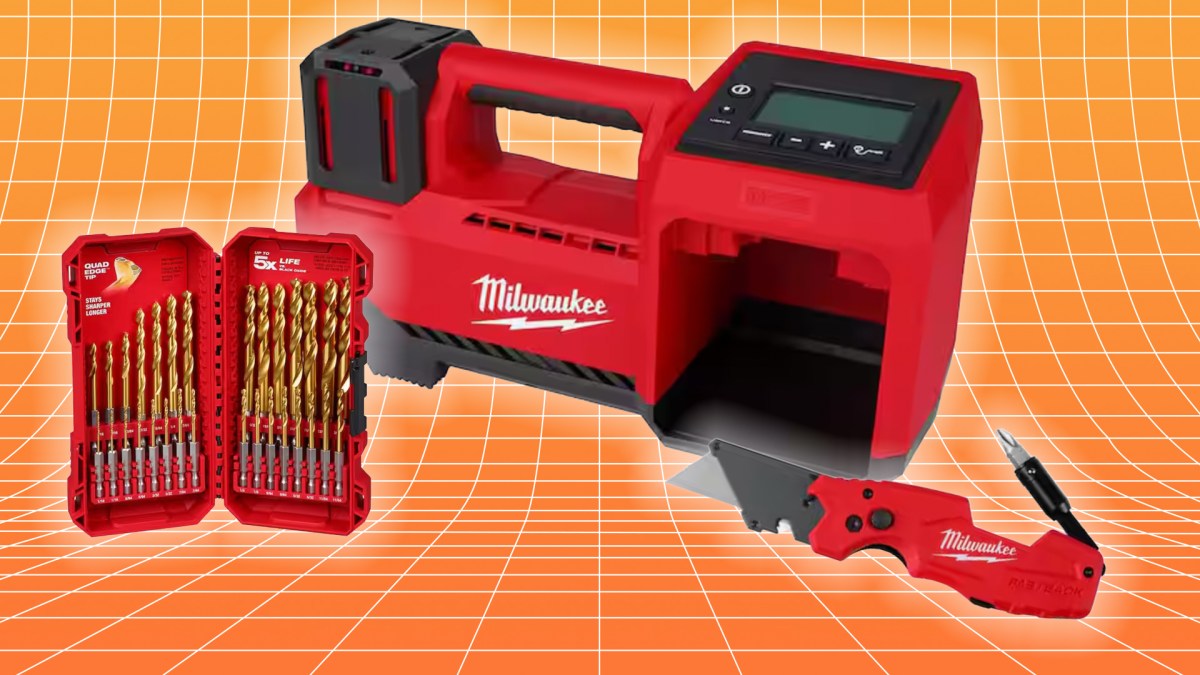
Home Depot Black Friday: M12 Battery Pack 47% Off, Tool Discounts, Packout Promos
Free M18 inflator ($200 value) with qualifying M18 kit or battery purchase at Home Depot. M12 4.0 Ah...