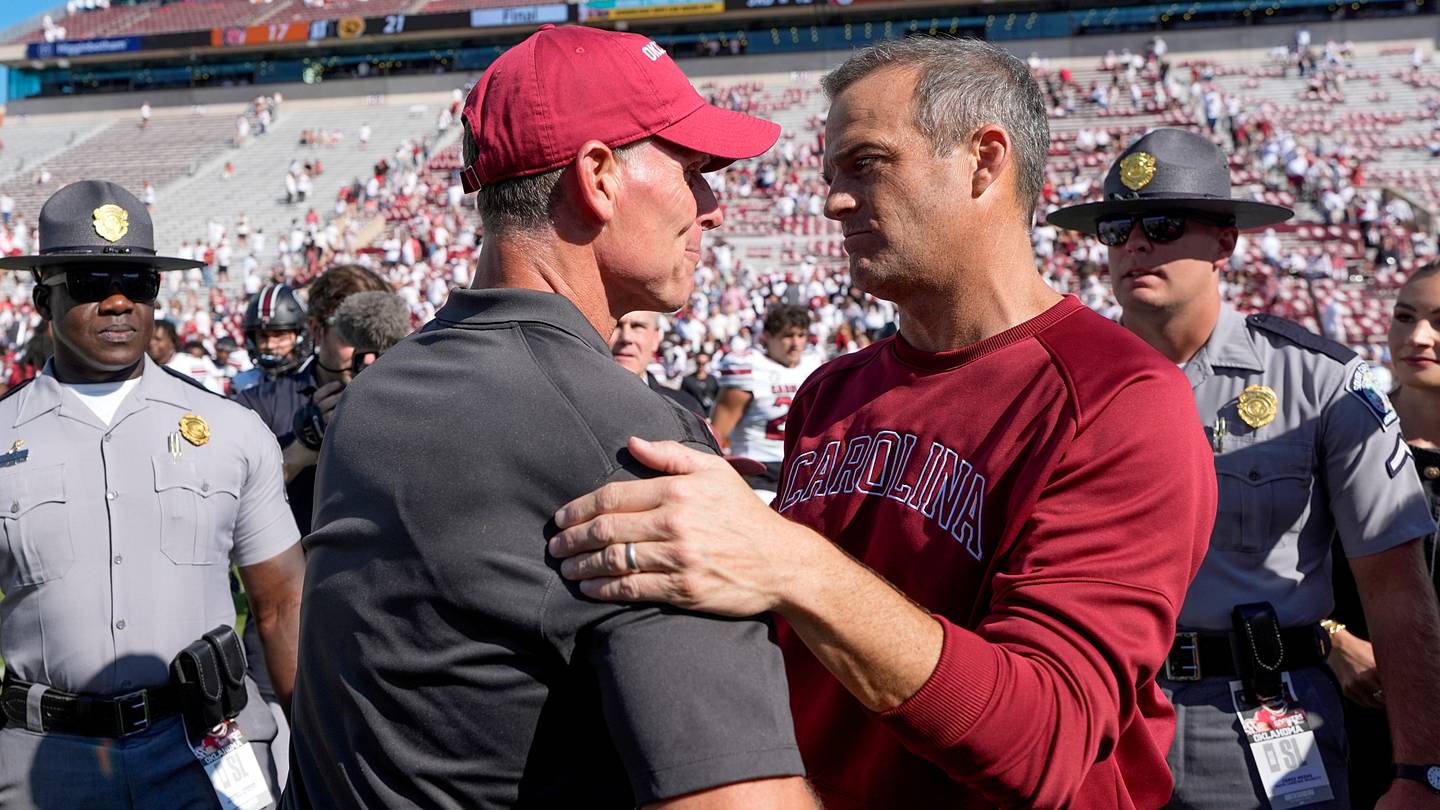
Two years ago, a mid-October afternoon in Norman, Oklahoma, seemed to collapse under the weight of three early turnovers. The South Carolina Gamecocks walked into Gaylord Family-Oklahoma Memorial Stadium, dismantled the Sooners 35-9, and in doing so, appeared to trigger a strange, diverging ripple in both programs’ timelines. As reported by Sports Illustrated, that 2024 encounter wasn’t just a lopsided box score; it functioned as a rupture, a moment of profound displacement that sent South Carolina on a late-season surge toward a 9-3 finish, while Oklahoma drifted into a stagnant six-win campaign.
Today, as we arrive at October 29, 2026, the cosmic geometry of the Southeastern Conference schedule has aligned once more. The two teams are back in Norman, both standing at a precarious fork in the road, attempting to reconcile their current realities with their preseason ambitions. It is a moment that invites a scientific metaphor: Hooke’s Law. Much like the physical principle stating that the force needed to extend a spring is proportional to the distance it is stretched—provided the material stays within its elastic limit—the 2024 season proved to be a test of that very limit for both coaching staffs.
The Physics of a Program Pivot
The “elastic limit” of a football program is often defined by its ability to absorb a catastrophic loss without losing its identity. In 2024, the Sooners’ failure to hold onto the ball against Shane Beamer’s squad pushed them beyond that threshold, leading to a period of institutional deformation. Conversely, the Gamecocks used that victory as a catalyst, rebounding from an early 3-3 start to secure a winning record. Now, the roles feel strangely inverted, yet the stakes remain identical.
Week 09 vs. South Carolina📍 Norman🏠 Homecoming🕞 3:15 PM CT📺 SECN pic.twitter.com/PciHy3dHzR
Brent Venables finds his team locked in a repetitive, exhausting cycle of win-loss-win-loss that dates back to the conclusion of the 2025 regular season against LSU. To break this rhythm, Oklahoma must prove that the 2024 loss was an aberration rather than a foundational shift. As noted by Yahoo Sports, the winner of this Saturday’s rematch gains a trajectory that seemed entirely implausible just thirty days ago, while the loser faces the grim reality of abandoning aspirations for a meaningful post-season.
Realigning the SEC Timeline
South Carolina’s path to this game has been equally volatile. After dropping three consecutive games earlier this year—including losses to Mississippi State and Kentucky—the Gamecocks have shown signs of restoration. They secured two consecutive victories, most notably a road win against a then-No. 16 Florida team. This recent momentum suggests that Shane Beamer’s team has managed to navigate the same “elastic” stressors that defined their 2024 season.
The contrast between the two programs over the last twenty-four months is striking. While South Carolina fell short of expectations following their 2024 win in Norman, finishing 4-8 the following season, Oklahoma experienced a brief period of resurgence, soaring to a 10-3 record and a College Football Playoff appearance. The question now is whether the 2026 version of this matchup serves as a correction or a continuation of that instability.

The winner of this game could very well set themselves up for success that seemed unrealistic a month ago, while the loser will abandon any and all hope of playing for something grander.
This reality brings an undeniable economic and emotional weight to the Gaylord Family-Oklahoma Memorial Stadium. For the fanbases, the “so what” is clear: this is not merely a conference game; it is a referendum on the sustainability of the current coaching regimes. If Oklahoma can finally snap the win-loss cycle, they prove they have the structural integrity to compete in the modern SEC. If they falter, the questions surrounding Venables’ long-term outlook will only intensify.
The physics of the situation are simple, even if the execution is not. A spring stretched too far will either return to its original shape or it will snap. After two years of displacement, both South Carolina and Oklahoma are finally ready to see if they can return to the center.
Keep reading

NYC Cafe Owner Honored for Standing With Israel Amid Post-October 7 Backlash
Three Years After a Staff Walkout, Cafe Aronne Founder Aaron Dahan Reflects on the Reality of Running an...

CF Montreal travels to face New York City FC in Eastern Conference
CF Montreal travels to face New York City FC in Eastern Conference play on Saturday at 2 p.m....

How to Get Into the University of New Mexico: Admission Requirements and Guide
Navigating university admissions often feels like deciphering a locked archive, especially when major institutions leave certain metrics unstated....

Project Manager / Senior Project Manager, L&D Solutions – Hybrid (Yardley, PA)
Project Manager Openings in Yardley Highlight Life Sciences Demand When life sciences companies need to launch a new...