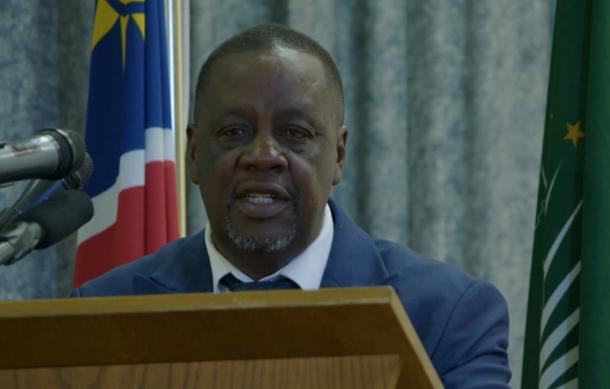
“A commemoration must also challenge us to ask: What are we doing for the living? What are we doing for the families who returned and the children growing up here? What are we doing to ensure that those who came back to the motherland can build dignified and productive lives?” Omaheke Governor Pijoo Nganate stressed that securing sustainable livelihoods for Ovambanderu returnees must be a top priority during the 33rd Commemoration of the Repatriation from Botswana at Eiseb 10 in the Otjombinde constituency, where he announced a new Food for Work initiative to tackle ongoing challenges in infrastructure, water, and food security.
Commemorating the repatriation of the Ovambanderu people is not enough on its own, according to Omaheke Governor Pijoo Nganate.
Governor Nganate Pushes Beyond Historical Reflection at Eiseb 10
The remarks shifted the focus from historical reflection to immediate development needs. Addressing the crowd on behalf of the governor, officials highlighted that the difficulties facing returnee communities can no longer remain just a historical conversation.
A commemoration must also challenge us to ask: What are we doing for the living? What are we doing for the families who returned and the children growing up here? What are we doing to ensure that those who came back to the motherland can build dignified and productive lives?
Pijoo Nganate, Omaheke Governor
While noting that the government cannot resolve these issues overnight, Nganate emphasized that collective action alongside traditional authorities, private sector partners, and communities is essential.
Food for Work Initiative Targets Agricultural Development
To move past mere speeches and photographs, Nganate committed his office to launching a Food for Work initiative in Eiseb 10. The project aims to support community members while they prepare land for a rain-fed communal garden.
The initiative involves clearing and preparing agricultural land, setting up necessary fencing, and getting the soil ready for ploughing and planting. By establishing a community food-production project, the scheme creates opportunities for residents to earn an income through meaningful work.
Nganate pledged to remain closely involved with stakeholders to guide the project from an initial idea to complete implementation, ensuring that the work reaches completion rather than fading away after the event.
Bridging the Gap in Regional Government Services
Beyond food production, the governor stressed that development requires closer cooperation with government ministries, agencies, and offices to improve service delivery in Eiseb 10. He noted that residents should not feel that the government is distant, but rather visible and active in their daily lives.
In cases where local concerns fall outside the direct mandate of the Omaheke Regional Council or the Office of the Governor, Nganate promised to engage relevant authorities to follow up on matters spanning education, health, documentation, social protection, and economic infrastructure.
Closing his remarks, Nganate encouraged the youth of Omaheke to draw strength from their history of survival and displacement, urging them to build schools, businesses, and institutions worthy of their ancestors’ sacrifices.
Related reading

Australian Soldier Killed and Five Injured in Northern Territory Training Crash
An Australian Army soldier died and five others sustained injuries on October 5, 2026, during a vehicle rollover...

SAPS Denies Shadrack Sibiya Disciplinary Proceedings Have Been Halted
Suspended Deputy National Police Commissioner Shadrack Sibiya attended an internal disciplinary hearing held at the Kgosi Mampuru II...

US Evacuates B-1 Bombers From UK Base Over Suspected Iranian Plot
The United States evacuated a dozen long-range B-1 bombers from RAF Fairford in the United Kingdom following security...
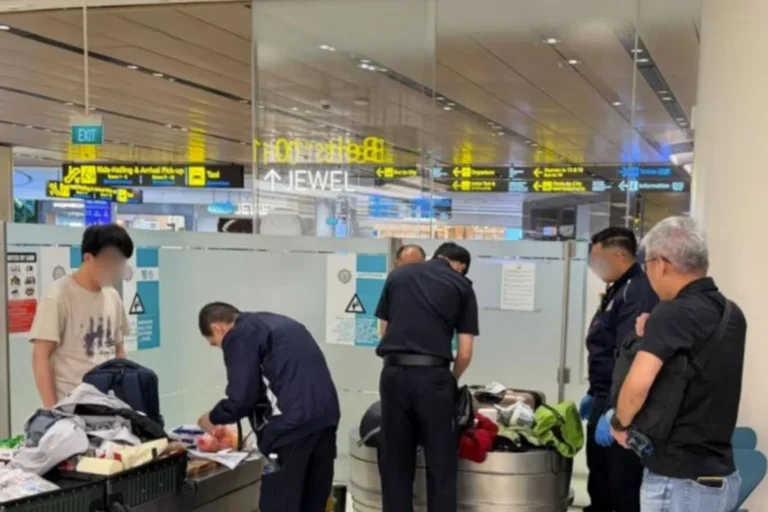
Singapore Authorities Catch 67 Travellers for Border-Related Offences
During a week-long border operation from September 22 to 28, Singapore authorities checked nearly 13,000 travellers and detected...