
U.S. Army Maj. Harry Conrad Hoffmeyer was laid to rest with full military honors at Eagle Point National Cemetery during a warm late October afternoon.
The service, which included funeral honors provided by members of the Oregon Army National Guard, was attended by the local community and Hoffmeyer’s only living relative, his grand-niece Susan Burnes. A resident of Rogue River, Burnes grew up hearing stories about her uncle, a family legend who was believed to have been missing in action during World War II.
The presence of the Honor Guard serves as a modern window into a massive, dual-mission organization that has been part of Oregon’s fabric since 1843. While the ceremony was a private moment of remembrance for the Hoffmeyer family, it showed the civic role played by the state's 8,100 Soldiers and Airmen.
A militia with two masters
The Oregon National Guard operates under a complex framework, answering to the governor when performing state missions and to federal authorities when mobilized for national service. This versatility allows the force to pivot between local emergencies—such as wildland firefighting, search and rescue, and disaster response—and overseas combat deployments.
The organization’s lineage is deeply rooted in the Pacific Northwest. The 41st Infantry Regiment, for instance, is part of the legacy of the 41st Infantry Division, historically known as the “Sunset Division.” This unit, comprised largely of personnel from Oregon, Washington, Idaho, Montana, and Wyoming, has a combat history that spans from the trenches of Europe in 1918 to the jungles of the Pacific in World War II.
In 1942, the division sailed to Australia and later fought in Papua New Guinea. The division earned the nickname “Jungleers” after the 162nd and 186th regiments from Oregon defeated more than 10,000 Japanese troops during the 1944 Battle of Biak.
From historic armories to F-35A jets
Today, the Guard’s footprint is visible across the state through 41 armories spanning 33 communities. These include landmark facilities like the 1891 Portland Armory and the Ashland Armory, built between 1912 and 1913.
The technological evolution of the Oregon Air National Guard is currently underway at two primary hubs. The 142nd Wing at the Portland Air National Guard Base maintains a 24/7 NORAD Aerospace Control Alert mission using the F-15EX Eagle II. Meanwhile, Kingsley Field in Klamath Falls is preparing for a generational change in aerial combat capability.
The Air Force’s third F-35A Lightning II Formal Training Unit is the focus of a current transition for the 173rd Fighter Wing as it moves away from the F-15C/D Eagles.
The human side of service
Beyond the high‑tech fighter jets and overseas operations like Operation Inherent Resolve, the Guard maintains a constant, quiet presence in Oregonian daily life. This includes providing funeral honors at Willamette National Cemetery, Roseburg National Cemetery, and Eagle Point National Cemetery, often utilizing a traveling team to reach residents statewide.
The 234th Army Band, referred to as “Oregon’s Own,” provides the auditory backdrop for the state's most important milestones. Functioning as a full concert band, a marching band, and various specialized musical teams, they perform at everything from military ceremonies to local parades.
The National Guard’s formal history is tied to the organization of the first militia regiments in North America in Massachusetts on December 13, 1636. The Department of Defense continues to recognize this date as the birthday of the National Guard, adopting the dates of initial authorizing legislation for organized units to mark the birth of active and reserve components.
Related reading

Update Your Contact Information and Location Preferences
Mutiny Presents is bringing Sammy Virji to Salt Lake City on March 6, according to listings on Edmtrain....
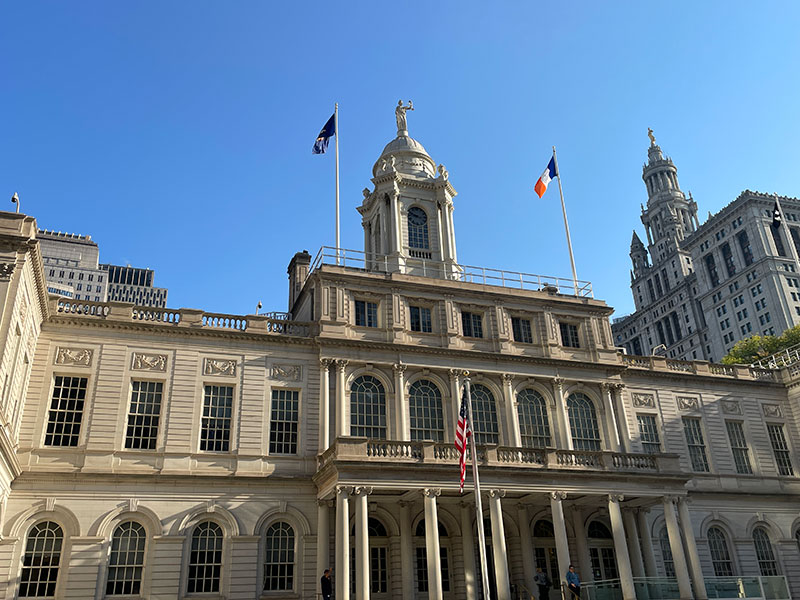
Mayor Mamdani Announces 16 Judicial Appointments to NYC Criminal and Family Courts
Mayor Zohran Kwame Mamdani announced 16 judicial appointments and reappointments to New York City’s Criminal and Family Courts...

Vermont Minimum Wage to Increase by 49 Cents in January
Vermont’s minimum wage floor is set to shift upward on January 1, moving from $14.42 to $14.91 per...

Student Writer Shares Experience with Imposter Syndrome
In a recent column for the Her Campus at Northeastern chapter, a student writer recounts her personal transition...