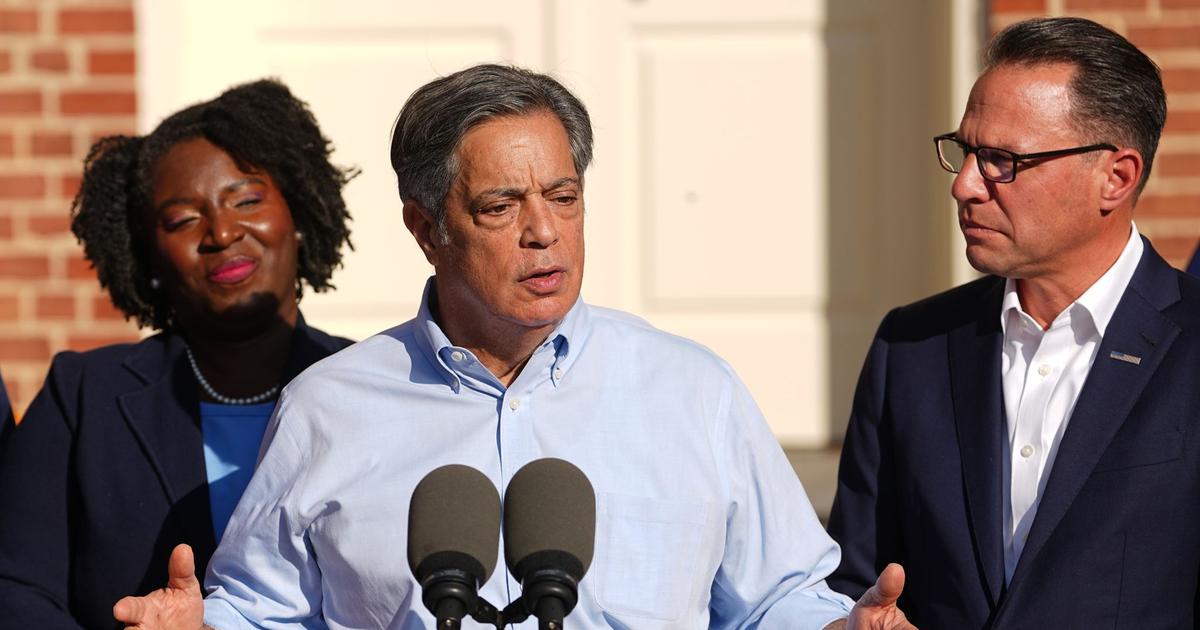
HARRISBURG — One day after Pennsylvania voters handed Democrats control of the governor’s office and both legislative chambers for the first time in more than three decades, Gov. Josh Shapiro stood at the Governor’s Residence and promised a fast-moving agenda, Spotlight PA reported. Flanked by Lt. Gov. Austin Davis and top lawmakers, Shapiro said the party will soon unveil a policy agenda for the first 100 days of governing, and he guaranteed voters five deliverables: funding mass transit, raising the minimum wage, protecting reproductive freedom, building more housing, and letting survivors of abuse confront their abusers in court.
The stakes reach directly into household budgets. Pennsylvania’s minimum wage has sat at $7.25 an hour — the federal floor set in 2009 — since lawmakers last voted to raise it in 2006, meaning a full-time worker at the bottom of the pay scale earns about $15,080 a year before taxes.
Democrats Secure Tight Legislative Control
The numbers behind the trifecta are narrow but decisive. Voters elected four Democrats to state Senate seats previously held by Republicans, while one Democratic incumbent lost, leaving the party with a 26-24 majority in the upper chamber. In the state House, Democrats expanded their majority by at least eight seats to 111 members of the 203-person chamber, though the Associated Press had yet to call four races as of Wednesday afternoon. The gains were concentrated in the eastern third of the state, outside Allentown and Philadelphia.

That margin shapes everything. “It’s not just a one-seat majority,” state House Speaker Joanna McClinton (D., Philadelphia) said at a separate news conference on the Capitol steps. “It is a mandate to respond to the needs of this hour.”
“What last night’s election showed is that I have a mandate to continue to lead our commonwealth forward.” — Gov. Josh Shapiro
Democrats plan to move a bill raising the state minimum wage first. State Sen. Vincent Hughes (D., Philadelphia) put it bluntly, saying he wanted to “double that sucker.” Beyond the wage, lawmakers told Spotlight PA they want to tackle paid family leave, legalizing recreational cannabis, stricter rules for data centers, expanded voting rights, and citizen-led referenda.
Picking the Hills
With a one-seat Senate majority, every vote matters. State Sen. Lisa Boscola (D., Northampton), a self-described moderate from the Lehigh Valley, drew her own line: she would support $15 an hour, but “if they talked about $20, I would say no.” She also backs data center guardrails, though not a moratorium. “Any one person in the Senate can say, ‘You put this in a bill; I’m not voting for it,’ and then it’s trouble,” she said.
The ideological spread runs from moderates like Boscola to progressives like state Sen. Nikil Saval (D., Philadelphia), who said the moment “is not about red lines, drawing lines in the sand,” but about “governing and delivering for Pennsylvania.” State Rep. Izzy Smith-Wade-El (D., Lancaster) of the Progressive Caucus expects colleagues to gather for a “big family dinner” to reach consensus, while Michael Manzo, a lobbyist and former chief of staff to a House majority leader, warned that Democrats will need to “pick and choose which hill you’re going to die on.”
Republicans pushed back hard. In a statement, state House Minority Leader Jesse Topper (R., Bedford) rejected the idea of a blank check, arguing the results showed only “dissatisfaction with the national direction” and warning that if Democrats pursue what he called a “far-left, collectivist wishlist,” they will face opposition from his caucus and “every Pennsylvanian who wants their freedom and their way of life protected.”
New Leadership in the Senate
The House leadership stays put: McClinton and Majority Leader Matt Bradford (D., Montgomery), who have held their posts since Democrats flipped the chamber in 2022, will remain in place, with a larger cushion this time. Bradford said he would keep the governing philosophy that carried them at 102 seats: “We have a mandate, yes. But it’s a mandate for… humility.”
The real shift is in the Senate. Minority Leader Jay Costa (D., Allegheny), first elected in 1996 and leader of his caucus through the political wilderness since 2010, appears to be the party’s choice for president pro tempore — a title Shapiro, McClinton, Bradford, and Hughes all used for him Wednesday. The full Senate will vote on the position as early as November and must secure a simple majority.
Tony Lepore, a senior adviser at Ballard Spahr, said the trifecta will “open up a ton of opportunities,” with a minimum wage increase likely and an effort to address federal healthcare cuts. But he cautioned that individual members may feel more bargaining power with a one-seat advantage, and some may passionately oppose proposals the rest of the caucus supports. Lepore said it is not easy leading a caucus, whether Democrats or Republicans, and he thinks it is even harder today because there is a wider range of people in the caucus with different viewpoints. State Sen. Katie Muth (D., Chester) added a note of caution about influence, pointing to data centers, adult-use cannabis, and skill games as issues heavily shaped by lobbyists and donors, and saying she hopes “corporate Democratic policies are not what this trifecta is focusing on.”
Leaders Outline Upcoming Legislative Steps
Democratic leaders say a formal 100-day agenda will be announced soon, with the minimum wage bill moving first. The Senate votes on its president pro tempore as early as November, and four House races remained uncalled as of Wednesday afternoon. Mary Isenhour, a lobbyist who served as chief of staff to former Gov. Tom Wolf, offered one non-policy priority for the new majority: “Treat colleagues with respect. Be gracious winners. Be gracious losers.”
Related reading

Teen Charged With Child Neglect After Fatal Fayette County Shooting
OAK HILL, W.Va. — An 18-year-old man is facing a charge of child neglect resulting in death after...

Virginia Beach Election Results: Most Incumbents Retain City Council and School Board Seats
Virginia Beach Voters Keep Most Incumbents, Oust District 4 Council Member Janet Byrnes, a 38-year-old retired Virginia Beach...

Blackburn outlines Tennessee’s early governor priorities: workforce, housing, education
Tennessee is moving toward a historic change in its executive office: Gov.-elect Marsha Blackburn, the state's first elected...

SUITSUPPLY’s Washington DC flagship offers custom suits, ready-to-wear, and same-day alterations near White House
In downtown Washington D.C., just steps from the White House and Capitol Hill, SUITSUPPLY reported that its flagship...