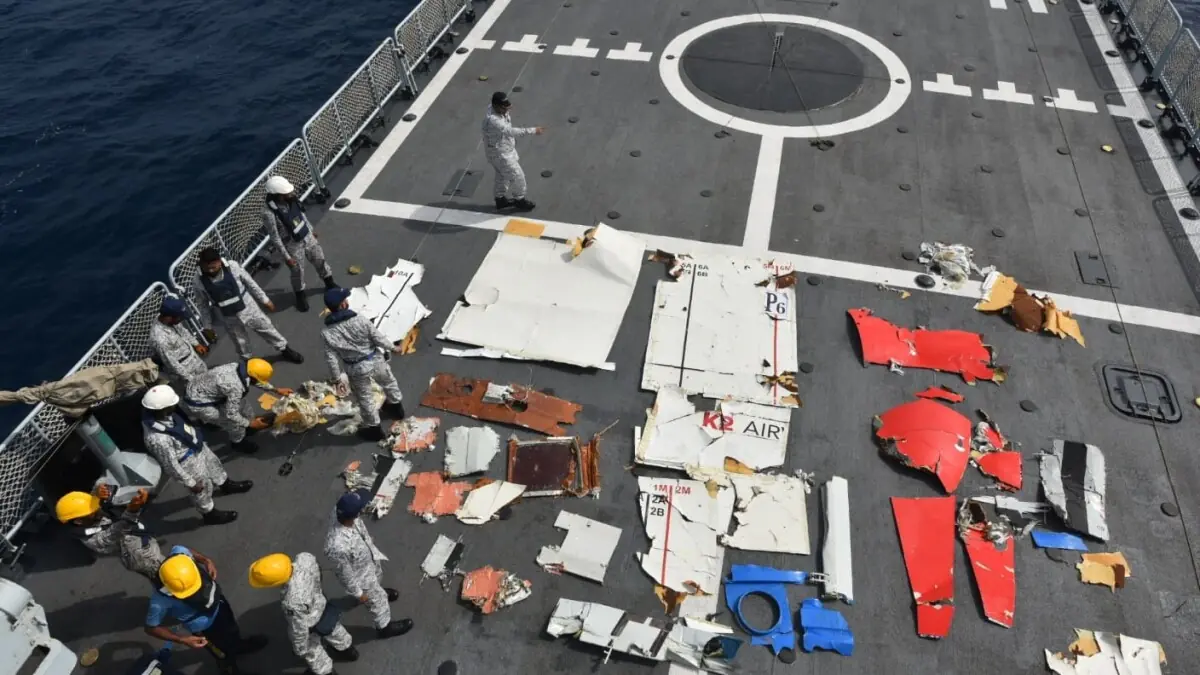
The Pakistan Airports Authority confirmed on Wednesday that search teams have located the wreckage of a K2 Airways Boeing 737 cargo plane 53 nautical miles south of Ormara. The aircraft, which disappeared from radar late Tuesday while traveling from Karachi to Sharjah, remains the subject of ongoing recovery efforts for its five missing crew members.
Search and Recovery Operations in the Arabian Sea
Following a 12-hour search involving air and sea-borne assets, the Pakistan Navy and the Pakistan Maritime Security Agency successfully identified the crash site. The wreckage was discovered at sea, approximately 360 kilometers (223 miles) west of Karachi. While the location of the Boeing 737-400 has been secured, officials noted that the bodies of the five crew members have not yet been recovered, and “efforts are underway” to locate them.

The search effort was bolstered by direct intervention from the highest levels of government. Prime Minister Shehbaz Sharif instructed the Civil Aviation Authority, the navy, and the Pakistan Air Force to deploy all available resources to the area. President Asif Ali Zardari also issued a statement regarding the disaster, noting that he “extended heartfelt condolences to the families of the aircraft’s crew and expressed complete solidarity with them during this hour of trial.”
Operations in the Arabian Sea are complicated by the depth of the water and the debris field’s fragmentation. Maritime security officials have established a perimeter around the wreckage site to facilitate the arrival of specialized recovery vessels equipped for deep-sea operations. These assets are vital for locating the flight data recorder and cockpit voice recorder, which are essential for the subsequent investigation into the crash.
Final Moments of Flight AP-BOI
The sequence of events leading to the crash occurred rapidly late Tuesday night. The Karachi Area Control Centre received a distress call at 9:18 p.m., during which the pilot reported a navigation system problem. Aviation officials stated that controllers attempted to guide the flight, but by 9:21 p.m., the aircraft was observed on radar “rapidly descending” and making an abrupt change in its heading.

Shortly after the descent, “radar contact and communication were lost” approximately 287 kilometers west of Karachi. The aircraft, registered as AP-BOI, was a Boeing 737-4M0 freighter that had only recently entered service with the Karachi-based K2 Airways in 2024. Before its current role, the airframe had a lengthy operational history, having been delivered to Aeroflot in 1999 and subsequently serving with Garuda Indonesia, TNT Airways, and ASL Airlines. The transition of older passenger aircraft into cargo freighters is a common practice in the aviation industry, requiring extensive modification to the airframe to accommodate specialized freight handling equipment.
Aviation Safety Context and Airline Background
K2 Airways, a private carrier, was established in May 2018 after receiving a charter license from the government. The disappearance of this freighter marks a significant incident in Pakistan’s aviation sector, which has faced scrutiny following previous tragedies. The last major aviation incident in the country occurred in 2020, when a Pakistan International Airlines passenger flight crashed while approaching Karachi airport, resulting in 97 fatalities among the 99 people on board. That event led to widespread reviews of safety protocols and air traffic control oversight within the region.
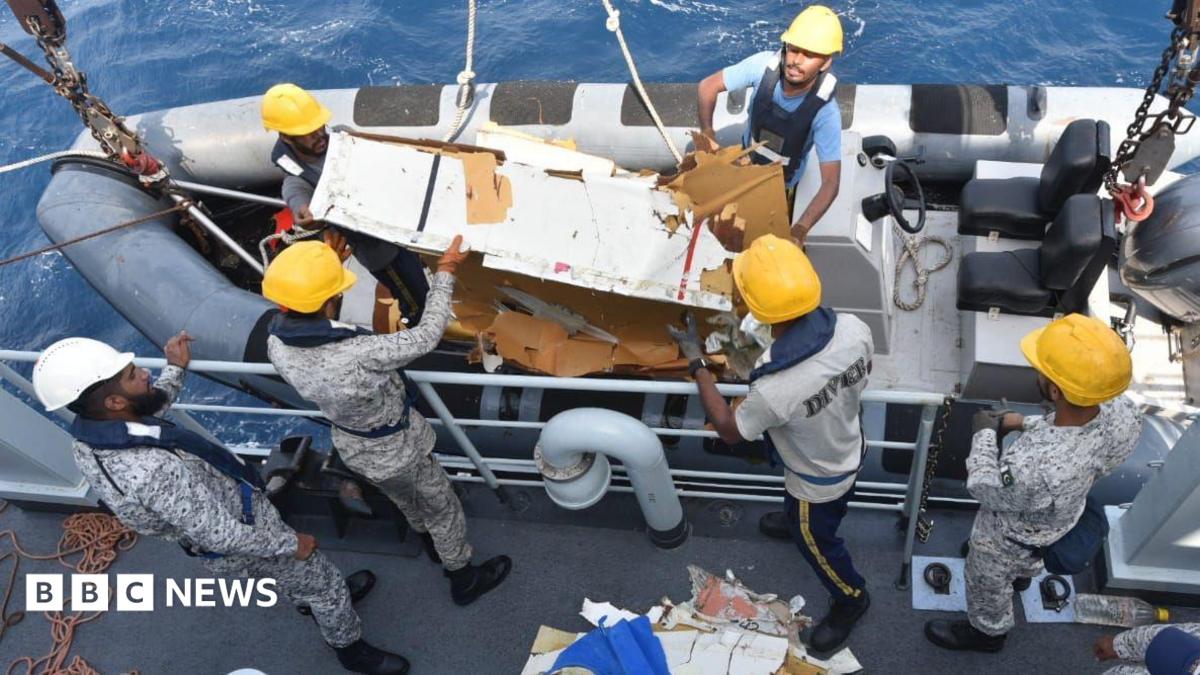
In standard aviation practice, when a crash occurs in international or territorial waters, the Civil Aviation Authority is required to lead the accident investigation process. This involves coordinating with international partners if the aircraft manufacturer or the airline’s insurance entities require external technical input. The primary goal of such an investigation is to determine the sequence of mechanical or pilot-related failures that led to the loss of the aircraft, with the ultimate objective of issuing safety recommendations to prevent recurrence.
As the recovery operation continues off the coast of Ormara, authorities have indicated that further information regarding the cause of the navigational failure and the status of the search will be released as it becomes available. For now, the focus remains on the recovery of the missing crew members in the deep-sea search zone, an operation hampered by current maritime conditions in the Arabian Sea.
Find more reporting in our News section.

Pakistan Imposes Emergency and Governor’s Rule in Khyber Pakhtunkhwa
Pakistan declared a state of emergency in Khyber Pakhtunkhwa on Sunday, October 11, 2026, suspending the provincial government...

Abiy Ahmed Sworn In as Prime Minister With Focus on Red Sea Access
Prime Minister Abiy Ahmed was sworn into a new five-year term on Monday, October 5, 2026, following his...
Pope Leo XIV Rejects Death Penalty as Attack on Human Dignity
Pope Leo XIV has rejected the death penalty as an attack on human dignity, posting on X that...

SpaceX Launches 21 U.S. Space Force Satellites After Delay
Following a five-day delay from an earlier countdown abort, a SpaceX Falcon 9 rocket successfully launched 21 data...