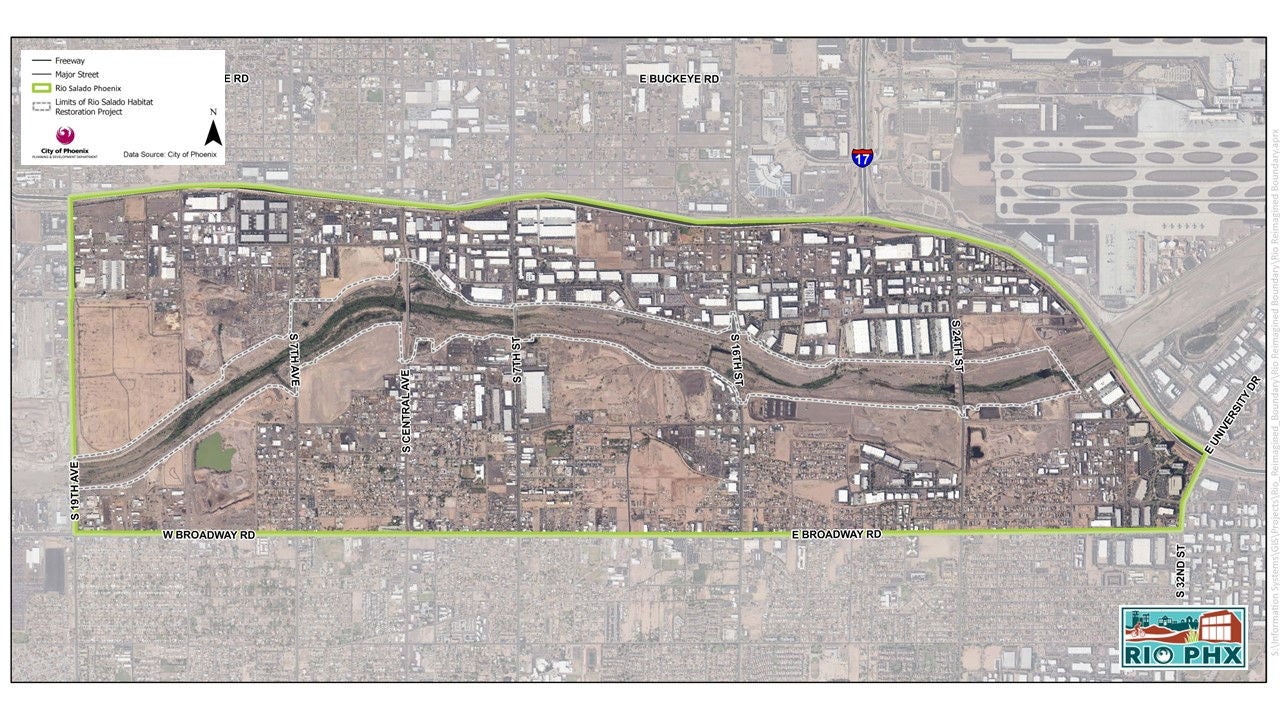
For decades, the Rio Salado was a neglected ribbon of water running through the heart of Phoenix. That changes today. The Phoenix City Council has approved the Rio Salado District Policy Plan, a sweeping blueprint designed to reconnect the city with its forgotten riverfront and sets the stage for one of the city's most ambitious urban transformations in half a century.
This approval, which comes after years of planning and extensive public input, is the first major step in the larger RIO PHX initiative, a city-led effort to reimagine and revitalize a 20-mile stretch of the Rio Salado corridor. The plan, as reported by officials at Phoenix.gov, focuses on a key area just south of Downtown and aims to create a vibrant mix of housing, jobs, recreation, and environmental restoration, all while honoring the history of the communities already there.
A New Vision for the River
The Rio Salado District is the first planning area to be locked in under the RIO PHX banner. It’s a diverse patchwork of established neighborhoods, businesses, industrial zones, and natural spaces. The newly approved policy plan provides the long-term framework to guide all future development and investment in this area. The goals are clear: strengthen connections between neighborhoods, support economic growth, expand access to public spaces and recreation, and protect the area’s natural resources.
The plan also emphasizes preserving the character of existing neighborhoods and ensuring that the people who live there benefit directly from the coming changes. It’s a delicate balancing act, aiming to build a thriving new district without displacing the families who have called this place home for generations.
“Rio Reimagined is a regional commitment to honor the river that gave life to our community, and RIO PHX sets the course to uplift this special riparian corridor as it winds through the heart of Phoenix,” said Phoenix Mayor Kate Gallego. “This plan reflects the enthusiasm and ideas of our community members and translates vision into policy to ensure new development delivers opportunities for residents to enjoy the Rio Salado for generations.”
Mayor Gallego’s statement highlights a key element of the plan: its foundation in community feedback. The development of the policy wasn’t just a top-down dictate from City Hall. It involved a lengthy and deliberate public engagement process, designed to ensure that the final product reflects the desires and concerns of the people who live and work along the river.
From Planning to Action
So, what does this approval actually mean? For now, it doesn’t greenlight any specific construction projects or change existing zoning laws. Instead, it’s the foundational layer of policy that will guide all future decisions. Alongside the policy plan, the City Council also approved an amendment to the City’s General Plan Land Use Map, ensuring that the long-term vision for the Rio Salado is formally aligned with the city’s overall planning documents.
This legal and procedural groundwork is essential. It sets the table for everything that comes next, from negotiating with private developers to planning new public parks and trails. The city can now officially move from the long-range planning phase into the implementation phase, working with residents, property owners, and other agencies to turn the plan’s broad strokes into reality.
Vice Mayor Kesha Hodge Washington highlighted the importance of this transition, particularly the inclusion of residential opportunities. “The Rio Salado District Policy Plan gives us an opportunity to think intentionally about how the area develops, how we connect residents to the Rio, and how we create more vibrant neighborhoods,” she said. “I appreciate the extensive community engagement and collaboration that helped shape this plan and for the community’s emphasis on including residential opportunities as part of the plan. This is an exciting step forward for community-driven investment in the Rio Salado area.”
A History of Harm and a Hope for Healing
The significance of this plan is deeply rooted in the past. For many communities along the Rio Salado, particularly those south of downtown, the city’s growth has historically been a source of pain, not prosperity. This history was a central theme in the council debate and a driving force behind the plan’s community-first approach.
As District 7 Councilwoman Anna Hernandez bluntly put it, “For generations, the City of Phoenix made choices that harmed the communities along the Rio Salado. It drew lines that kept Black and Latino families out of the north side, withheld basic infrastructure, and routed Interstate 17 through the neighborhoods that were left.”
This legacy of neglect and division casts a long shadow. It’s a story of communities that have seen “growth happen to a community instead of with it,” as Hernandez described. The new plan is an explicit attempt to do things differently. It’s a commitment to a more equitable and inclusive development process, one that learns from past mistakes and actively works to heal the historic wounds inflicted by urban planning.
“Our responsibility is to ensure that future growth respects that rich history, protects the character of our neighborhoods, and places community voices at the heart of every decision,” said District 4 Councilwoman Laura Pastor. “This is more than a development plan. It is an opportunity to reconnect communities and build a future that honors our past.” Councilwoman Laura Pastor
Councilwoman Pastor’s words capture the emotional weight of the moment. This isn’t just about buildings and parks; it’s about reclaiming a narrative and restoring a sense of pride and ownership for communities that have too often been left on the margins. The plan is a direct response to the historical injustices she described, aiming to create a future that is fundamentally different from the past.
City Will Work on Plan Recommendations
With the policy plan now in place, the real work begins. The city will spend the coming months and years coordinating with a wide range of stakeholders to advance the plan’s recommendations. This includes identifying specific opportunities for investment, planning infrastructure improvements, and continuing the vital community engagement that has defined this process so far.
The plan is also part of a larger regional vision known as Rio Reimagined, which seeks to restore and activate the Salt and Gila river corridors as shared community and environmental assets. The approval of the Rio Salado District policy plan is a major victory for this regional effort, providing a concrete example of how ambitious, community-led revitalization can become a reality.
Of course, challenges remain. The scale of the transformation is enormous, and ensuring that the benefits are shared equitably will be a constant test. Councilwoman Hernandez, in her final comments, made it clear she intends to hold the city accountable. “With this plan, the City has a chance to do it differently,” she said. “I’ll be holding us to that, from the first development deal to the last.”
For Phoenix, this is more than just a planning document. It’s a statement of intent. It’s a commitment to a future where the river that once gave life to the community is no longer a forgotten boundary, but a central, celebrated heart of the city, a place for everyone to enjoy for generations to come.
Worth a look

Wisconsin Democrats gain full control, MPS hit by fraud
A $450,000 Fraud Hits Milwaukee Schools as Democrats Take Full State Control Wisconsin’s political control shifted this week,...

Washington Voters Ban Trans Girls From School Sports
Washington Voters Ban Trans Girls From Girls' Sports Teams Washington state voters have approved a ballot measure that...

Joanna White’s Charleston Estate Sale Business Thrives
A Childhood Love of Treasure Hunting Blooms Into a Charleston Estate Sale Empire Just half an hour after...

Reliable HVAC Services in Richmond, KY | Heating & Cooling Repair
Richmond's HVAC Lifeline: More Than Just Comfort, It's the Engine of a Community When the mercury plummets or...