
Phoenix is fighting to maintain its status as a premier destination for mega-sporting events after being excluded from the shortlist for the men’s Final Four basketball tournament between 2032 and 2036. While the city remains a finalist for the women’s Final Four during that same window, the omission from the men’s rotation—coupled with a lack of scheduled Super Bowls through 2030—raises questions about the Valley’s continued attractiveness as a big-event host site.
As Las Vegas and Los Angeles lean into brand-new, state-of-the-art facilities, Phoenix is finding that “proven experience” may no longer be enough to beat “cutting-edge” architecture.
The NCAA splits the Valley’s prospects
The NCAA recently announced the cities vying to host the Final Four from 2032 to 2036, and the results were a mixed bag for Arizona. Phoenix is officially in the running for the women’s tournament, joining Detroit, Indianapolis, Las Vegas, Minneapolis, New Orleans, and San Antonio. This follows the city’s successful effort to stage the women’s event in 2026.
The men’s side of the ledger is more sobering, Cronkite News reported. Despite hosting the men’s Final Four in 2017 and 2024, Phoenix was left off the list of seven finalists. That group now consists of Denver, Houston, Indianapolis, Kansas City, Las Vegas, Nashville, and New Orleans.
“Narrowing it down to seven cities to host during this five-year cycle was challenging for the committee. We have a terrific blend of experienced host cities and potential newcomers, each of which we are confident will demonstrate that their competition venue, hotels and infrastructure will deliver at the level our participating teams have come to expect,” said Martin Newton, Samford vice president for Intercollegiate Athletics and chair of the Division I Men’s Basketball Committee.
The shadow of the ‘New Stadium’ race
Phoenix has a storied history with the big game. The Valley has hosted the Super Bowl four times, starting at Sun Devil Stadium in 1996 and followed by three events at State Farm Stadium in Glendale in 2008, 2015, and 2023. But the landscape has changed. The “arms race” of sports infrastructure has moved West.
Los Angeles and Las Vegas have shifted the goalposts by building venues that are not just functional, but architectural landmarks. SoFi Stadium in LA, which hosted the 2022 Super Bowl and will do so again in February 2027, represents a level of investment that creates a gravitational pull for event organizers. Similarly, Las Vegas has transformed from a gambling hub into a sports mecca. Since the Golden Knights arrived in 2017, Vegas has added the Raiders in 2020 and the Aces in 2018. With the Athletics expected to begin MLB play in a new stadium by 2028 and the NBA actively considering the city for expansion, the Nevada desert is no longer just a tourist trap—it’s a sports powerhouse.
The finalist cities to host the 2032-2036 Men's and Women's Final Fours have been announced: Phoenix was listed as a finalist for the Women's Final Four, however cities like Las Vegas were given the nod over Phoenix as a finalist for the Men's Final Four. The Committees will…
The data shows the shift in real-time. While Phoenix waits for its next NFL title game, Las Vegas hosted its first Super Bowl in 2024 and is already slated for another in 2029.
Local leaders push back against the slump
Despite the optics, Phoenix leadership isn’t ready to concede the “Championship Valley” title. Mayor Kate Gallego maintains that the region remains a powerhouse in the bidding wars.
“We feel like we are incredibly competitive with large scale sporting events,” Gallego said during a press conference at the Collier Center. “For our region, we have been incredibly competitive. People on the national level have started calling us ‘Championship Valley’ because we do so many great mega events here. And I think the future is bright.”
The city does have a short-term win on the calendar: the NBA All-Star game is scheduled to hit the Mortgage Matchup Center in February 2027.
Phoenix must compete more aggressively for events
The reality is that the pool of capable cities has expanded. Today, that list has grown, forcing Phoenix to compete not just on reliability, but on aggression.
Kyle Hedstrom, executive vice president and COO of the Arizona Sports and Events Alliance, acknowledges that the bar has been raised. He notes that the number of cities capable of competing for a men’s Final Four has grown from roughly 10 to as many as 15. According to Hedstrom, this means the city will have to be “more aggressive” in how it pursues these contracts.

If the trend continues, the Valley may face increased competition from cities such as Las Vegas and LA, which have built state-of-the-art stadiums and may become preferred destinations for events.
The next critical litmus test will be the final selection for the women’s Final Four.
Worth a look

Calcasieu-Sabine Basin wetlands collapsing, experts say
The Calcasieu-Sabine Basin in Southwest Louisiana is experiencing a collapse of its coastal wetlands that experts now describe...

Kim Halbauer Elected Chair of Kentucky Chamber of Commerce
According to The Lane Report, Les Fugate of Brown-Forman Corp. has been named chair-elect for 2027, while Kim...
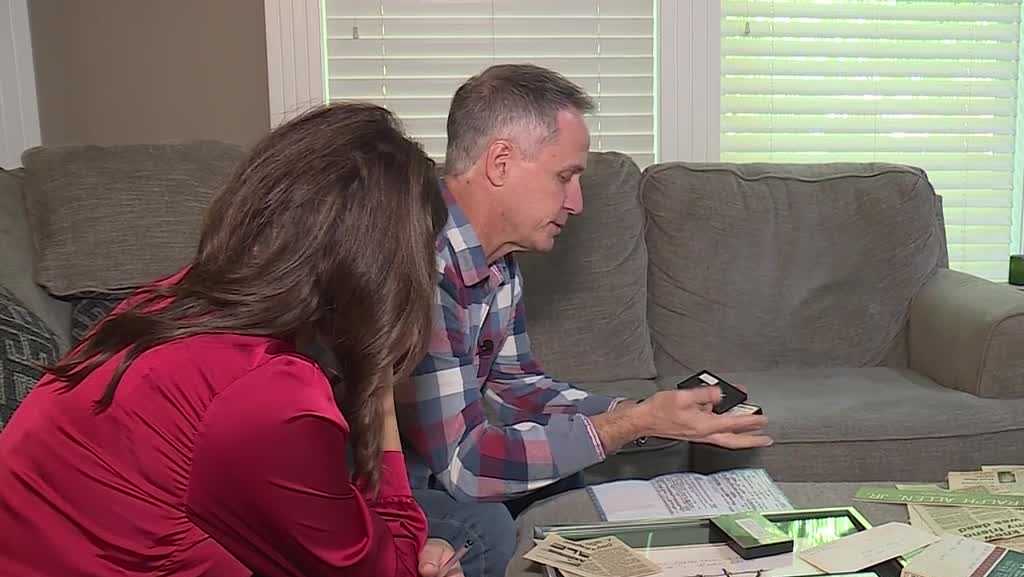
Kevin Patrick Allen Examines 1976 Wichita Sniper Attack in Film
"Everybody from that era is kind of their JFK or their 9/11." That is how Kevin Patrick Allen...

Iowa Pharmacy Worker’s License Revoked Over Alleged Pill Theft
168 tablets of alprazolam and 100 capsules of methylphenidate ER. Those are the numbers at the center of...