
Physicist Pierre-Élie Larré laid out a new theoretical map for binary superfluids on February 3, 2026, in a seminar at the Laboratoire de Physique Théorique de la Matière Condensée in Paris.
The talk, titled “Collective dynamics in binary superfluids: From dissipationless flow to dispersive shock waves,” centered on systems with two internal states — a spin mode atop the usual density mode — that appear in ultracold atoms and in nonlinear optics. Larré tied two major theoretical strands to recent experiments at the Laboratoire Kastler Brossel and the Institut d’Optique, according to the seminar announcement posted by the LPTMC.
Critical speed for a binary fluid of light
Larré’s first strand revisits Landau’s criterion for superfluidity. For a weak impurity, linear-response theory recovers the standard critical velocity. But for an impurity of arbitrary strength, the critical speed emerges from the loss of strong ellipticity in the stationary flow equations — a geometric condition on the equations themselves rather than an energetic one.
The analysis identifies two distinct dissipation channels: the emission of linear waves in both density and spin sectors, and the nucleation of vortex structures. The work, developed with C. Michel and N. Cherroret, is slated for a 2026 preprint.
Dispersive shock waves in a driven condensate
The second strand follows a 2022 experiment by A. Hammond, L. Lavoine, and T. Bourdel at the Institut d’Optique, where a coherently driven two-component Bose-Einstein condensate realizes tunable three-body interactions. In the ground state, the system reduces to a single field governed by the cubic-quintic nonlinear Schrödinger equation.
In one dimension, step-like initial conditions generate contact dispersive shock waves — nonlinear structures that have no analogue in the standard cubic equation. Larré, with T. Congy and P. Sprenger, applied modulation theory to characterize these waves in a 2026 preprint.
Self-propulsion via vortex shedding
Larré closed by turning to a single-component fluid of light. A 2025 experiment at LKB led by M. Baker-Rasooli, T. Aladjidi, T. D. Ferreira, A. Bramati, M. Albert, and Q. Glorieux observed a finite-mass impurity swimming against a two-dimensional superfluid flow by shedding vortex-antivortex pairs.
Reducing the impurity to its center of mass and modeling the vortices as point singularities, Larré showed how quantized vortices act as momentum-transfer agents — linking quantum fluid dynamics to the physics of active matter.
The seminar ran from 10:45 to 11:45 on February 3, 2026.

Missouri Multi-Agency Lab Opens Nov. 19, 300 Workers to Move In Early December
Three hundred state scientists and analysts will begin moving into Jefferson City's new multi-agency laboratory the first week...

Montgomery Academy Heads to Bayside Academy for Single A Semifinal Rematch
Montgomery Academy travels to Bayside Academy on Friday for a Single A semifinal rematch of the quarterfinal that...

Mississippi Democrats Demand Investigation After 60K Spike in ‘Inactive’ Voters
In majority-Black Hinds County, the acceptance rate fell to 34 percent from 60 percent in 2024, Associated Press...
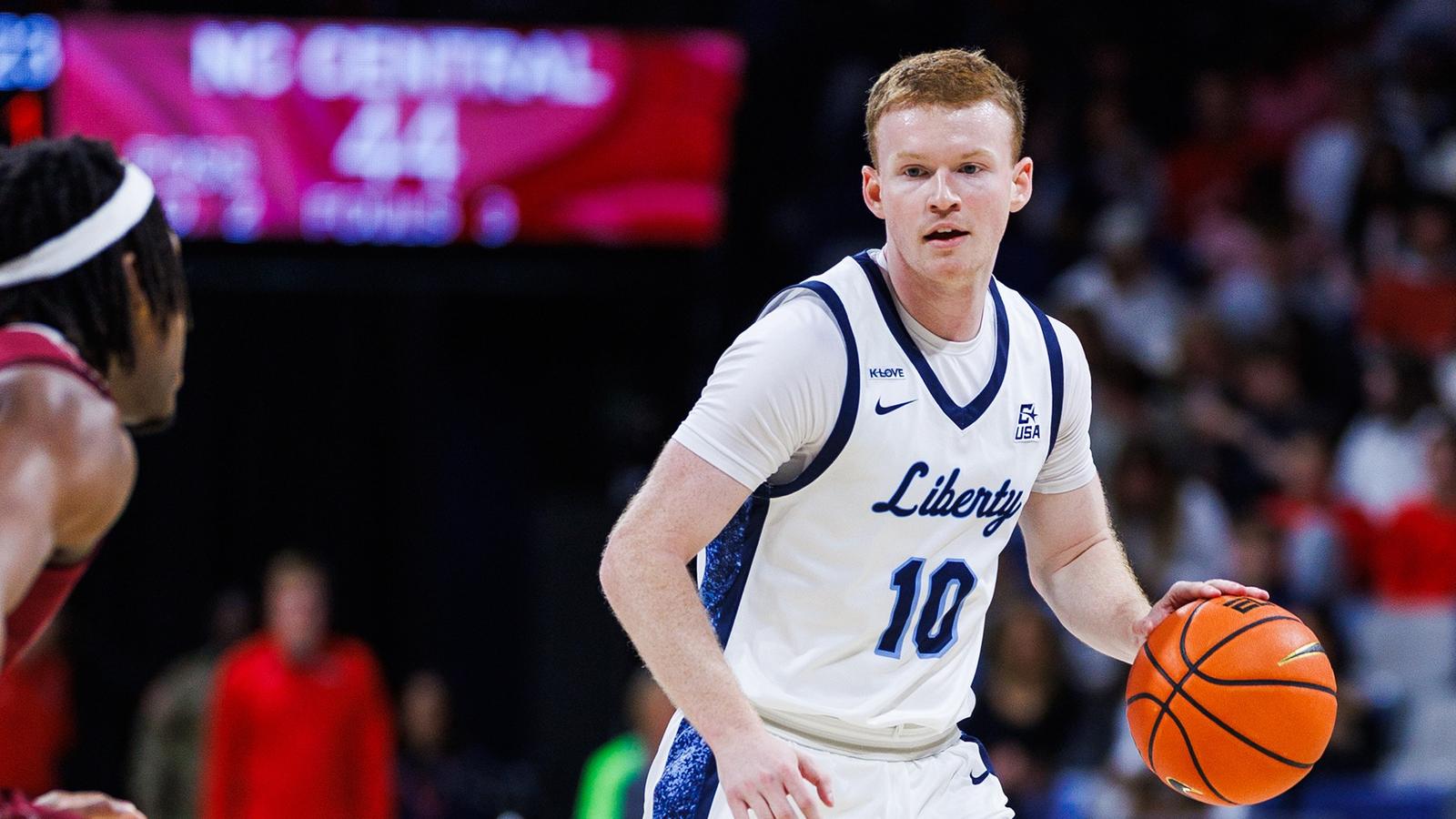
Liberty Flames, Rhode Island Rams Meet in Greenbrier Tip-Off Opener
Liberty (3-1) and Rhode Island (5-0) meet Friday at 4:30 p.m. ET in the Greenbrier Tip-Off River Division...