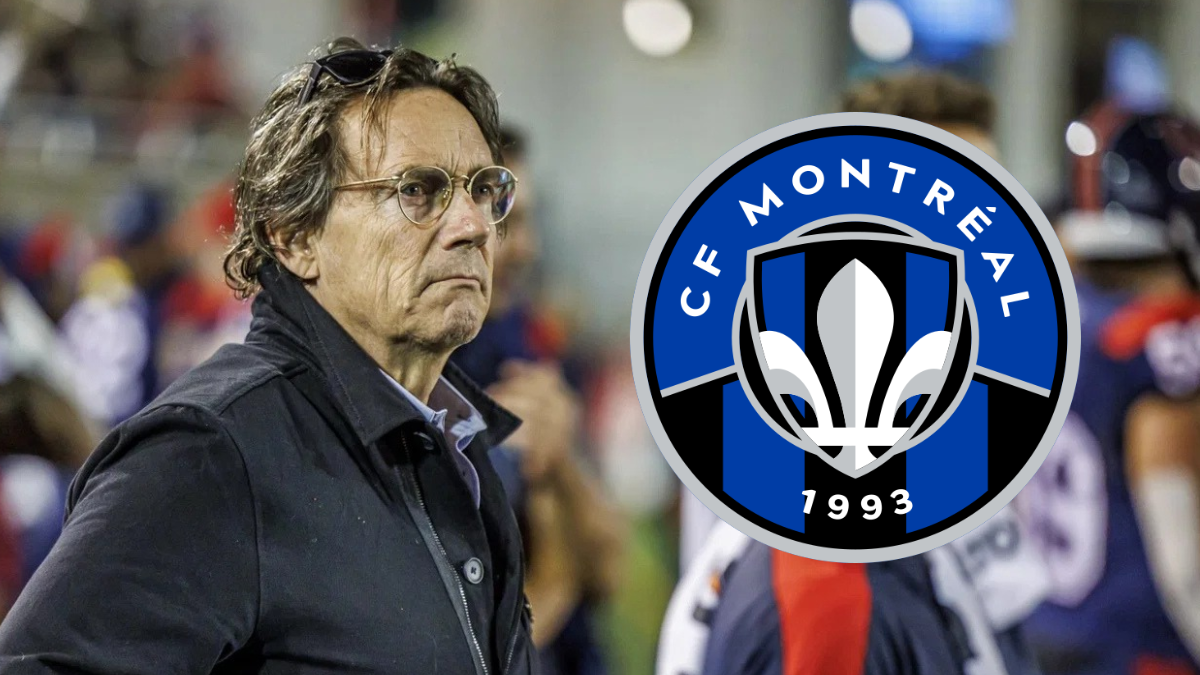
Pierre Karl Péladeau just watched his Montreal Alouettes lose a second straight Grey Cup on Sunday, and by Monday he was already fielding questions about a different kind of rescue mission — the one Joey Saputo triggered last week when he put CF Montreal up for sale.
The Quebecor chief executive, fresh off launching a $31 billion bid for rival telco TELUS, told Radio-Canada’s Le Téléjournal Grand Montréal he would not rule out buying the Major League Soccer club, but he insisted the math has to work.
“I think it’s a little premature to answer yes or no, because there’s a process that’s going to be started, and then we’ll see how it goes,” Péladeau said. “If necessary, we’ll do what’s necessary to get interested, and determine the future.” Canadian Soccer Daily reported the exchange Tuesday.
The valuation gap is stark: CF Montreal carries a price tag of roughly $440 million (CAD $627.88 million), a rounding error beside the TELUS takeover. Yet the soccer club’s stadium problem is immediate. The Saputo family also owns Stade Saputo, the 19,619-seat venue the team calls home, and any buyer would likely need to acquire the real estate too — or negotiate a lease with the sellers.
Geoff Molson, whose family owns the Montreal Canadiens and the Bell Centre, struck nearly the same cautious tone last week. “At the moment, I don’t have much to say on the subject, except that we’ll have to look at it and see where it leads us,” Molson said. “It’s day one, and I prefer to declare my intentions when it’s a little more behind us.”

Both men are running out of time. Saputo has warned the franchise could leave Montreal if a local buyer does not materialize “in a reasonable period of time,” and the league’s planned switch to a winter calendar — aligning with European seasons — compresses the window for a stadium solution.
The Alouettes, meanwhile, face their own venue crisis. McGill University’s Percival Molson Memorial Stadium is aging, and the CFL’s move to a 100-yard field in 2025 will require modifications the current site may not easily accommodate.
Stade Saputo, sitting a few kilometers away, could host the Als in summer while CF Montreal shifts to a winter schedule — but only if the soccer-specific stadium is retrofitted for the wider, longer Canadian field.
Olympic Stadium offers a third path. The Big O is undergoing hundreds of millions of dollars in renovations and is expected to reopen in 2028. CF Montreal has held talks to move there permanently, and a joint tenantship — soccer in winter, football in summer — would be administratively cleaner under a single owner.
A sports-finance analyst who has advised North American franchise sales said that if one owner controls both teams and both schedules, Olympic Stadium becomes a year-round asset instead of a seasonal headache. But the capital call is massive: stadium retrofit, league expansion fees, operating losses — you’re writing nine-figure checks before the first ticket scans.
Quebecor already owns the Quebec Remparts of the QMJHL and the Centre Vidéotron, the arena at the heart of its bid to lure the NHL back to Quebec City. The company also holds a non-compete clause that has complicated a separate group’s push for a CFL expansion franchise in the capital.
Adding CF Montreal would give Quebecor a second major-league foothold in the province’s largest market, but it would also mean absorbing MLS’s collective bargaining obligations, a new collective agreement ratified only in 2025, and the league’s revenue-sharing model that redistributes national media money — currently about $250 million annually across 29 clubs.
Ashkan Karbasfrooshan, the entrepreneur who publicly declared his own bid for the club last week, represents the only named buyer willing to move quickly. His group has not disclosed financing details, and league sources say MLS vetting typically takes 60 to 90 days once a formal offer is submitted.
The next milestone is procedural: Saputo’s advisors are expected to launch a formal data room for qualified bidders within days. Until a term sheet lands, Péladeau and Molson can afford to wait — but Montreal’s soccer fans cannot. The 2026 FIFA World Cup matches at Olympic Stadium are less than two years away, and the city’s only MLS team still does not know who will sign the checks.
California DMV Bans Waymo Robotaxis From Freeways Over ‘Imminent Hazard
Three driverless Waymo taxis drove into a closed construction zone on U.S. 101 near Burlingame on Nov. 5....

Denver Council Committees Cancel Entire Thanksgiving Week Session
Denver City Council committees will not meet for the entire week of Thanksgiving, leaving a stack of routine...

Tarleton State Volleyball’s Dinh, Davis Earn All-UAC Honors
Tarleton State middle blockers Alyssa Dinh and Onita Davis collected All-United Athletic Conference honors Wednesday, the league office...

Florida Leaders Will Address Amendment 3 in Regular Session Starting March 2
Florida’s new legislative leaders slammed the door on Gov. Ron DeSantis’s push for a special session Tuesday, telling...