The announcement on Nov. 15 set off alarm across eastern Iowa because the explosion is expected to send a plume of lead-contaminated dust beyond the plant boundary.
Lead is a toxin with no safe level of exposure, posing particular risk to children and pregnant women. The plant, which spans 19,000 acres outside Middletown, has been the Army’s main facility for packing heavy artillery since World War II and was added to the EPA’s National Priorities List in 1990 after tests found TNT, DDT and RDX in nearby wells Iowa Public Radio reported.
Workplace dangers span decades
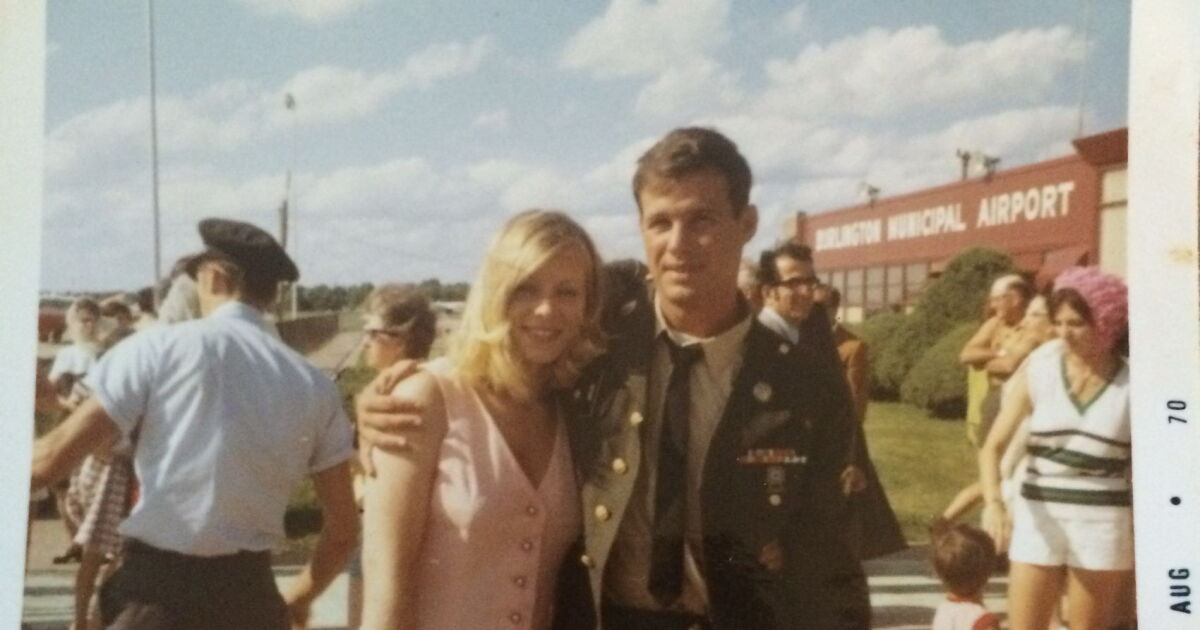
Cheryl Black worked at the plant during the Vietnam War, sewing pouches for landmines on the assembly line. “Sometimes accidents happened,” she said. “Severe ones.” She recalled an explosion that threw her across the room and burned off her hair; the woman beside her lost a hand. “There was a real rush on to produce as much as we could,” she told Iowa Public Radio.
Her sister, Georgia Black, said planned detonations were once announced informally. “The way we found out about a planned detonation was my dad coming home and telling us: ‘Tomorrow you might hear a blast. It’s intentional. Don’t bother calling the office, the secretary, trying to find out if I’m okay,’” she told Iowa Public Radio.
Historic practices triggered Superfund designation
Historic practices — open burning of explosives, burying debris, uncontrolled wastewater disposal — led to the Superfund designation. An estimated 100 people drew drinking water from private wells within three miles of hazardous substances, according to the NPL listing. Cleanup has continued for more than 35 years, including removal of waste from the site’s nuclear weapons program, which operated from the 1940s through 1975.
About $360 million has been paid to Iowa workers under a 2000 compensation law for nuclear weapons workers, according to U.S. Department of Labor data cited by Iowa Public Radio.
Their father, George Black, worked at the plant from the 1950s until he died of cancer in 1983. He often came home wearing a radiation meter. “There was a heavy culture of silence about what people did at the plant,” Georgia Black told Iowa Public Radio.
Recent safety record
Michele Evermore, a researcher who wrote her master’s thesis on the plant’s history, said she interviewed Bob Anderson, who developed non-Hodgkin’s lymphoma in 1987 after working there from 1968 to 1973. Anderson reported being told to keep nuclear work secret, The Gleaner reported.
Cheryl Black details Vietnam-era assembly work
Cheryl Black worked summers in 1966 and 1967 while attending high school and returned in 1969 after graduating, Iowa Public Radio reported. She joined a line of women operating sewing machines to stitch pouches from heavy olive drab fabric that were later stuffed with explosives. The plant expanded during the Vietnam War to meet production demands, according to Iowa Public Radio.
“There was a real rush on to produce as much as we could,” she told Iowa Public Radio. The Army later acknowledged in a news release that “making ammunitions is a dangerous business,” the Des Moines Register reported.
Senate inquiry uncovered hidden nuclear program
In 1997, former worker Bob Anderson wrote to Sen. Tom Harkin’s office about nuclear weapons work at the plant, Michele Evermore wrote in her 2016 master’s thesis. A DOE staffer initially said they had no records of nuclear weapons being manufactured in Burlington.
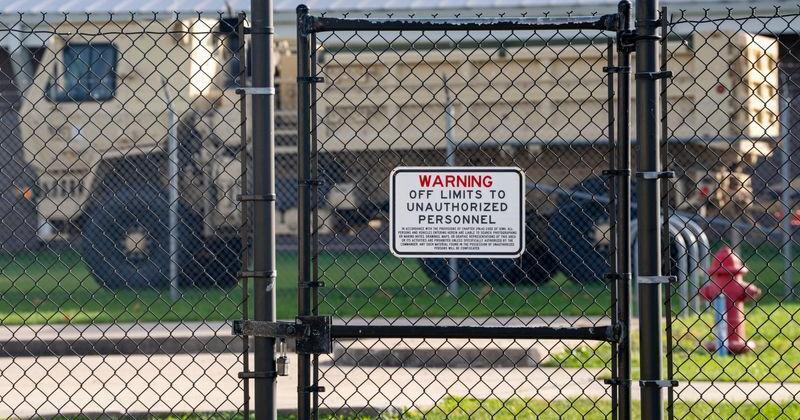
Months later, during a routine outreach trip to the plant, Tyler noticed a poster about building nuclear weapons and was told, “Oh yeah, we made those bombs here,” Evermore wrote. Tyler then received a “windshield tour” and saw a dome-shaped building designed to collapse inward in an explosion. Harkin later toured the facility and held a town hall in 2000, Evermore wrote.
Court clearance now required
The detonation is now scheduled for Nov. 25, contingent on federal court approval. The state of Iowa has launched a resource page with public health guidance and information for livestock producers. “I really do want there to be more transparency, not just about this, but about the other materials that have been on the reservation of that plant for decades,” Georgia Black told Iowa Public Radio.

How to File for Divorce in Maine: Residency Rules, Service, and the 60-Day Wait
Filing for divorce in Maine requires establishing a legal connection to the state, serving the other spouse, and...

Walk off Charities Secured a State Budget Allocation for Youth Baseball Fields
Walk Off Charities secured a state budget allocation for youth baseball fields as Ballard Partners pulled in millions...
Journal of Integrated Pest Management Details Cochineal Insect Ecology
Roughly 70,000 cochineal scale insects are required to produce just 450 grams of the brilliant red dye harvested...

Central Arkansas Beats North Florida 80-66 With 32-0 Run
Central Arkansas defeated North Florida 80-66 on Monday in Jacksonville, Florida, using a massive 32-0 first-half run to...