
“There are known health effects of iodine deficiency and that’s why we want to raise awareness of this,” said Dr. Sarah Bath, an associate professor in public health nutrition at the University of Surrey. Even replacing just a fifth to a third of dairy intake with plant-based milks, cheeses, and yoghurts could push iodine deficiency rates among teenage girls from 54% to 65%, according to new modelling published in the Lancet Planetary Health.
The study, conducted by researchers at the University of Surrey and Queen’s University Belfast with contributions from University College Cork’s Cork Centre for Vitamin D and Nutrition Research, examined 289 plant-based products on the UK market—146 non-dairy milks, 76 yoghurts, and 67 cheeses. While most contained added calcium (61%) and nearly half had vitamin B12 (46%), only 19% were fortified with riboflavin and just 12% with iodine. In the UK, children get about half their iodine from dairy and adults about a third, yet there is no formal requirement for vegan alternatives to be fortified with micronutrients.
The Iodine Gap Hits Young Women Hardest
Iodine sits at the center of the researchers’ concerns. The trace element fuels the thyroid gland, which produces hormones regulating metabolism, growth, and brain development. More than half of UK teenage girls already have inadequate iodine intake, and the modelling shows that swapping a third of dairy for plant-based substitutes would drive that figure to 65% among girls aged 14 to 18, and from 32% to 42% among women aged 19 to 49. A complete switch to non-dairy alternatives would leave 80% of teenage girls and 72% of teenage boys with inadequate iodine levels.
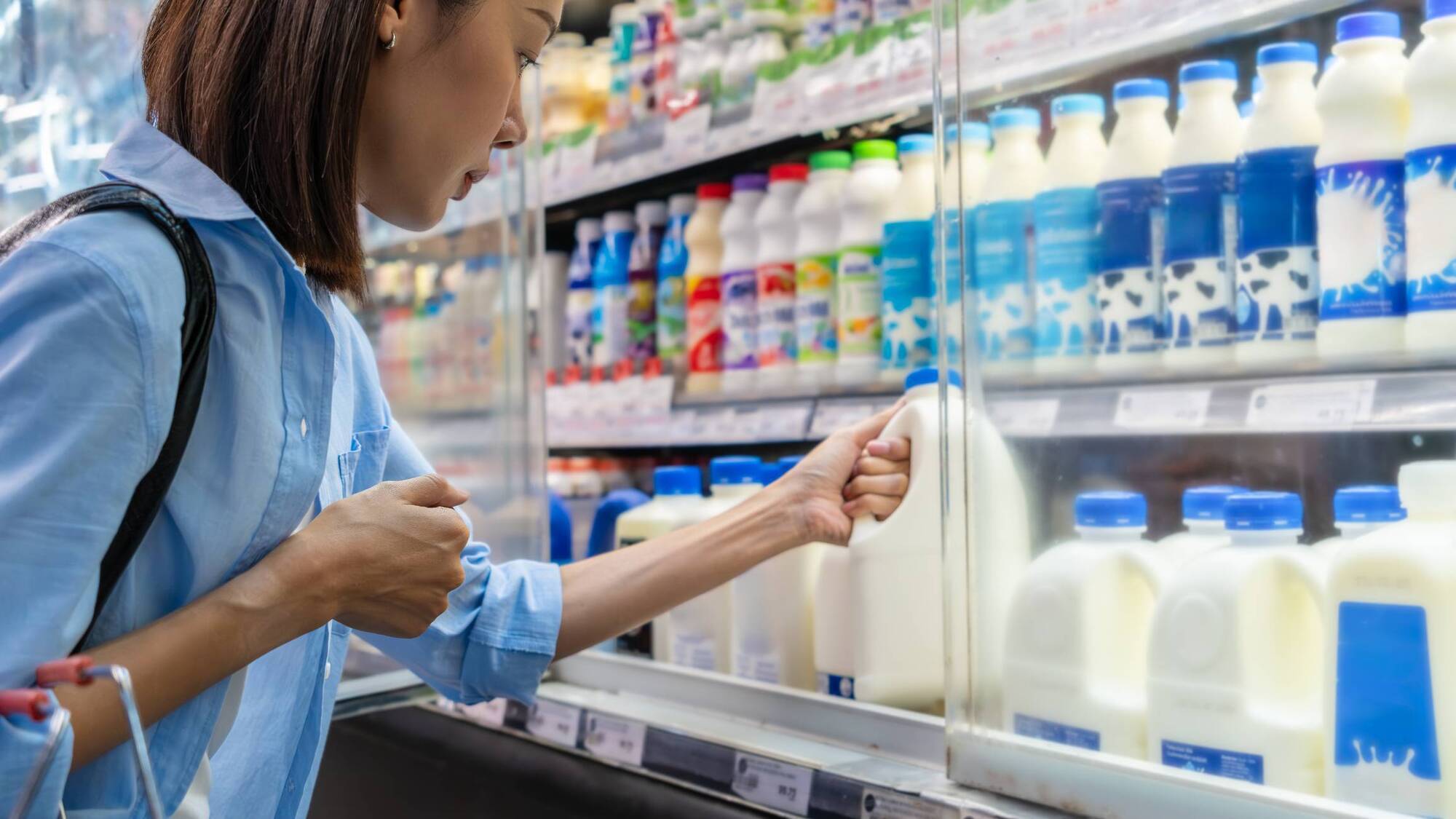
Calcium, riboflavin, and vitamin B12 also declined across the board. Replacing all dairy with plant-based products pushed inadequate calcium intake among boys aged 14 to 18 from 30% to 47%, and among girls the same age from 54% to 70%. For riboflavin, inadequate intakes in women aged 19 to 49 jumped from 29% to 50% under a full swap. Even a partial replacement—half of usual dairy swapped for plant-based items—drove riboflavin inadequacy in that group to 39%.
Fortification Varies Wildly by Brand
The research reveals a fragmented system of protective measures. Some major brands already add nutrients: Danone’s core Alpro range includes calcium, iodine, and vitamins B2 and B12, while Oatly fortifies all its unflavoured, non-organic oat drinks with iodine, calcium, riboflavin, and vitamins B12 and D. But organic drinks typically aren’t fortified, and the majority of products on shelves lack iodine entirely.
Nichola Ludlam-Raine, a registered dietitian and spokesperson for the British Dietetic Association, said that for anyone choosing plant-based milk, she would recommend checking the label and choosing one fortified with iodine, such as Alpro. She added that organic drinks aren’t fortified with added nutrients, so they’re unlikely to provide iodine.
Ludlam-Raine cautioned that the study raised population-level concerns but didn’t mean every person switching would become deficient, since overall diet matters too. She also warned against relying on seaweed or kelp supplements for iodine, noting the content can vary widely and may be excessive.
Policy Makers Face a Balancing Act
The findings land as dietary guidelines push for reduced animal product consumption. Dr. Katie Nicol, a research fellow at the University of Surrey and co-author of the study, emphasized that nutrition policy must evolve alongside environmental targets without compromising public health. Fortification of foods is one way that this could be achieved. However, government policy is needed to make this happen.
Professor Mairead Kiely of the Cork Centre for Vitamin D and Nutrition Research warned that vulnerable populations face the highest risk. Iodine and calcium are among the nutrients already deficient in the regular diets of people who avoid dairy, making them a public health concern. Some population groups, notably adolescents and women of reproductive age, already have inadequate intakes of calcium, iodine and riboflavin.
The researchers found that requiring all non-dairy alternatives to be fortified with iodine would prevent average declines, and adding iodised salt to bread helped reduce the proportion of teenage girls with inadequate intake in modelled scenarios.
“This research underlines the importance of appropriate fortification as diets become more plant-based,” said Caroline Orfila Jenkins, vice-president for science and technology at Oatly.
Currently, shoppers must decide which dairy products to buy. With plant-based alternatives growing in popularity—though some consumers are already shifting back—the gap between fortified and unfortified options remains a quiet public health risk, particularly for the young women who need these nutrients most during critical developmental years.

Gene Therapy Reduces Seizures by 90% in Epilepsy Clinical Trial
Three adults whose epilepsy had resisted at least two anti-seizure medications saw their monthly seizures fall by more...

Gaza Engineer Builds Wind Turbines From Scrap to Power Families
Above a maze of tents in a crowded displacement camp in Khan Younis, homemade wind turbines built from...

Mantle Currents May Explain the Grand Canyon’s Missing History
At the Grand Canyon, Cambrian sandstone about 540 million years old sits directly on crystalline basement up to...

108-Year-Old Theologian and NZ’s Oldest Man Sir Lloyd Geering Dies
Sir Lloyd Geering, the theologian who became the only man in New Zealand to stand trial for anti-Christian...