
A single 65-year-old with $600,000 in a traditional IRA and $2,800 a month in Social Security can spend roughly $4,800 a month under Warren Buffett’s famous 90/10 allocation — and owe the IRS only about $1,000 for the year, according to an analysis published by 24/7 Wall St. The same plan carries one dangerous mistake and a hard deadline at age 73 that decide whether it survives a full retirement.
-
The Bottom Line:
- Buffett’s 90/10 split — 90% in a low-cost S&P 500 index fund, 10% in short-term government bonds — generates about $4,800 a month in total spending power for this retiree when combined with Social Security.
- The effective federal tax rate on the cash flow is under 2%.
- The $60,000 Treasury-bill cushion is the load-bearing wall: spend it in year one and the plan becomes 100% equities with a fixed withdrawal — a different, riskier strategy.
What Buffett Actually Said — and Who It Was For
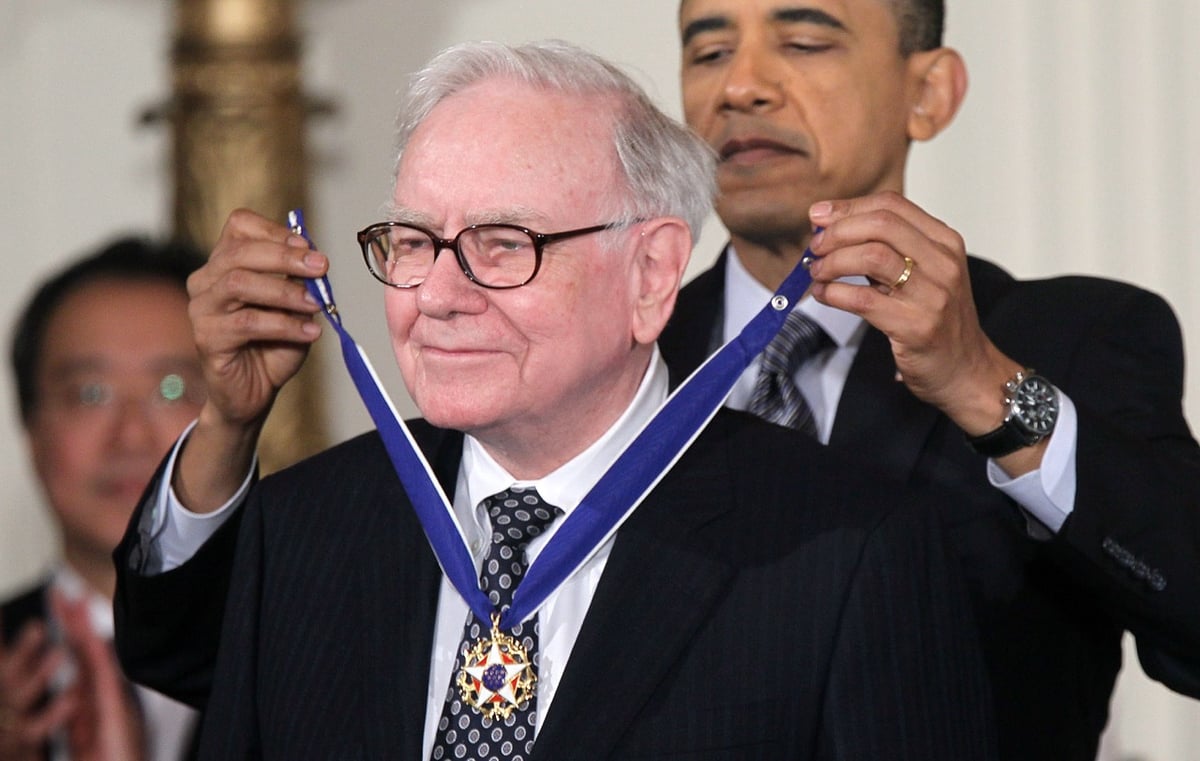
In his 2013 letter to Berkshire Hathaway shareholders, Buffett told the trustee of his estate to keep things simple. According to 24/7 Wall St., his instruction “could not be more simple”: allocate 10% of the cash to short-term government bonds and 90% to a very low-cost S&P 500 index fund. No stock picking, no bond ladder, no annuity. The catch is that this was advice for a widow who would never need to touch the principal. Most retirees this year are not in that position, and 24/7 Wall St. set out to test the formula against a far more common profile: someone who must spend from the account every month.
“Put 10% of the cash in short-term government bonds and 90% in a very low-cost S&P 500 index fund.” — Warren Buffett, 2013 letter to Berkshire Hathaway shareholders, as quoted by 24/7 Wall St.
The ETF Buffett has cited repeatedly is the Vanguard S&P 500 ETF (VOO), which ended Tuesday at $704.78 per share and distributed $7.43 per share in dividends over the trailing 12 months — a yield of roughly 1.05%. Three-month Treasury bills yielded 4.21% as of Monday, per Treasury data. The Motley Fool notes that since VOO’s inception in September 2010 it has delivered annualized returns of 14.94%, and that the S&P 500 has averaged roughly 9.98% annually since 1928. The Motley Fool adds that the S&P 500 has returned about 10.7% annually with dividends reinvested since 1957, and that roughly one-third of its total return over the last century came from reinvested dividends.

How the $4,800 a Month Actually Comes Out
Following the 90/10 rule to the letter, the IRA holds $540,000 in the S&P 500 fund and $60,000 in Treasury bills. The portfolio’s own income is modest: about $5,670 a year from the stock side and $2,530 from the bills, roughly $8,200 total, or $683 a month before anyone sells a share. Buffett’s point was never that dividends would carry a retiree — it was that the stock side would compound faster over a long retirement while the 10% in bills acts as a cushion so the retiree is never forced to sell stocks in a bad year.
The spending plan starts with the standard 4% withdrawal: $24,000 a year, or $2,000 a month, from the $600,000 IRA. Add the $2,800 Social Security check and the retiree has $4,800 a month, $57,600 a year. In practice, the $8,200 of dividends and interest covers about a third of the $24,000, and the remaining $15,800 comes from selling roughly 22 shares of the index fund annually at current prices. In a down year, the plan draws the full $24,000 from the $60,000 bill cushion instead — enough to cover two and a half bad years. Push the withdrawal to 5% ($2,500 a month) and history still supports it over 30 years; at 6% ($3,000 a month), the worst 30-year stretches on record run out of money.
The Tax Twist That Surprises People
The IRS decides how much Social Security is taxable by adding other income plus half the benefit: $24,000 of IRA withdrawals plus half of $33,600 equals $40,800. Above the $34,000 line for a single filer, $10,280 of the $33,600 benefit counts as income, leaving $23,320 tax free. Total federal income is therefore $34,280. Against that, the 2026 standard deduction for a single filer is $16,100, plus a $2,050 bump for being 65 or older, plus the new deduction of up to $6,000 for seniors under the tax law passed in 2025 — available through 2028 and fully available here because income sits well under the $75,000 phaseout. Those deductions total $24,150, leaving taxable income of $10,130, all in the 10% bracket. The federal bill: about $1,013 for the year — under 2% effective on cash flow. Most states don’t tax Social Security at all.
Tax-Free Conversions Avoid Mandatory Withdrawals
One date belongs on the calendar. Starting at 73, required minimum distributions force annual withdrawals from a traditional IRA; on an account grown to $800,000, the first RMD is about $30,200. The move advisors suggest for ages 65 to 73 is converting a slice of the IRA to a Roth each year, filling the rest of the 10% and 12% brackets — roughly $22,000 a year for this retiree, taxed at 12% or less now instead of a higher rate later. Roth money has no required withdrawals and comes out tax free.
Where the Plan Is Weak
Spend that cushion on a kitchen remodel during the first year and the strategy shifts to 100% stocks with a fixed withdrawal.
Warren Buffett consistently expressed confidence in America’s economy and the long-term outlook for the U.S. stock market as a whole. In 2021 in his annual letter to Berkshire shareholders, he wrote, “never bet against America.” Buying an S&P 500 ETF is a good way to bet on America.

What This Means for Household Budgets
Disclaimer: The information provided in this article is for educational and market analysis purposes only and does not constitute financial, investment, or legal advice. Always consult with a certified financial professional before making investment decisions.

Top 2027 Recruit Cherif Millogo Commits to Kentucky Basketball
Kentucky basketball's 2027 class just got a lot taller—and a lot harder to score on inside. On Wednesday,...

Kansas voters approve 2026 amendment to explicitly ban noncitizens from voting, KWCH reports
Kansas voters approved a constitutional amendment Tuesday that rewrites the state's voting qualification language to state explicitly that...

Starr’s Cave Nature Center hosts stewardship day and cooking program
Volunteers will fan out across Starr's Cave Nature Center on November 14 with trash bags, work gloves, and...

Indiana Democrats Break Republican Supermajority in Statehouse Election Results
Indiana Democrats won 15 House seats Tuesday, ending the Republican supermajority that had dominated the statehouse for over...