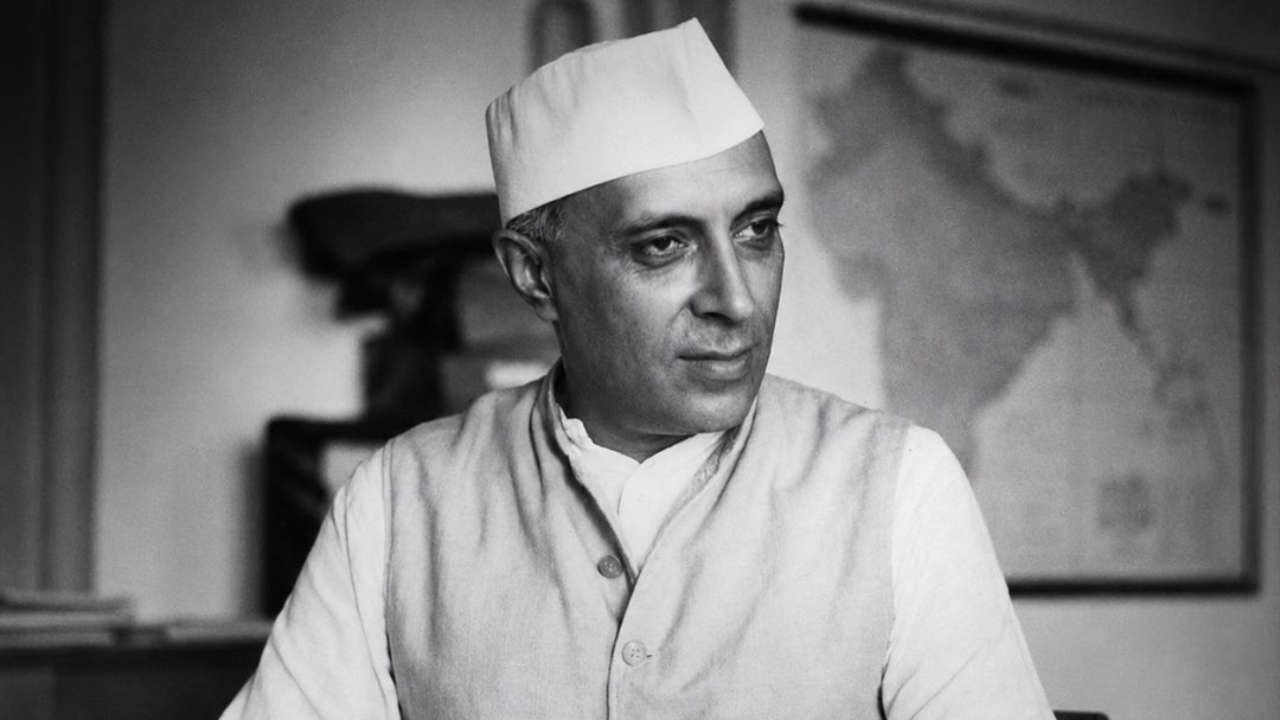
India’s political leaders across the spectrum gathered on Saturday to commemorate the 137th birth anniversary of Jawaharlal Nehru, the nation’s first prime minister.
The day, which also serves as Children’s Day across the country, saw tributes from high-ranking officials including Prime Minister Narendra Modi and Leader of the Opposition Rahul Gandhi, The Times of India reported.
While the day is marked by school activities and government events, the tributes highlighted the enduring, and often debated, legacy of the man known popularly as “Chacha Nehru.”
“Paying tribute to former PM Pandit Jawaharlal Nehru on his birth anniversary,” Prime Minister Modi wrote in a post on X, according to The Times of India.
The architect of a modern state
The tributes reflected on the formative years of the Republic, a period defined by the massive undertaking of building democratic institutions from the ground up. Defence Minister Rajnath Singh recalled Nehru’s role in the independence movement and his early leadership.
“His contribution to India’s freedom struggle and his leadership as the first Prime Minister of independent India left an enduring imprint on the formative years of our nation,” Rajnath Singh said in a post on X.
Nehru’s administration was characterized by a focus on self-reliance and industrialization. According to The Hindu, his government established the Planning Commission in 1950 and utilized Five-Year Plans to steer economic development, specifically supporting large infrastructure projects and public-sector industries.
His commitment to the next generation was also institutionalized. The Hindu said that his plans ensured free and compulsory education for children, and he established the Children’s Film Society of India in 1955 and the National Bal Bhawan in 1956.
Contrasting visions of democracy
The commemoration also provided a platform for modern political figures to frame Nehru’s ideals within today’s political climate. Rahul Gandhi described the former leader as the “jewel of India” and emphasized the responsibilities of citizenship.
“Their dream of a modern, scientific, progressive, and self-confident India remains our inspiration today,” Gandhi said.
However, the legacy of Nehru remains a subject of intense scrutiny and differing interpretations among historians and political analysts. While some see him as the indispensable architect of a secular democracy, others point to the complexities of his era.

Writing for Telegraph India, Ramachandra Guha discussed the complexities of Nehru’s tenure, citing Walter Crocker’s 1966 work, Nehru: A Contemporary’s Estimate. Crocker suggested that Nehru’s refusal to step down while in good health might have helped the cause of parliamentary democracy by allowing for a smoother transition of power.
In a different vein, Scroll.in reported on perspectives that view Nehru’s writings as a guide to understanding the struggles against colonial-style governance. The outlet said that Nehru’s descriptions of the British Raj as a “police conception of the state” resonate with contemporary debates regarding civil liberties and the role of the state.
A legacy of service and struggle
Nehru’s path to the premiership was shaped by decades of political agitation. He first met Mahatma Gandhi in 1916 during the Lucknow Session of the Congress, a meeting that, according to The Hindu, deeply influenced his approach to the freedom struggle.
He became a central figure in the non-cooperation movement in 1920 and eventually presided over the 1929 Lahore Session of the Indian National Congress, where the party adopted the goal of Purna Swaraj, or complete independence.
Even before his national leadership, Nehru engaged in local governance. The Hindu reported that he was elected President of the Allahabad Municipal Corporation in 1924, where he focused on sanitation, healthcare, and education.
The tradition of marking his birthday as Children’s Day was established after his death. Following his passing from a heart attack in 1964, Parliament unanimously passed a resolution to observe November 14 as Bal Diwas, or Children’s Day, to honor his affection for the nation’s youth.
The United Nations has also recognized the importance of this date, having declared November 20 as Universal Children’s Day in 1954, a date India initially observed before transitioning to Nehru’s birth anniversary, The Times of India reported.
Nehru died in office on May 27, 1964, at the age of 74.
Keep reading
Scientists Discover Hidden Body Movement Map in Mouse Brains Using Optical Imaging
“Finding this map was unexpected,” said Elizabeth Hillman, PhD, St. Jude Department of Imaging Sciences chair. Scientists have...

US Measles Deaths Rise to 10 as Outbreak Threatens Elimination Status
Ten people have died from measles-associated complications in the United States this year following new reports from Pennsylvania...
NIR Family Poverty Incidence Drops to 14.3% in 2025
Negros Island Region families saw poverty rates drop significantly in 2025, according to the latest data from the...

Omalizumab Shows Similar Early CSU Improvement to Remibrutinib
“By post hoc indirect comparison, improvements in disease activity appeared to be similar for omalizumab vs remibrutinib during...