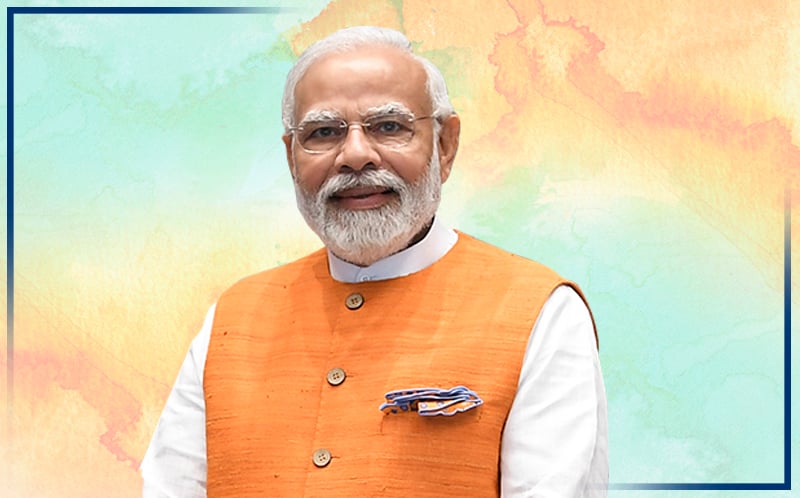
Prime Minister Narendra Modi arrived in Chennai on October 11, 2026, to launch development projects exceeding ₹13,000 crore across Tamil Nadu. The visit features the opening of Chennai Metro Phase 2’s first operational stretch, multi-sector transport investments, and scientific inaugurations alongside state leaders.
State leadership welcomed the federal delegation at the airport, setting the stage for a rollout spanning urban transit, maritime logistics, rail networks, and scientific research. Governor R.V. Arlekar, alongside Tamil Nadu Chief Minister C. Joseph Vijay, ministers, and leaders from the Bharatiya Janata Party and the All India Anna Dravida Kazhagam—which heads the National Democratic Alliance in the state—personally received the Prime Minister at Chennai Airport upon his arrival from Delhi.
Chennai Metro Opens Poonamallee-Vadapalani Stretch
The centerpiece of the transportation push is the inauguration of the Poonamallee-Vadapalani stretch of Phase II of the Chennai Metro Rail Project. Built at a cost of around ₹4,900 crore (approximately US$584 million), the 14.6-kilometre section represents the first operational segment of the broader 118.9-kilometre expansion.
The corridor incorporates a distinctive 3.7-kilometre double-decker structure and advanced signaling systems engineered to support driverless train operations. To mark the opening, the Prime Minister undertook a metro ride from Porur Bypass Station to Poonamallee Bypass Station and back alongside Tamil Nadu Chief Minister C. Joseph Vijay, marking their first joint public appearance since Vijay assumed office in May.
Prior to his transit and project events, the Prime Minister performed darshan and pooja at the Jalakandeswarar Temple in Chennai.
National Highway and Railway Investments Across Tamil Nadu
Beyond the urban rail network, the infrastructure package incorporates highway projects valued at approximately ₹3,700 crore (around US$441 million). The Prime Minister inaugurated the 36-kilometre, four-lane Vadugapatti–Therkuvenganallur section of NH-744 alongside the 30-kilometre, four-lane Madurai Ring Road section of NH-744A to alleviate traffic congestion around Madurai and improve links to industrial, commercial, and pilgrimage centres. To ensure a smoother journey around the town by offering an alternative route, foundation stones were additionally laid for the four-lane Thiruvarur Bypass situated on the Nagapattinam–Thanjavur portion of NH-83.
In the rail sector, projects worth over ₹750 crore were dedicated to the state to improve passenger facilities, strengthen rail connectivity, and increase network capacity. According to SN Narain, Chief Public Relations Officer for Southern Railway, these initiatives include five redeveloped Amrit Bharat stations—Ambasamudram, Palani, Namakkal, Paramakkudi, and Vellore Cantonment—upgraded at a total cost exceeding ₹70 crore. The 23-kilometre Karaikal-Peralam railway line was dedicated at a cost of more than ₹550 crore to facilitate the movement of commodities like coal, fertilizers, and food grains, alongside three rail flyovers built in and around Coimbatore for over ₹120 crore to ease level crossing congestion.
Port Modernization and Petroleum Facility Expansion
Maritime and industrial capacity formed another pillar of the investment package. At Chennai Port, four completed infrastructure upgrades were inaugurated: a paved storage yard, four export-import warehouses, an upgraded cruise terminal designed to handle higher passenger volumes simultaneously, and a seafarers club providing modern welfare and recreational facilities.

V.O. Chidambaranar Port saw the launch of eight development projects aimed at expanding cargo and container handling while supporting cleaner maritime energy transitions. At Kamarajar Port, Coal Berth-3 was opened, and capital dredging works for Container Terminal Phase-I, Stage-II were initiated. A foundation stone was laid for the Group II/III Lube Oil Base Stocks project at the Manali refinery of Chennai Petroleum Corporation Limited, valued at approximately ₹1,620 crore (around US$193 million) with an annual production capacity of 270,000 metric tonnes.
Scientific Research Milestones at IIT Madras
The Prime Minister dedicated the Sudha Gopalakrishnan Brain Centre at IIT Madras, taking a walkthrough of the facility during his visit. Alongside the inauguration, a global scientific mission was launched to map more than 100 human brains into three-dimensional atlases at cellular resolution across the human lifespan, extending from the fetal stage to old age.
Governor Rajendra Vishwanath Arlekar noted that the broader infrastructure push reflected a commitment to modern transport and public convenience, while describing the brain mapping initiative in strong terms. The Prime Minister also released C-STROKE, a human ischemic stroke atlas featuring over 1,000 annotated microscopic sections from a stroke-affected brain intended to help researchers identify therapeutic targets.
Prime Minister Attends School Jubilee Celebrations
During the latter part of the day, the Prime Minister took part in the Golden Jubilee celebrations held for the Jaigopal Garodia Hindu Vidyalaya Matriculation Higher Secondary School located in Chennai, where he also gave a speech. The institution marked five decades of educational service characterized by academic excellence, cultural values, and its guiding motto, Sa Vidya Ya Vimuktaye,
meaning knowledge that liberates.
The high-level political activity in the city also included Congress leader Rahul Gandhi arriving for a separate students’ interaction event titled Maanavargalin Kural
at Island Grounds and a luncheon meeting with Chief Minister C. Joseph Vijay at his Neelankarai residence.
More on Joseph Vijay
Worth a look

US Inflation Expected to Rise in September on Higher Gasoline Prices
Higher gasoline prices pushed overall US inflation up 0.6% in September, while core price pressures continue a gradual...

UK Pensions Face Inheritance Tax Overhaul From April 2027
Millions of UK families face a tax policy change as unused pensions and death benefits enter the inheritance...

Indonesia’s House of Representatives (Commission VIII DPR RI) and government ministers finalized
Indonesia’s House of Representatives (Commission VIII DPR RI) and government ministers finalized the Hajj Organising Costs, known as...

Poonawalla Fincorp Posts Fivefold Net Profit Jump in Q2
Poonawalla Fincorp reported a significant increase in net profit to ₹375 crore for the second quarter of financial...