Governor Jared Polis filed a second presidential disaster request on Saturday as the same southwestern counties were still waiting on the first one, creating a rare dual-track emergency for a region hit by historic flooding twice in eight days.
The move shows a bureaucratic collision: the National Weather Service treats the storms that began October 22 and October 29 as distinct events, forcing Colorado to submit two separate Major Disaster Declaration requests to FEMA. But the water did not read the federal rulebook. The second storm struck communities already saturated and damaged by the first, compounding the wreckage across Archuleta, Conejos, La Plata, Mineral, Montezuma, and Rio Grande counties.
"Coloradans living in the southwestern part of our state experienced unprecedented floods." Hundreds of families have lost homes, roads and bridges have been washed away, and communities are facing a large recovery effort as winter approaches,” Polis said in the formal request. “Approving one without the other would cause confusion, create unnecessary barriers to recovery, and leave families, businesses and communities without the assistance they need to rebuild.”
Two storms, one shattered corridor
The initial system, running October 22 through 25, pushed the San Juan River in Pagosa Springs to its second-highest crest since 1911 and drove the Rio Grande to roughly 11,000 cubic feet per second, surpassing its 1949 record, according to the congressional delegation’s letter to President Trump. That event alone damaged approximately 700 homes across Archuleta and Rio Grande counties, destroying 16 homes and six commercial buildings.
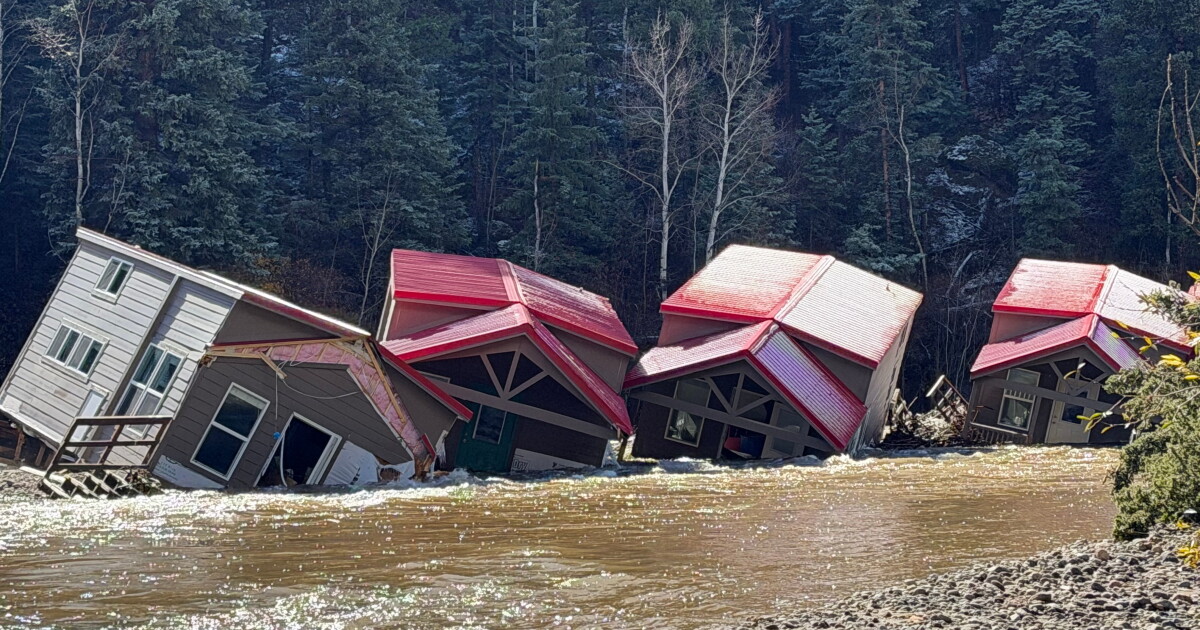
Before assessment teams could finish documenting that damage, the second storm arrived October 29. In many gauges it produced higher water levels than the first round. Joint state-federal teams have now validated $28.5 million in Public Assistance-eligible damage from the second event alone, along with 271 primary homes destroyed or deemed uninhabitable and 136 more with major damage across the four counties requesting Individual Assistance, the governor’s office reported.
At the height of the flooding, more than 6,300 residents were under mandatory evacuation orders and over 3,300 homes were inaccessible. As of late October, roughly 100 homes in Archuleta County remained cut off, meaning the true toll is still rising.
What the declarations would unlock
The second request, submitted Saturday, seeks Public Assistance (Categories A through G) for six counties — Archuleta, Conejos, La Plata, Mineral, Montezuma, and Rio Grande — covering debris removal, emergency protective measures, and permanent repairs to roads, bridges, water systems, public buildings, utilities, and parks.
It also asks for Individual Assistance for Archuleta, Conejos, La Plata, and Rio Grande counties, which would provide housing aid, crisis counseling, disaster unemployment assistance, and legal services to displaced households. A statewide Hazard Mitigation Grant Program request aims to fund flood-proofing infrastructure, streambank stabilization, and other long-term risk reduction.
The first request, filed October 31 on an expedited basis while assessments were still underway, initially covered only Archuleta and Rio Grande counties for Public Assistance and Hazard Mitigation. Polis told Denver7 the state would add counties as damage assessments were completed.
That first request has already validated nearly $27 million in PA-eligible costs in those two counties alone — $10.6 million in roads, bridges, and culverts; $2.44 million in public utilities; and $8.59 million in parks and recreation facilities, the congressional delegation detailed.
A delegation united, a winter deadline looming
In a rare show of unity, Senators John Hickenlooper and Michael Bennet joined Representatives Diana DeGette, Joe Neguse, Jason Crow, Lauren Boebert, Brittany Pettersen, Jeff Crank, Gabe Evans, and Jeff Hurd in a letter to President Trump urging swift approval of both declarations.
“Without additional support, residents could face unsafe homes and drinking water, long delays in rebuilding critical roads and bridges, and the loss of local businesses,” they wrote. “Successful recovery is essential to restoring these communities’ economies, which depend on agriculture, tourism, outdoor recreation, and hunting and fishing.”
“The terrible floods have left Southwestern Colorado facing an unprecedented recovery challenge. Our local and state responders have done an incredible job, but the damage to essential public infrastructure and the sheer number of displaced residents require federal support. Securing this Major Disaster Declaration is critical to ensuring our communities have the housing assistance and infrastructure funding they need to recover safely before winter conditions make rebuilding impossible.”
said Trevor Denney, Director of the Colorado Office of Emergency Management.
“Our communities have endured two devastating floods in a matter of days, leaving families displaced, critical infrastructure damaged, and residents facing an uncertain future. I’m incredibly proud of our first responders, county employees, and community partners who have worked tirelessly to help our neighbors, but recovery of this magnitude requires federal support. I urge President Trump to approve both Major Disaster Declarations without delay so our families and communities can begin rebuilding.”
said La Plata County Commissioner Matt Salka.
State resources already stretched thin
Colorado has mobilized nearly 100 National Guard members with aviation and ground assets, rescued 48 people and 31 animals, and deployed incident management teams and field personnel to deliver food, water, and supplies. Polis issued two executive orders Saturday extending the state disaster emergency for the flooding and amending a previous wildfire declaration to reflect updated costs.
This marks the state’s 13th declared disaster of 2026. Colorado has already committed more than $128.2 million to the previous 12 events, leaving local governments and emergency responders stretched across repeated crises. The Federal Highway Administration has released $6.5 million in quick-release funds for road repairs, but that covers only a fraction of the transportation damage.
Polis, born in Boulder in 1975, built several internet companies — including bluemountain.com and ProFlowers — before entering politics. He served on the Colorado State Board of Education from 2001 to 2007 and then represented the state’s 2nd congressional district in the U.S. House from 2009 to 2019.
In 2008 he became the first openly gay man elected to Congress as a non-incumbent. A decade later he won the governorship, making him the first openly gay man elected governor of a U.S. state and the first Jewish governor of Colorado. He was reelected in 2022.
The open question
FEMA has not yet ruled on the October 31 request, and no timeline has been given for the second. With winter closing in, some households may remain without road access until spring, and others have no homes to return to at all.

Backcountry Travelers Trigger Shallow Wind-Drifted Avalanches in Little Cottonwood Canyon
Backcountry travelers in Little Cottonwood Canyon triggered shallow wind-drifted avalanches on Wednesday, showing an unstable new snow layer...
Concrete Gates at Old River Prevent Mississippi From Shifting to Atchafalaya
The Mississippi River is not supposed to be where it is today, and the only thing keeping it...

Northern Nevada Public Health on Alert as Measles Cases Grow Nationwide
The United States lost its measles elimination status Tuesday after the Pan American Health Organization confirmed the same...
Rho’s Boaz Katan Argues Boston Seed-to-A Odds Halved as Outside Investors Lead Rounds
Rho community lead Boaz Katan argues in a LinkedIn post that Boston founders face a tougher climb from...