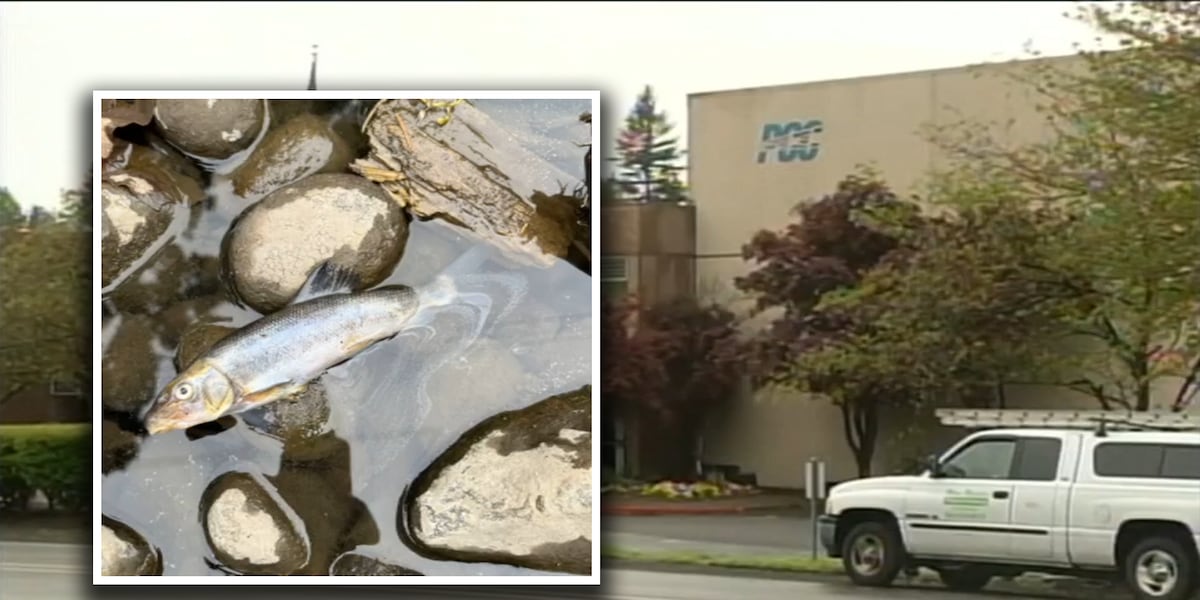
About 394 gallons of sodium hydroxide spilled into Johnson Creek in September, killing fish and aquatic life along a one- to two-mile stretch downstream from a Precision Castparts stormwater outfall, KPTV reported. The discharge, which also included smaller amounts of sodium hydrosulfide and sodium chlorite, has drawn scrutiny from environmental regulators and reignited long-standing neighborhood concerns over the Southeast Portland industrial facility’s operating history.
A Routine School Visit Uncovers a Chemical Discharge
The discovery began quietly. A class from Sunnyside Environmental School was visiting Tideman Johnson Park when students and a parent noticed foam on the water alongside a large number of dead fish. Community members and the Johnson Creek Watershed Council quickly alerted authorities, triggering an investigation by the Oregon Department of Environmental Quality, the Oregon Department of Fish and Wildlife, the city of Portland, and the Oregon State Police.
Investigators traced the dead aquatic life downstream from a PCC stormwater outfall. According to the DEQ, process water from a new air-quality control device inadvertently entered the company’s stormwater system and flowed straight into the creek. “The wastewater was not supposed to go there,” said Michael Loch, a DEQ public affairs specialist.
Sept. 18: dead fish, lamprey and crayfish along 2 miles of Portland's Johnson Creek. Sept. 28: Precision Castparts reported a discharge, later put at 394 gallons of sodium hydroxide and other chemicals. Oregon just cited its most serious violation class. #Portland #Oregon
On October 23, the agency issued PCC a pre-enforcement notice citing two Class I water-pollution violations. While this notice is not a fine or a final agency order, it launches the formal enforcement process that could eventually lead to civil penalties or mandated corrective actions. PCC stated that the release occurred in mid-September during the equipment installation, noting that the company immediately stopped using the device, expressed regret over the discharge, and implemented steps to prevent future occurrences.
The DEQ stated that the released chemicals are not expected to create long-term public health risks because they do not typically accumulate in fish and would have been diluted or flushed downstream within hours. Yet for community advocates who have spent years nursing the urban watershed back to health, the immediate biological toll is difficult to overlook.
Decades of Scrutiny and Community Tension
The Johnson Creek incident arrives against a backdrop of historic environmental friction between PCC and its Southeast Portland neighbors. For Noah Jenkins, conservation director for the Johnson Creek Watershed Council, the scale of the recent die-off stands out in his nearly 20 years with the organization. Volunteers and staff have invested years in stream cleanups, fish-passage projects, and habitat restoration, making the sudden loss a severe setback.
PCC’s operations have faced regulatory and legal challenges before. A 2011 chemical release triggered a hazardous-materials response and shelter-in-place orders for nearby residents. Previous investigations also documented industrial discharges into storm drains feeding Johnson Creek, with city officials later discovering PCBs and other pollutants in nearby sediment.
Air quality has been another flashpoint. A 2015 U.S. Forest Service study found elevated levels of nickel and arsenic in moss samples near the facility, helping fuel a class-action lawsuit from property owners. PCC denied wrongdoing, and the case ended in 2022 with a court-approved $22.5 million settlement. While subsequent Oregon Health Authority reviews concluded that measured contaminant levels were unlikely to harm human health under evaluated conditions, state health officials also noted that historical monitoring data was insufficient to gauge past risks, suggesting earlier emissions may have been significantly higher during peak operating periods.
Marianne Colgrove, a 23-year resident and coordinator for the Friends of Tideman Johnson Community Stewardship Group, was among those affected by the prior class-action settlement. “I want them to do a better job of preventing releases in air and water and land,” Colgrove said. “What’s it going to take for them to get control over it?”
Regulatory Precedents and Unanswered Questions
Beyond the Southeast Portland facility, state regulators have cracked down on PCC elsewhere. In 2022, the DEQ assessed a $15,000 penalty against PCC Structurals for hazardous-waste violations, including storing hazardous waste in open and unlabeled containers. Although regulators confirmed that the case involved a separate facility and is unrelated to the Johnson Creek investigation, the pattern of enforcement actions keeps local watchdogs on high alert.
The watershed council is scheduled to tour the PCC facility to review the specific mechanics that caused the industrial process water to breach the stormwater system. Jenkins noted that the primary goal is understanding the failure mode to ensure it never happens again.
For now, the formal investigation remains open as regulators weigh final penalties, and local advocates wait to see what concrete operational changes will follow.
Keep reading

Economic woes have residents leaving Hawaii, delaying retirement
For 38 years, Julie Gabot has cleaned hotel rooms and worked a slate of extra jobs to keep...

Jags cruise by the Colts, AFC South lead up to 3 games – WTOC
Jacksonville Controls the Colts as AFC South Lead Expands Indianapolis hadn’t won in Jacksonville since 2014. That streak...
November 1, 2026 Dover Saddlery Highland Series and Championships Presented by THIS Results
Dover Saddlery Highland Series and Championships Spotlight Competition Results Equestrian athletes gathered for the Dover Saddlery Highland Series...

Connecticut market snapshots: Comparing jobs, businesses and property taxes
Connecticut municipalities face stark economic contrasts according to the Connecticut Commercial Opportunity Index, developed by the Yankee Institute...