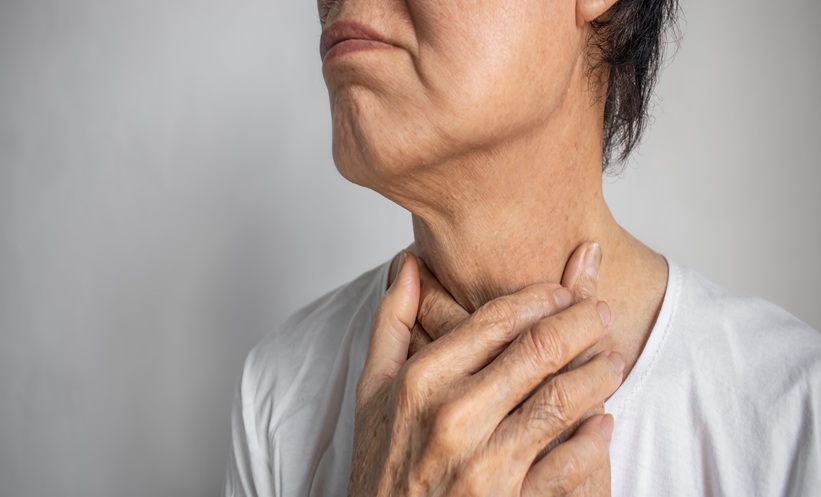
Head and neck cancer survivors face a complex recovery path where the very treatments designed to save their lives often leave behind significant, long-term functional hurdles.
A longitudinal study published in the journal Head & Neck tracks this transition, revealing that while most patients see improvements after the first year, a substantial minority remains locked in a cycle of persistent swallowing difficulty, or dysphagia.
According to the research, which followed 445 patients through their first 12 months post-treatment, swallowing-related quality of life hits its absolute nadir at the three-month mark. While the prevalence of moderate-to-severe impairment drops to 12% by the one-year anniversary of treatment, the recovery is far from uniform.
“Post-treatment swallowing difficulties are intricately linked to baseline disease burden and therapeutic intensity,” the researchers said in their findings. This divergence between what a patient feels and what a clinical test shows is a major hurdle in modern oncology.
Because patient-perceived functional impairment often differs from objective physiological assessments, the study argues that integrating patient-reported outcome measures into standard clinical workflows is no longer optional—it is a necessity for effective survivorship care.
Identifying which patients are at the highest risk for chronic dysphagia allows medical teams to intervene before a condition becomes permanent. The Head & Neck study identified several key indicators that surface even before treatment begins. Specifically, patients who were on sick leave prior to their diagnosis or those who had recently quit smoking showed a higher vulnerability to developing chronic swallowing disorders.
This data suggests that the physiological impact of cancer is compounded by a patient’s baseline health status. For clinicians, this means that “one-size-fits-all” recovery protocols are increasingly inadequate.
Tailoring rehabilitation to the individual requires recognizing that a patient’s recovery trajectory is heavily influenced by the specific composition of their treatment regimen—distinguishing, for instance, between less invasive surgical options and the more aggressive multimodality approaches required for advanced cases.
The stakes here are not merely clinical; they are deeply personal and economic. Dysphagia affects the most fundamental human activities—eating, speaking, and socializing. When these functions are compromised, the impact on a survivor’s quality of life and their ability to return to the workforce is profound.
One of the most persistent challenges in oncology is the “hidden” nature of swallowing dysfunction. A patient may pass an objective physiological test in a clinical setting while still suffering from significant, life-altering difficulty in their daily routine. This disconnect is why the researchers emphasize the role of validated patient-reported outcome measures.
By capturing the patient’s own experience of their swallowing function, multidisciplinary teams can identify those at risk of long-term impairment much earlier. This shift toward proactive, patient-centered surveillance is essential for mitigating chronic morbidity. As the findings demonstrate, the goal is to bridge the gap between cancer eradication and the restoration of a functional, high-quality life.
The clinical implications are clear: proactive, multidisciplinary support is the only way to effectively navigate the long-term consequences of head and neck cancer therapy. As the researchers concluded in their study, the key to improving survivorship lies in rigorous, tailored surveillance protocols that acknowledge the evolving nature of post-treatment recovery.

Climate Change and El Niño Drive Severe Indonesia Forest Fires
Fires in Indonesia, driven partly by a strong El Nino, have burned approximately 2.88 million hectares of land...

Study Shows NAD Levels in Healthy Adults Do Not Decline With Age
Healthy adults do not necessarily need to take popular anti-aging supplements to boost their body’s nicotinamide adenine dinucleotide...

Marcos to Visit Brazil Next Year After Talks With Lula
President Ferdinand R. Marcos Jr. will travel to Brazil next year after holding bilateral talks with Brazilian President...

Beyond the Male Loneliness Epidemic: Why Women’s Experiences Are Being Overlooked
“I’m a very socially connected person,” says Sasha, a 38-year-old from Sydney, yet she describes the intensity of...