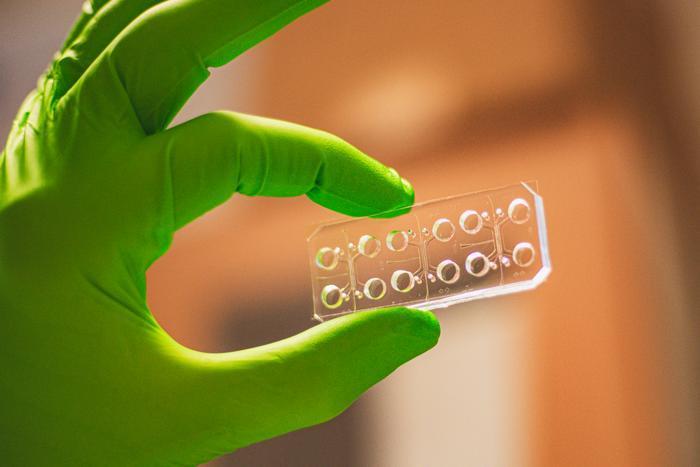
Researchers at Linköping University in Sweden have developed an organ-on-a-chip model that captures the complex, chaotic reality of how head and neck tumors grow, spread, and interact with the human body.
This postage-stamp-sized device, designed in collaboration with the MiMic Lab at Politecnico di Milano, offers a window into the tumor microenvironment that animal testing simply cannot replicate, according to findings published in the Proceedings of the National Academy of Sciences (PNAS).
For decades, cancer research has been hamstrung by the limitations of two-dimensional petri dish cultures and the biological differences between human patients and animal models. By integrating cancer cells, nerves, and blood vessel-like structures into a single microsystem, this new platform allows scientists to observe how tumors behave when they are actually “plugged in” to their surroundings.
The stakes here are high: head and neck cancers are notoriously aggressive, and understanding the specific mechanisms that allow them to resist chemotherapy could fundamentally change how clinicians approach treatment.
“Rather than having to carry out research on animals or test potential drugs in humans, we want to be able to carry out tests in a single microsystem in the laboratory,” said Pierfrancesco Pagella, Senior Associate Professor at Linköping University, who led the research.
“If we want to understand why a tumor grows, spreads, causes pain or resists treatment, we need models that can replicate the interactions between the tumor and its surroundings.”
The team’s approach relies on a three-step construction process. First, they engineered a synthetic extracellular matrix (ECM)—the structural scaffolding that cells inhabit—using a precise blend of collagen, laminins, and hyaluronic acid.
The model then introduces blood vessel-like structures, which serve as both a lifeline for the tumor and a highway for metastasis. When the researchers added these vessels to the chip, they witnessed the cancer cells actively moving toward and invading the vascular structure. This provides a direct, observable look at the initial stages of tumor spread, a process that is often difficult to track in real-time within a patient.
Perhaps the most compelling addition is the integration of nerves. By utilizing stem cells to recreate trigeminal ganglia—the sensory nerves responsible for pain and sensation in the face—the team was able to watch how nerves influence tumor growth. The results were counterintuitive, suggesting a complex trade-off in the tumor’s strategy:
“In our three-dimensional system, we saw that tumors in contact with nerves were less likely to invade blood vessels, but at the same time grew larger,” said Pagella, as noted by News-Medical.
“Our model enables us to study nerves as an active component of the tumor microenvironment. This is particularly interesting in head and neck cancer, where nerves are involved both in regulating tumor behavior and aggressiveness, and in cancer-related pain.”
While this model is more advanced, it is limited to a controlled laboratory environment. It cannot yet account for every variable a patient might face, such as systemic inflammation or the varied, highly personalized genetic makeup of individual cancers.
However, the potential for this technology to act as a bridge between basic research and clinical application is clear. By allowing for repeatable, highly specific experiments on human-derived cells, this platform could eventually help oncologists predict which patients will respond to specific drug regimens, potentially sparing them the side effects of treatments that have little chance of working.
The research team is already looking toward adapting the model for other solid tumor types where tissue interaction is a defining feature of the disease.
The project, which received support from the Swedish Research Council, the Knut and Alice Wallenberg Foundation, and the European Research Council, shows that cancer research is prioritizing precision modeling. As of November 2026, the scientific community continues to move away from reliance on non-human biological models, favoring instead these sophisticated, human-relevant systems that treat cancer not as an isolated cluster of cells, but as a systemic, interactive phenomenon.

Eight Finalists Named for RTÉ’s Today Show Christmas Home Cook 2026
Eight amateur cooks from seven different counties have stepped into a professional studio kitchen for RTÉ's Today Show...

US Measles Elimination Status at Risk as Cases Cross 5,182
Measles cases in the United States have crossed 5,182 this year, pushing federal health authorities to confront a...

Bangsamoro Govt Grants P1M to 3 Learning Centers for Therapy
Three specialized learning centers in Cotabato City recently received a combined P1 million in medical assistance from the...

Temporal Trends in Childhood Type 1 Diabetes in the East Midlands, 2010-2024
Between 2010 and 2024, the East Midlands Young Persons Diabetes Registry recorded 1,678 children aged zero to 14...