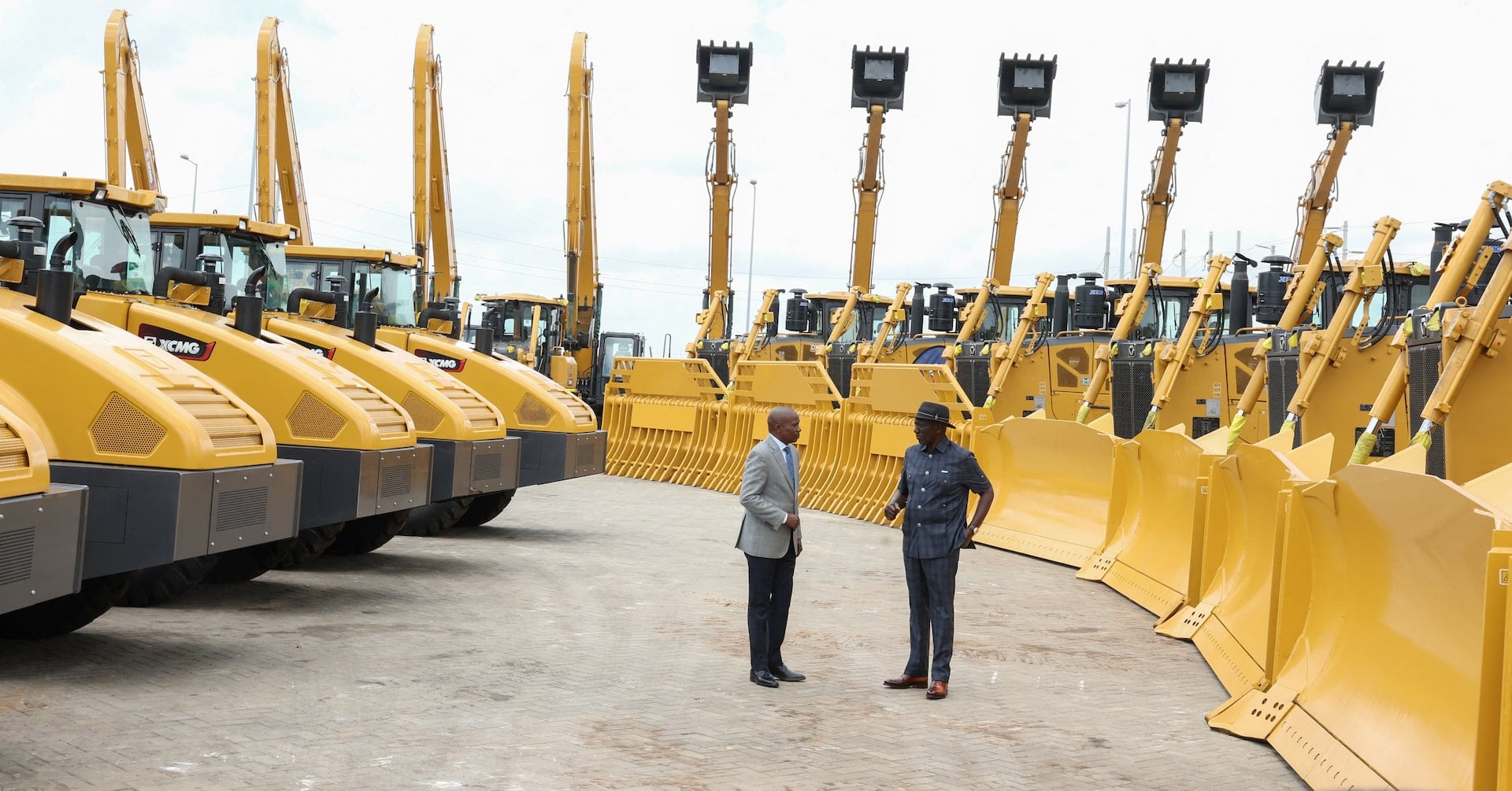
President William Ruto and billionaire Aliko Dangote broke ground on a $16 billion oil refinery in Lamu, Kenya, designed to process 700,000 barrels per day. The project faces local land lawsuits and environmental concerns while drawing regional backing from heads of state.
Construction began on Wednesday for a massive East African oil refinery intended to reshape regional energy supplies and reduce reliance on imported fuel at the port of Lamu. Nigerian industrialist Aliko Dangote joined Kenyan President William Ruto alongside regional leaders for the groundbreaking ceremony on the Indian Ocean coast.
President William Ruto and Aliko Dangote Break Ground in Lamu
Marking the commencement of Kenya’s biggest infrastructure undertaking since gaining independence, the ceremony convened Ethiopian Prime Minister Abiy Ahmed, Ugandan President Yoweri Museveni, Beninese President Romuald Wadagni, and Togolese President Jean-Lucien Savi de Tové. The development surpasses the $5.1 billion Standard Gauge Railway in scale and cost.
African leaders on Wednesday broke ground on a new $16 billion oil refinery off Kenya’s coast. Construction is slated to wrap up within a 40-month timeframe, with the facility geared to handle roughly 700,000 barrels of crude daily.
Kenya Ports Authority Managing Director Captain William Ruto noted that the arrival signaled the deep-water transshipment hub’s growing industrial capacity. Highlighting the docking of Mv Da Yang Bai He as a major milestone, Captain William Ruto pointed out that Lamu Port has recently enjoyed a record-breaking increase in both freight volumes and large vessel traffic.
Honeywell Technologies Provides Engineering for Mega-Refinery
The planned facility will process 700,000 barrels of crude oil daily, positioning it as a major industrial engine for East and Central Africa. To accelerate development, Dangote selected Honeywell Technologies to provide engineering services, licensing, and equipment for the mega-refinery.
The two companies previously collaborated on upgrading Dangote’s refinery in Nigeria. Honeywell Technologies UOP president Rajesh Gattupalli stated that proven large-train engineering designs would significantly reduce time-to-market for the Kenyan installation.
“When you talk about 700,000 barrels per day, it’s actually small. For the region, it’s a big refinery, it’s a big investment, but it is a start-up.”
Aliko Dangote, via EWN
Officials have stated that the facility is also expected to spur industries such as petrochemicals, base oil, and bitumen production while creating more than 50,000 jobs.
Court Declines Request to Halt Project
The project advances under the shadow of ongoing legal disputes regarding land rights. On Monday, Justice Jane Onyango of the Malindi Environment and Land Court declined an urgent request to halt the ceremony starting the project, filed by 133 residents of Chandavai.
The litigants claim customary and community tenure over parcel LR No. 13061, alleging that heavy machinery destroyed their homes, trees, and crops without prior consultation or adequate compensation. The court ordered parties to maintain the existing status quo until an inter partes hearing scheduled for October 14, 2026, while permitting the launch event to proceed.
Aliko Dangote Dismisses Opposition and Regional Rivalries
Addressing critics during press briefings, Dangote dismissed local resistance and attributed the protests to commercial interference from local marketers and international oil companies whose profit margins face disruption.
“Anybody who wants to cause trouble, we are ready for his trouble and will give him a headache.”
Aliko Dangote, via eNCA
The refinery also unfolds within a complex geopolitical landscape. Uganda and Tanzania recently announced a rival $20-billion refinery and energy hub at the port of Tanga. While Ugandan President Yoweri Museveni attended the Lamu ceremony and expressed broad support for regional processing, he confirmed that Uganda would not take a financial stake as it develops its own facilities in the Albertine Graben.
More on Aliko Dangote
Worth a look

Ethiopian Federal Forces Capture Strategic Town of Alamata in Tigray
Federal forces in Ethiopia have captured the strategic town of Alamata in Tigray following three days of heavy...

Two Iranian Nationals Charged in Plot to Target Manchester Jewish Community
Two Iranian nationals from Salford and Liverpool have been charged with terrorism offences over an alleged bomb plot...

Mona McSharry Wins 100m Breaststroke Gold at World Cup in Baku
Ireland's Mona McSharry secured her first gold medal of the 2026 World Aquatics World Cup series on Friday,...

French High Schools Shut Down As Student Protests Escalate Nationwide
More than 400 French high schools remained shut on Friday as weeks of student protests over decaying facilities,...