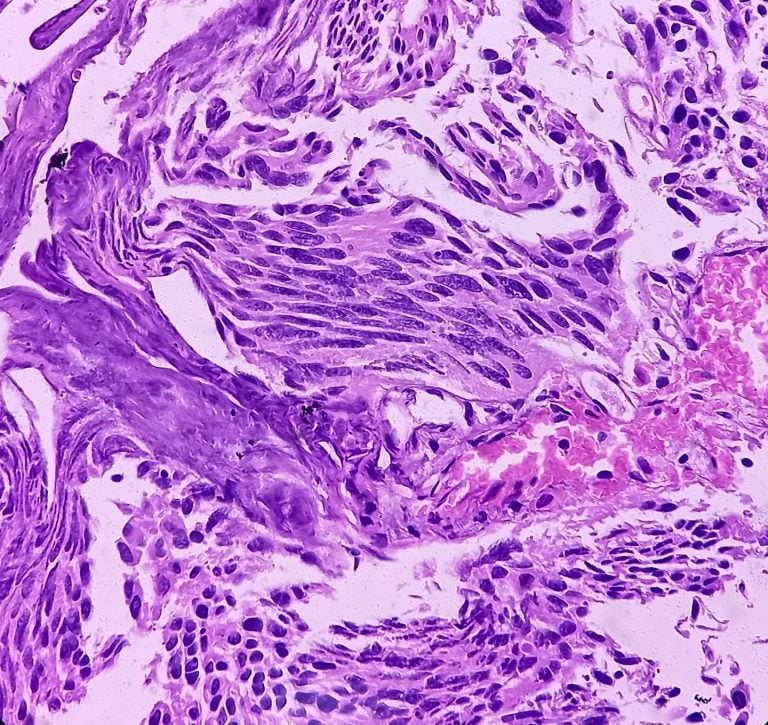
Researchers at Stanford Medicine and the VA Palo Alto Health Care System have developed a non-invasive urine test called uRARE-seq that identifies bladder cancer by measuring cell-free RNA fragments. Published on October 2, 2026, in Nature Medicine, the assay correctly detected 95 percent of localized bladder cancer cases in a study.
Stanford Researchers Develop uRARE-seq to Measure Cell-Free RNA
A team of investigators at Stanford Medicine and the VA Palo Alto Health Care System has introduced a novel liquid biopsy method designed to diagnose bladder cancer and guide treatment decisions from a simple urine sample. The test, known as uRARE-seq, measures cell-free RNA fragments shed by tumors rather than hunting for mutated DNA.
Most blood and urine liquid biopsies search for cancer-associated DNA mutations. However, the Stanford assay takes a different path by analyzing RNA messages, which reflect the genes a cancer cell actively expresses. This captures tumor behavior alongside its physical presence.
The research was led by graduate student Kevin J. Liu and co-authored by senior investigators Maximilian Diehn, Joseph Liao, and Ash Alizadeh. The findings were published on October 2, 2026, in the journal Nature Medicine.
Study Results and Diagnostic Accuracy Across 683 Samples
To evaluate the assay, the research team analyzed 683 urine samples collected from both cancer patients and healthy volunteers at Stanford University and the VA Palo Alto Health Care System. The test correctly identified 95 percent of individuals with localized bladder cancer and returned clean results for 90 percent of participants without the disease.
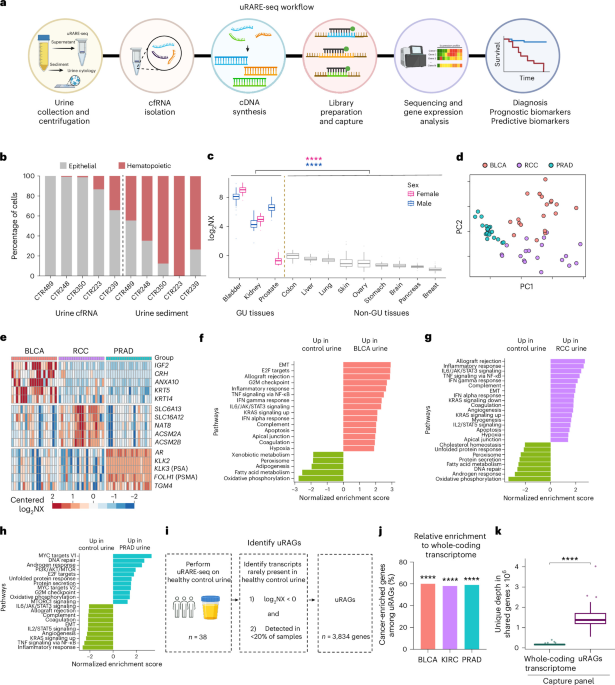
The assay also detected non-muscle-invasive bladder cancer, representing early-stage tumors that have not yet breached the bladder wall and which standard cytology procedures can miss.
The test also avoids a well-documented obstacle in urine DNA testing known as the field effect. Normal bladder lining cells often accumulate bystander mutations that overlap with actual tumor mutations, which can lead DNA tests to produce false positives unless the patient’s specific tumor is sequenced beforehand. Because RNA reflects overall gene activity rather than individual point mutations, uRARE-seq does not require matched tumor tissue samples.
Treatment Prediction and Monitoring Residual Disease Following BCG Therapy
Beyond initial detection, the assay demonstrated an ability to track residual disease following surgery and to predict patient response to Bacillus Calmette-Guérin (BCG) immunotherapy. BCG is a weakened tuberculosis bacterial strain instilled directly into the bladder via catheter to stimulate the immune system against lingering cancer cells. However, the treatment does not work for every patient.
Researchers discovered that patients who exhibited a complete molecular response to BCG showed stronger T-cell and immune-signaling gene expression signatures in their pretreatment urine. Conversely, patients who showed molecular residual disease presented higher expression of proliferation-associated genes.
“These findings are significant as identification of T-cell signatures in urine which predict BCG response could help to select those patients who are unresponsive to BCG, thus identifying patients who may need alternative treatments.”
Dr. Daniel Petrylak
Using these molecular differences, the investigators developed a model predicting the likelihood of response to BCG versus intravesical chemotherapy. In pretreatment urine samples from 114 patients, the model scored 0.93 on a scale where 1.0 represents perfect discrimination between treatment responses.
Next Steps for Clinical Validation and Commercialization
Approximately 85,000 individuals are diagnosed with bladder cancer each year in the United States. Current surveillance methods rely heavily on cystoscopy, an invasive endoscopic procedure that can miss up to 30 percent of cases and must be repeated frequently for high-risk patients.
While the initial data from Stanford are promising, independent experts emphasize that further evaluation is necessary.
MSF Doctor Evacuated to Netherlands After Testing Positive for Ebola
An Médecins Sans Frontières staff member working on the Ebola response in the Democratic Republic of Congo has...

Study Links Early Smartphone Use to Eating Disorders in Teens
“When a child whose brain is not yet capable of mature impulse control is pitted against an algorithm...

Nobel Prize in Literature Frontrunners Emerge Ahead of October 8 Announcement
As global betting markets and publishers name top contenders for the 2026 Nobel Prize in Literature ahead of...
High-Sugar Foods Increase Gut Microbiome Damage During Antibiotic Treatment
Researchers studying hospitalized cancer patients at Memorial Sloan Kettering Cancer Center, City of Hope, and NYU Langone Health...