
A proposed federal land exchange has revived a two-decade fight over who controls the history at Martin’s Cove, where hundreds of Mormon pioneers died in 1856.
The Bureau of Land Management is considering a trade that would convey the 825-acre historic site to the Church of Jesus Christ of Latter-day Saints, which has leased the property since 2004. The church bought the adjacent 12,000-acre Sun Ranch in 1996 and sought to purchase the cove outright in 2002, a move Wyoming opponents called an unconstitutional transfer of public land to a religious organization.
“Once you own the land, you get to tell the story of what happened,” historian Tom Rea told Cowboy State Daily. His 2006 book, Devil’s Gate: Owning the Land, Owning the Story, argued that property rights determine which narratives survive on the landscape.
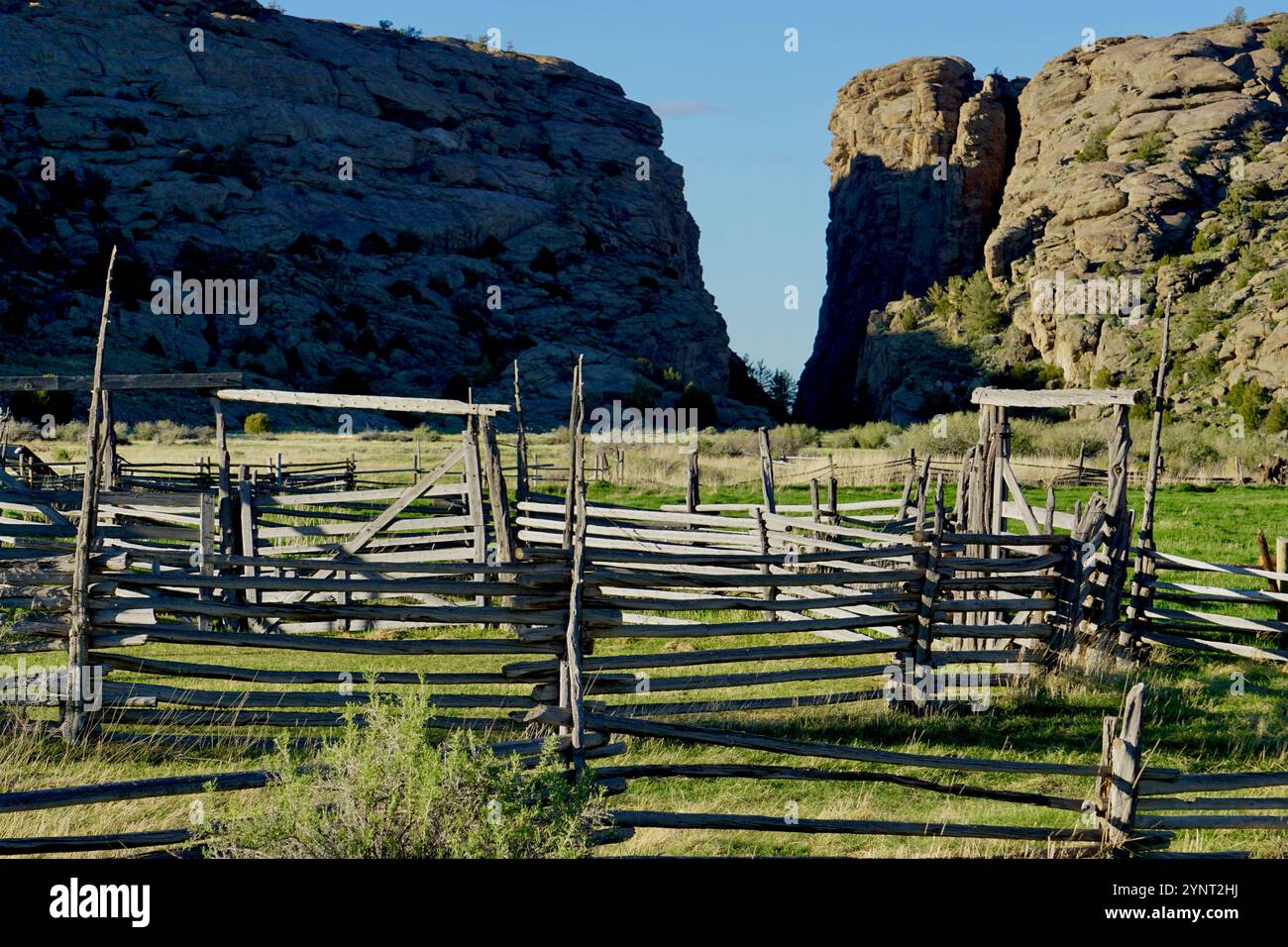
The 25-year lease, negotiated after Congress blocked a sale, costs the church $16,000 annually. The American Civil Liberties Union sued in 2005, arguing the arrangement endorsed religion by allowing proselytizing on federal ground. A 2006 settlement preserved public access but left interpretation largely to church missionaries.
The cove marks where the Martin handcart company, caught by an October blizzard, sheltered for five days in November 1856. Between 100 and 125 people died, according to the National Park Service. But Rea notes the valley holds older, quieter graves. Frederick Richard Fulkerson, 18, died of illness in 1847 and was buried in nearby Rattlesnake Pass; his mother died 13 days later near the Green River.
Emigrants carved names into the granite walls of Devil’s Gate, the narrow gorge where the Sweetwater River cuts through the ridge. In 1850, Byron McKinstry wrote he was “in much danger of falling” during a descent. Three years later, Michael Luark fired a gun in the gorge and heard the echo “like a continuous cannon blast.”
Rea spent two years researching the book, drawing on soldiers’ letters and women’s journals that revealed a mixed-ancestry trading economy along the trails — families operating bridges, stores and blacksmith shops. “They were like modern convenience stores,” he said.
This summer, a visitor searching for an ancestor’s grave near Horse Creek stumbled across a small stone marker almost lost to erosion. The BLM has not set a timeline for a decision on the exchange.
Keep reading

Michigan’s Whittingham Says He Should Remain Coach After 45-0 Loss to Ohio State
Michigan head coach Kyle Whittingham said he should remain in the job after a 45-0 loss to Ohio...

Alaska DOT Collects Near-Miss Data to Map Moose Crossings on Glenn Highway
Alaska’s busiest commuter corridor averages nearly 19 documented wildlife crashes a year, a toll that has left one...

Haiti World Cup Qualifiers Played in Curaçao Amid Gang Crisis
Haiti's national soccer team qualified for the World Cup in November 2025 for the first time in 52...

Sedona Professional Theatre Company Presents Christmas in Montpelier Dec 9-12 at Fisher Theatre
The Sedona Professional Theatre Company continues its 2026-2027 season with "Christmas in Montpelier," a one-man stage play running...