
Quebec Paul St-Pierre Plamondon returned from a Francophonie summit in Cambodia this weekend declaring he was “treated and considered as a head of state,” a phrase that crystallizes his government’s push to expand the province’s diplomatic footprint long before a promised sovereignty referendum.
The appearance at the Francophonie summit marked the premier’s debut on the world stage, the Montreal Gazette reported. It comes just weeks after his Parti Québécois minority government took office and immediately appointed Pascal Paradis as Quebec’s first “chief diplomat and negotiator,” a role designed to “restore Quebec’s strong voice and real influence on the international stage.”
The stakes are distinct: the PQ has pledged to hold a referendum on independence in 2029 or 2030, though the minority government may not last that long. Support for sovereignty sits around all-time lows, yet the government’s 524-page Livre bleu sur l’indépendance du Québec, published in June, devotes twenty-nine pages to international aspirations — eleven more than the chapter on post-independence relations with the rest of Canada.

A blueprint for a diplomatic corps
The blue book envisions doubling Quebec’s current network of 34 offices and delegations abroad before any referendum vote. The strategy is twofold: promote business deals and familiarize foreign governments and publics with Quebec so that recognition comes faster if voters choose independence.
“Contrary to popular belief, national sports teams do not necessarily represent independent countries,” the document argues, citing Scotland’s World Cup entry as a model for Quebec federations seeking membership in global governing bodies.
After a Yes vote, the plan calls for converting existing representations into embassies and consulates, recognizing foreign diplomats already posted in Quebec, and applying for membership in the United Nations, NATO, and even the Commonwealth — headed by King Charles III — despite the goal of severing constitutional ties to the Crown.
Friction with Ottawa, then a handshake
The international push sparked early tension with Prime Minister Mark Carney. St-Pierre Plamondon boycotted the Canada-EU summit after Carney declined to let him address delegates. Days later, the premier wrote directly to newly elected U.S. officials on trade, prompting Carney to observe that “it’s always a good idea to have one single negotiator.”
St-Pierre Plamondon shot back that “Mr. Carney is not my boss,” adding that “in the coming months, expect to have a Quebec that takes its place in the world.”
Yet in Cambodia, the two leaders were all smiles, joking about hockey goaltending and exchanging phone numbers for direct communication. St-Pierre Plamondon said the meeting was a very pleasant and enjoyable one and that Quebec and the other party shared a sense of humour.
Carney backed Quebec’s proposal to host a Francophonie economic summit in Quebec City next year, saying Ottawa and Quebec can collaborate to “protect our workers impacted by tariffs and create new export opportunities for our businesses.” He added pointedly that “international agreements are negotiated between federal governments.”
The recognition question
The blue book acknowledges that an independent state’s status depends on recognition by other countries but does not detail a strategy for securing it. That gap echoes 1995: then-premier Jacques Parizeau hoped France and other francophone nations would recognize Quebec quickly after a Yes vote.
Publicly, Jacques Chirac signaled support, but private letters from a Parizeau adviser obtained by Le Journal de Montréal last year show French officials preferred to wait until Quebec–Canada negotiations concluded, fearing premature recognition would look like interference.
That dynamic resurfaced this month when President Emmanuel Macron was asked about the PQ’s plans. “It is not my place to interfere in Canadian affairs, but to continue supporting our close ties and our shared cultural and linguistic affinities,” Macron said.
Soft power versus the Cadillac test
The PQ argues an independent Quebec would wield “soft power” disproportionate to its size — French-speaking culture, experienced diplomats, a reputation as a peaceful society, and no history of military conflict. Nearly half a century ago, future prime minister Jean Chrétien mocked the symbolism of Quebec nationalism, arguing ordinary Quebecers show no interest in seeing Quebec ambassadors driven around in Cadillacs with Quebec flags “sur le hood.”
Born in 1977, Paul St-Pierre Plamondon earned law degrees from McGill and an MBA from Nuffield College, Oxford, before working with NATO in Belgium and co-founding the civic group Génération d’idées. He finished fourth in the 2016 PQ leadership race, then led a province-wide consultation that produced 156 recommendations for party renewal. Elected leader in 2020 and MNA for Camille-Laurin in 2022, he became premier in 2026.
The PQ’s blueprint envisions a much larger international presence. Whether Quebecers accept that vision is uncertain.
Worth a look
- Nuggets Overcome 17-Point Deficit, Beat Celtics 105-101 on Murray Free Throw, Tatum Technical
- Kansas Highway Patrol Superintendent Urges Lawmakers to Regulate License Plate Readers
- Germany Revises S3 Guideline on Gestational Diabetes Diagnosis, Treatment (archyde.com)
- Trump, Xi and Putin hold landmark trilateral summit in China to discuss nuclear arms and Ukraine war (newsarchyuk.com)
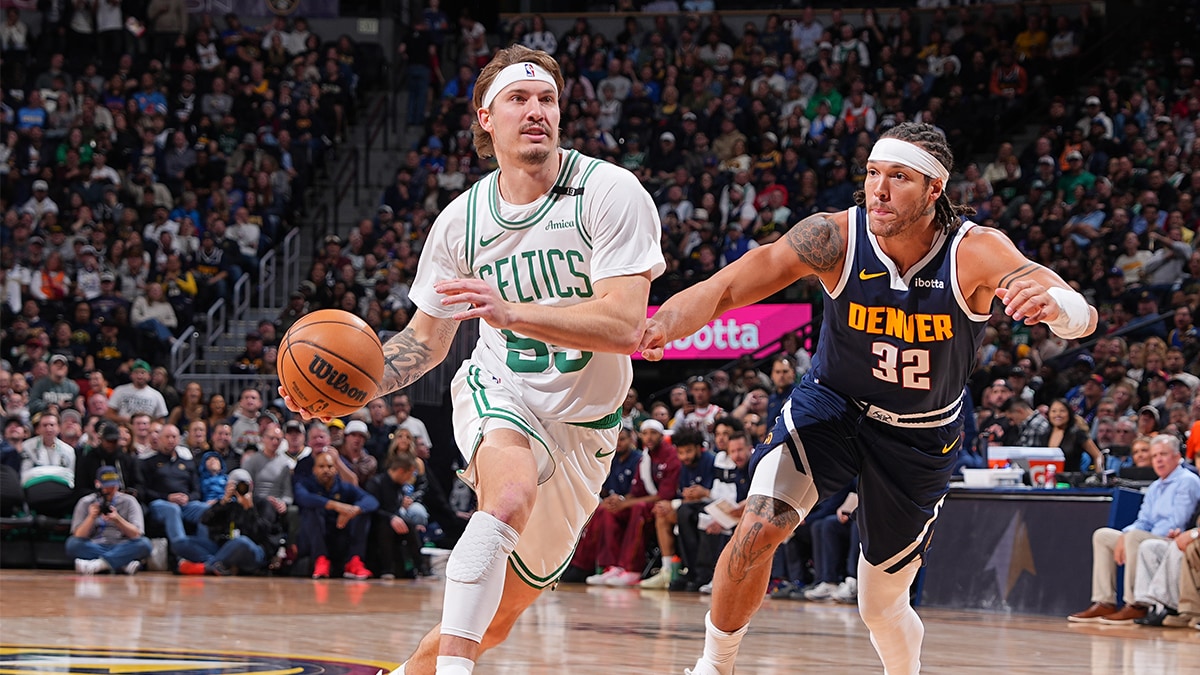
Nuggets Overcome 17-Point Deficit, Beat Celtics 105-101 on Murray Free Throw, Tatum Technical
Denver scored the final five points to overcome a 17-point deficit and beat Boston 105-101. The loss snapped...

Kansas Highway Patrol Superintendent Urges Lawmakers to Regulate License Plate Readers
The superintendent of the Kansas Highway Patrol wants state lawmakers to regulate automated license plate readers during the...

Alaska Finishes Ballot Count, Peltola Beats Sullivan 50.1% to 45.8%
Alaska finished counting its outstanding ballots Wednesday evening, confirming Democrat Mary Peltola's victory over Republican Senator Dan Sullivan...

Ellington Man Pleads Guilty to Fentanyl Trafficking, Gun Charges
"He drove away at a high rate of speed after witnessing the traffic stop," federal officials said. Jose...