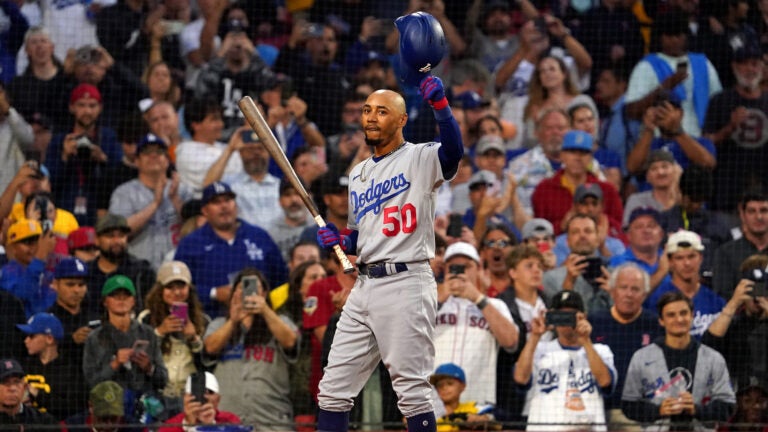
The Boston Red Sox have officially closed the book on the most controversial trade of their modern era.
On Tuesday, the team designated catcher Connor Wong for assignment to make room for newcomer Nick Fortes, marking the final departure of the three players acquired in the February 2020 deal that sent Mookie Betts to the Los Angeles Dodgers.
For a fanbase that has weathered legendary departures from Babe Ruth to Jeff Bagwell, the Betts trade sits in a distinct category of frustration. While the move was framed as a necessary financial pivot to avoid a massive payday for a homegrown superstar, the subsequent on-field reality has been stark.
As Betts went on to capture three World Series titles in Los Angeles, the trio of players Boston received in return—Alex Verdugo, Jeter Downs, and Wong—have all exited the organization without providing the sustained impact once envisioned.
The Declining Return on Investment
The logic behind the 2020 swap was built on the hope that younger talent would mature into a new core. The Dodgers, meanwhile, were comfortable betting big, eventually signing Betts to a 12-year, $365 million contract in July 2020, as boston.com noted.
While Betts has faced his own challenges, including injury and a dip in bat speed at age 34, his cumulative WAR of 36.7 over seven years in Los Angeles dwarfs the combined 11.7 bWAR produced by the three players Boston received.
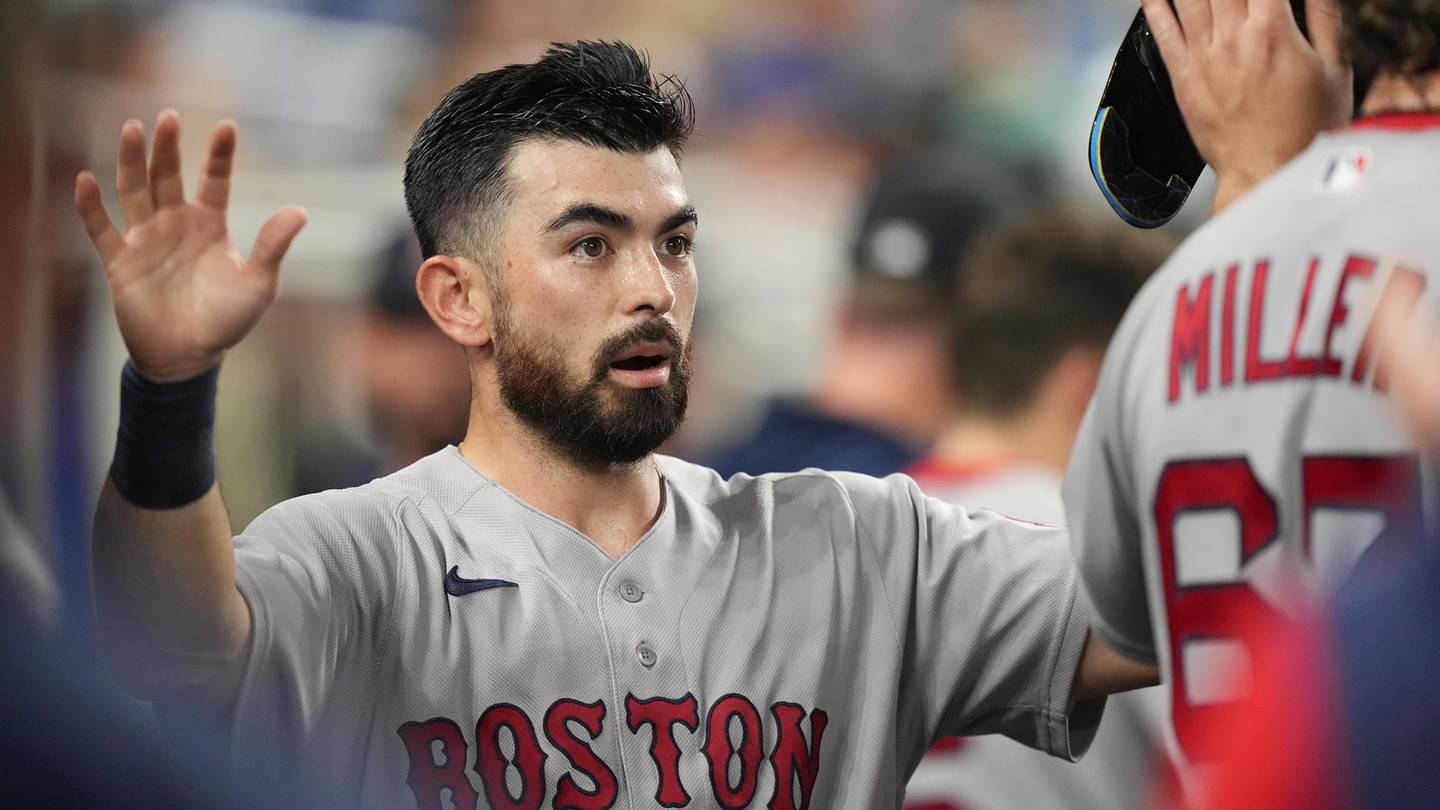
The individual trajectories of the acquired trio highlight the volatility of the trade. Alex Verdugo, the most prominent piece of the return, showed initial flashes of promise, including a 2.2 WAR season in 2021.
However, his tenure was marked by inconsistency and friction, including a highly publicized August 2023 incident where he arrived late to Fenway Park. “This is probably one of my worst days here in this organization,” a visibly frustrated manager Alex Cora said at the time, as reported by boston.com.
The other two players failed to find similar footing:
The #RedSox today acquired C Nick Fortes from the Tampa Bay Rays, in exchange for minor league RHP Angel Roa. To make room on the 40-man roster, Boston designated C Connor Wong for assignment. pic.twitter.com/e6HptTdc1z
- Jeter Downs: Once ranked as the No. 44 prospect in baseball, he struggled to hit above the Mendoza line in Triple-A Worcester and saw only 14 games in a Red Sox uniform before being designated for assignment in 2022.
- Connor Wong: Serving as the longest-tenured piece, Wong showed potential in 2024 with a .280 batting average, yet his production plummeted over the last two years, leading to his recent removal from the 40-man roster.
The “so what” for Red Sox fans is simple: the front office traded a perennial MVP candidate to shed salary, yet the organization failed to generate sufficient depth or replacement value from the return. Wong and Carlos Narvaez’s extended struggles in 2026 eventually prompted Boston to deplete its pipeline of pitching prospects to bring in Adley Rutschman from Baltimore just before the trade deadline.
Critics of the trade have long argued that the move prioritized accounting over championship contention. The Dodgers’ three World Series titles during the post-trade period serve as a frequent point of comparison, contrasting sharply with Boston’s inconsistent efforts to retool.
Even as Betts enters the later stages of his contract, the Dodgers have viewed their investment as a clear success, while the Red Sox are left with no active roster pieces from the exchange.
Mookie Betts was drafted by Boston in the fifth round of the 2011 Major League Baseball draft, 172nd overall, and signed for a $750,000 bonus that exceeded his slot value. He debuted in 2014 and became the first player in history to win the American League Most Valuable Player award, a Silver Slugger, a Gold Glove, a batting title, and a World Series championship all in the same 2018 season.
A four-time World Series champion overall, he also represents the United States internationally and competes professionally in ten-pin bowling, rolling a perfect game at the 2017 World Series of Bowling.
The organization’s decision to move on from Wong in favor of Nick Fortes signifies a shift toward immediate, albeit modest, roster upgrades. With no players remaining from the original trade, the transaction is now effectively a closed chapter in Boston’s history.
The focus for the front office now shifts to the 2027 season, leaving the Betts trade as a cautionary tale about the high cost of trading away elite, generational talent for perceived long-term flexibility.
Related reading

Missouri Voters Reject Abortion Ban and Transgender Care Restrictions by Wider Margin
Missouri voters rejected a constitutional amendment that would have reinstated the state’s strict abortion ban, expanding their 2024...

Mother Seeks Answers 3 Months After Son’s Killing on Portland’s Eastbank Esplanade
Laurie Mincey Cordova is still waiting for answers nearly three months after her son, 35-year-old Colton Mincey, was...

Georgia House Runoff Could Pad Democrats’ One-Seat Majority as Cheokas Faces Wolfe
Voters across eight southwest Georgia counties head back to the polls starting Monday for a runoff that will...

UF Jacksonville LaVilla Campus Wins Final Design Approval for First Building
The Jacksonville Downtown Development Review Board voted unanimously Thursday to grant final design approval for Building 1A, the...