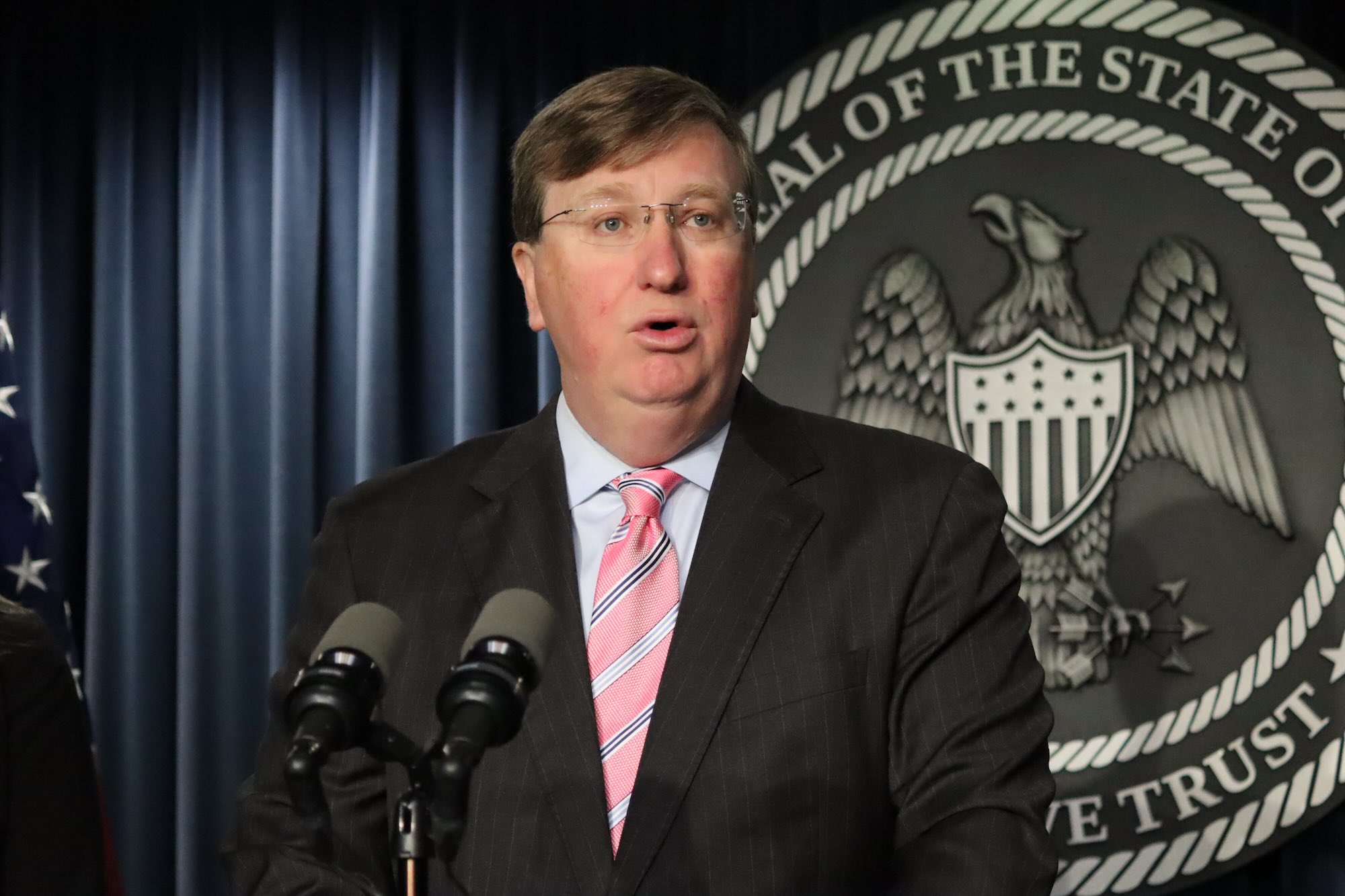
Gov. Tate Reeves told WLBT on Wednesday he still plans to call lawmakers back to Jackson for a special session on redistricting, more than six months after he canceled the first attempt.
The declaration came as the February 1, 2027, candidate qualifying deadline looms, a date that effectively serves as the hard stop for new legislative and congressional maps. Mississippi Free Press reported that Reeves has repeatedly signaled his intent since the U.S. Supreme Court’s April 29 ruling in Louisiana v. Callais, a decision the Republican majority used to narrow Section 2 of the Voting Rights Act.
“I have every intention of there being a special session for redistricting,” Reeves said Wednesday.
The governor first summoned legislators in April, only to call off the session in May amid pushback from advocacy groups. Since then, the Joint Committee on Reapportionment and Redistricting has crisscrossed the state — Tupelo, Senatobia, Cleveland, Natchez, Meridian, Hattiesburg, Gulfport, and Jackson — hearing overwhelming public opposition to redrawing lines.
WLBT reported that the focus has since narrowed to legislative districts, though Reeves has not ruled out touching congressional or judicial maps.
Supreme Court Ruling Raises Bar for Discrimination Claims
The Supreme Court’s ruling scrambled the legal framework Mississippi has operated under for decades. Federal courts previously cited Section 2 to order the creation of additional majority-Black legislative and state Supreme Court districts. Callais now requires plaintiffs to prove intentional discrimination rather than discriminatory effect, a significantly higher bar.

Republican leaders praised the decision. Reeves has made clear he hopes the Legislature redraws the 2nd Congressional District, the state’s only majority-Black district, currently represented by Democrat Bennie Thompson.
Its Black population hovers around 63%, Mississippi Free Press noted — 14 points higher than the pre-redistricting figure in Alabama’s 2nd District, where the Legislature cut the Black voting-age population from 49% to 40% ahead of the 2026 midterms. Republican Shomari Figures held the seat anyway.
Lt. Gov. Delbert Hosemann, who controls the Senate calendar, told reporters at the Neshoba County Fair in June that the Court’s directive was explicit: “The one thing that the Supreme Court said is that we cannot consider race in redistricting.”
He added that the committee would instead weigh partisan balance, saying Democrats and Republicans “have become homogenized.” Asked by Mississippi Today if he wanted to redraw the 2nd District, Hosemann declined to engage.
At the hearings, residents and lawmakers warned against rolling back representation. “We seem to not realize that if one group is oppressed, everyone will hurt eventually,” Lauderdale County resident Vickie Pickens told the committee in Meridian on September 10. “We can never go back to those days — Make America Great Again — because it only means Mississippi will suffer.”
Black Legislative Caucus Chairman Rep. Kabir Karriem, D-Columbus, said he spoke for the Legislature’s 58 Black members and the state’s 38% Black population. “I appear before you to urge you to protect meaningful representation and reject any proposal that diminishes Black electoral opportunity,” he told the Jackson hearing on October 1.
Rep. Otis Anthony, D-District 31, framed the midterm results as a rebuke. “You’re going to see a backlash. We’re already redistricted to death as a state. I mean, you have all branches of our government, Republican control. I don’t know how much more you can redistrict,” he told WLBT.
Republicans on the committee describe the work as technical cleanup. Vice Chair Rep. Noah Sanford said members have met individually and expect minor House map adjustments — fixing split towns and oddly shaped districts. “We’ve been doing the work. We’re not finished yet, but we will be ready when the governor calls a special session,” Sanford told WLBT.
Sen. Jeremy England, another Republican committee member, warned the window is closing. “If we don’t get called back maybe by the first week of December or earlier than that, we’re looking at a very real possibility of having to push the qualifying deadline back for our statewide elections that are coming up next year,” he said.
England and Hosemann both said the next step is adopting formal criteria to guide map drawing.
Absentee Ballots Join the Agenda
Redistricting won’t be the only item on the call. Reeves used his executive recommendation for the 2027 session to demand an end to the pandemic-era law allowing mail-in absentee ballots postmarked by Election Day to be counted if received within five business days. He wants all ballots in by 5 p.m. on Election Day.
“COVID-19 is now a distant memory, and Mississippi election laws should be amended to reflect the history and tradition of American democracy,” Reeves wrote in the recommendation, which Mississippi Free Press reviewed.
The National Republican Committee, the Mississippi Republican Party, and the Libertarian Party of Mississippi sued over the window in 2024; a three-judge panel of the 5th U.S. Circuit Court of Appeals ruled against the state in 2025, but the U.S. Supreme Court upheld the grace period in June.
“The Supreme Court has spoken,” Mississippi Republican Party Chairman Mike Hurst told reporters on November 5. “We don’t agree with what the Supreme Court decided, but the Supreme Court is the law of the land. And so, we’re going to follow that precedent and we’re going to follow Mississippi law that has been appealed by the Supreme Court.”
Legislators are not bound to adopt Reeves’ priorities. But with candidate qualifying opening in January, the governor’s next move — and the calendar — will decide whether Mississippi votes on new lines or old ones in 2027.
Related reading

Leon County Offices, Libraries Closed Three Days for Thanksgiving, Family Day; Tallahassee Shuts Two Days
Leon County offices, libraries and community centers will stay dark for three straight days starting Wednesday, a longer...

Democratic AG Leader Sean Rankin Steps Down After 2026 Election Wins
The head of the Democratic Attorneys General Association is stepping down after a 2026 election cycle that saw...

Carson Council Approves First Reading of Drive-Thru Ban Near Existing Sites
Carson will likely ban new restaurant drive-thrus from opening within 500 feet of existing ones after the City...
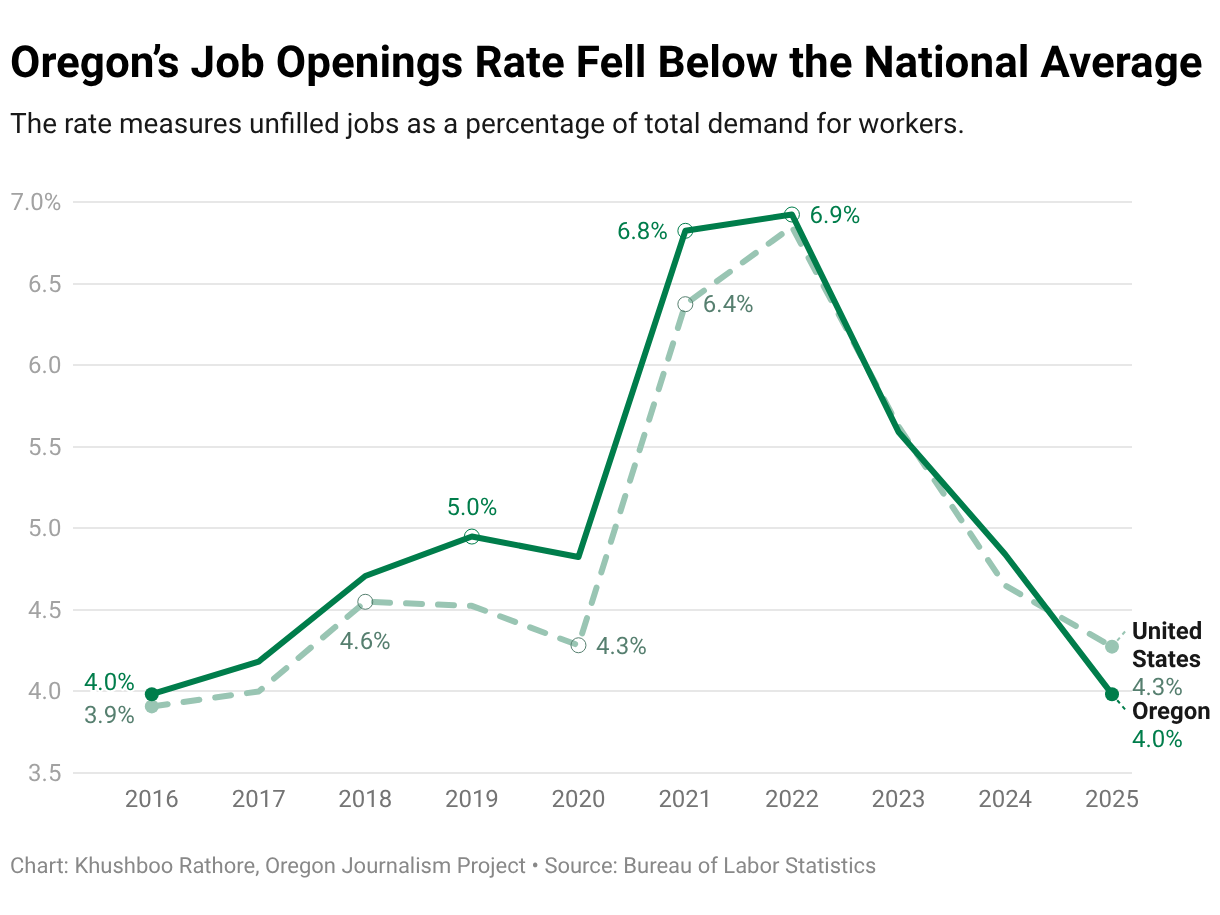
Oregon Job Openings Trail Nation by 75,000 in 2025, Unemployment High in 2026
New federal data shows Oregon's economy stalled in 2025, with job openings falling below the national average for...