One hundred forty-one years ago this week, a group of Reform rabbis gathered in Pittsburgh to answer a question that still echoes through American Jewish life: what should Judaism look like in this country?
The Pittsburgh Platform, adopted November 16–19, 1885, became the defining statement of American Reform Judaism for the next half-century. Drafted largely by Rabbi Kaufmann Kohler under the presidency of Rabbi Isaac Mayer Wise, its eight principles declared Judaism a universal religion rather than a nationality, rejected dietary and purity laws as obstacles to spiritual growth, and dismissed the expectation of a return to Palestine or a restored Temple.
The platform was a bid for belonging. Most American Jews at the time were German immigrants or their children, eager to prove they could be loyal, modern citizens. The backlash was immediate. Traditionalists appalled by the rejection of kashrut helped launch the Jewish Theological Seminary in 1886, the institutional home of the Conservative movement. A document meant to define one Jewish path forced every other camp to define its own.
Then the ground shifted. Between 1881 and 1924, more than two million Jews arrived from Eastern Europe. They spoke Yiddish, lived a thick culture of peoplehood, and did not see religion as a detachable module. In 1934, Rabbi Mordecai Kaplan, teaching at JTS, published Judaism as a Civilization.
His argument was simple and bold: Judaism is not only a religion but the living civilization of the Jewish people — language, literature, art, law, ethics, food, and a bond to the Land of Israel.
“The past should have a vote, not a veto,” he taught. In 1922, his daughter Judith became the first American girl to celebrate a public bat mitzvah. His vision of a “shul with a pool” — a synagogue as total community center — seeded the JCC movement.
By the late 1930s, the Pittsburgh consensus was fracturing. Hitler’s rise in 1933 made clear that assimilation offered no shield. Younger Reform rabbis, including Zionist leaders Stephen Wise and Abba Hillel Silver, pushed for change.
The 1937 Columbus Platform called Judaism the “religious experience of the Jewish people,” endorsed a Jewish homeland in Palestine, and restored Shabbat, holiday observance, Hebrew, and home ritual while keeping the social-justice core. Later statements in 1976 and 1999 — the latter adopted, fittingly, in Pittsburgh — moved Reform Judaism closer to tradition and to Israel, still honoring personal choice.
Today the situation looks different again. Most American Jews identify being Jewish as a religion, yet a growing number call themselves “Jews of no religion,” connecting through culture, family, and history.
The Pittsburgh rabbis believed modernity and loyalty would guarantee safety; today, guards stand at synagogue doors. The Holocaust and the founding of Israel vindicated Kaplan’s insistence on peoplehood, but disagreements over Israel now divide communities. Being a people does not mean speaking with one voice.
Kaufmann Kohler, born in Fürth, Bavaria, in 1843, earned his doctorate at Erlangen in 1868 with a thesis on higher biblical criticism that closed German pulpits to him.
Abraham Geiger steered him to the United States, where he led congregations in Detroit, Chicago, and New York before convening the 1885 Pittsburgh Rabbinical Conference that produced the platform. He later served as president of Hebrew Union College from 1903 and as a keynote speaker at the 1893 World Parliament of Religions.
The Pittsburgh Platform asked how to be fully Jewish and fully American. Kaplan asked how to keep a whole civilization alive in a new land. Pittsburgh was right about modernizing and justice. Kaplan was right that those values need a living, shared civilization to carry them. Together, they still point toward the knowledge, traditions, and belonging that connect one generation to the next.
Related reading

Oregon King Tides Arrive Monday: Photo Project Asks Public to Capture Flooding
The first King Tides of the season arrive on the Oregon coast Monday, launching a winter cycle that...

Vermont Police Hunt ‘Dangerous’ Man After Vehicle Thefts in Two Counties
Vermont State Police are hunting a 34-year-old man they call dangerous after a string of vehicle thefts spanning...

Liam Gleason Posthumously Honored with USILA Howdy Myers Man of the Year Award
The United States Intercollegiate Lacrosse Association posthumously presented the Howdy Myers Man of the Year Award to Liam...
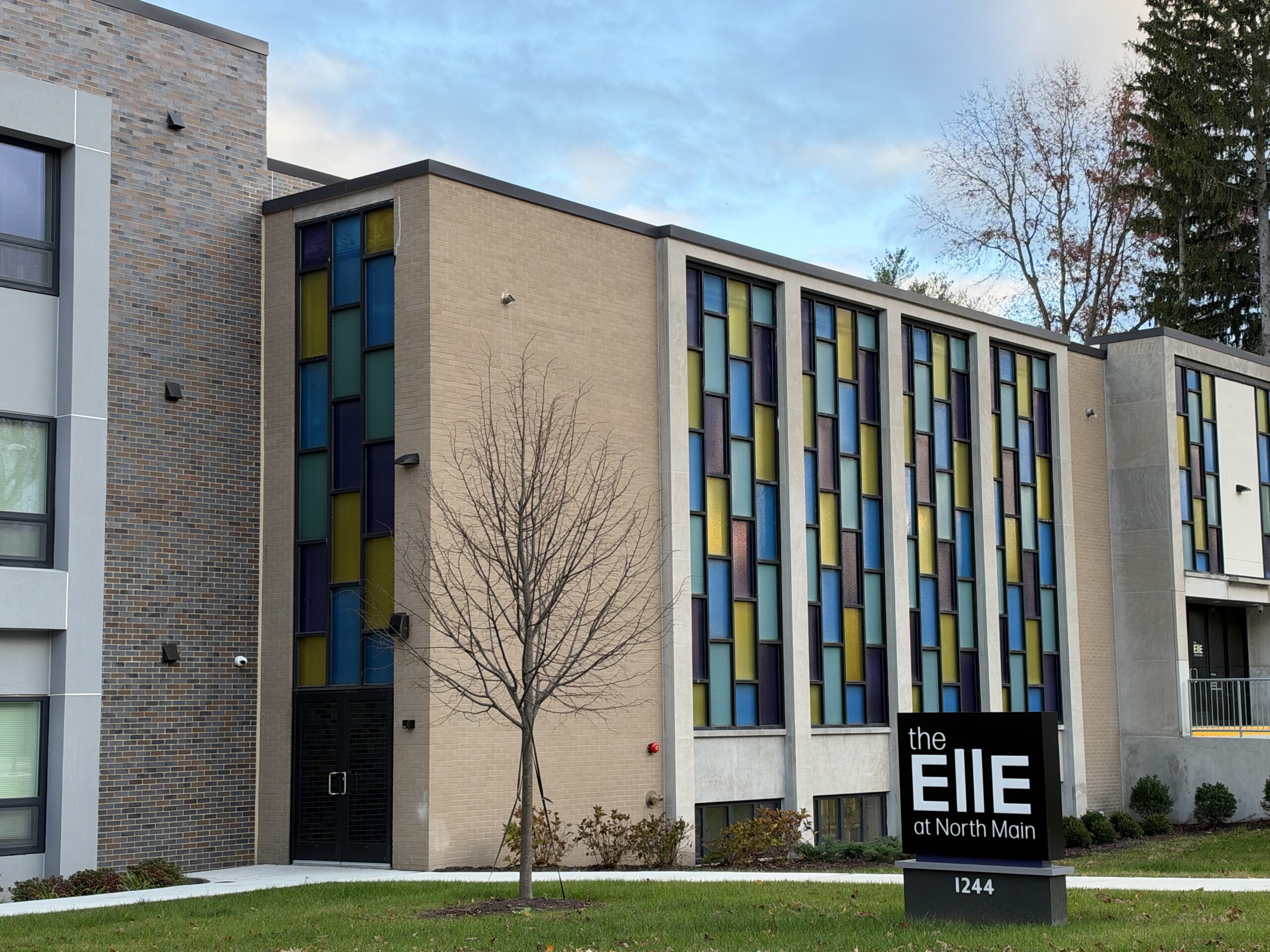
The Elle: Former West Hartford Synagogue Reimagined as 49-Unit Housing Development
"This is our first adaptive re-use," said Jill Corrado, executive director of the West Hartford Housing Authority. "It’s...