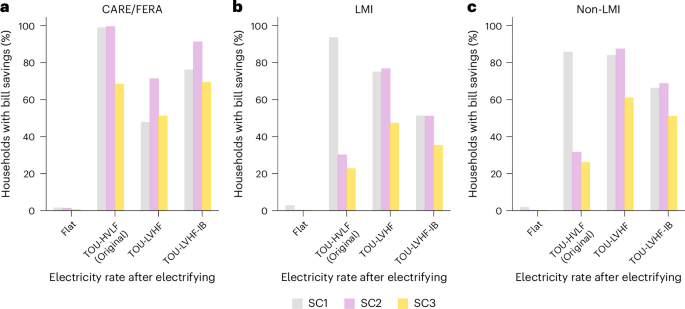
California is turning its attention to targeted neighborhood decarbonization to manage the mounting infrastructure costs of its clean energy transition.
As state policies push for widespread residential electrification, the remaining fossil gas infrastructure faces a shrinking customer base. Maintaining these legacy pipeline systems becomes increasingly costly for households that do not switch to electric alternatives.
Researchers project that strategic decommissioning can lower these lingering financial burdens. Communities targeted for transitions will see local gas lines capped rather than upgraded.
State utility regulators grapple with a financial paradox as clean energy mandates take hold across municipalities. Residential electrification programs aim to curb greenhouse gas emissions by replacing gas furnaces and water heaters with efficient electric heat pumps.
Transitioning entire neighborhoods off fossil fuels prevents utilities from sinking capital into pipe replacements designed to operate for decades. Researchers at Energy and Environmental Economics explored these dynamics in a benefit-cost analysis of targeted electrification and gas decommissioning.
Failing to prune the gas distribution network leaves fixed maintenance costs spread across fewer remaining ratepayers. Low-income households often stay connected to gas longer, absorbing a disproportionate share of those legacy expenses.
Upgrading electrical panels and grid infrastructure must keep pace with new loads from electric space heating and vehicle charging. Researchers note that distribution grids in parts of Northern California face capacity constraints that complicate rapid adoption.
Federal funding programs such as the Inflation Reduction Act of 2022 offer rebates for energy efficiency retrofits. These financial incentives help offset upfront costs for homeowners navigating equipment upgrades.

Oregon State Scrapes Past UC Riverside 64-57 at Gill Coliseum
Oregon State scraped past UC Riverside 64–57 on Wednesday afternoon at Gill Coliseum, leaving the Beavers 3–2 on...
Idaho Working Group Recommends Lottery, Loans, Asset Monetization for College Sports Funding
Idaho’s four public universities are staring down an $18 million hole at Boise State alone, and the governor’s...

Arkansas DC Ron Roberts: Stopping Run Is ‘Surprisingly Simple’ Key to Slowing Arch Manning, No. 5 Texas
Arkansas defensive coordinator Ron Roberts has a surprisingly simple recipe for slowing down Arch Manning: stop the run...
Dorothy Louise Holston, 71, Atglen Educator and Valley Baptist Church Member, Dies November 12, 2026
"To be absent from the body is to be present with the Lord," the family of Dorothy Louise...