
Researchers have developed SPARCS, a new technology that integrates artificial intelligence with microscopy to screen millions of genetically modified cells. Published in the journal Cell on October 6, 2026, the system allows scientists to link specific visual cellular behaviors to the underlying genetic changes that cause them.
How SPARCS Functions
The technology was created by a collaborative team led by Professor Veit Hornung at the LMU Gene Center, Professor Matthias Mann at the Max Planck Institute of Biochemistry, and Professor Fabian Theis at Helmholtz Munich. By combining genetic screening with automated imaging, SPARCS enables the large-scale analysis of cells. Once the artificial intelligence identifies cells displaying complex visual features, the system can selectively isolate those specific cells while keeping them intact.
This capability for isolated recovery is critical because it allows for downstream analysis. After the AI selects the cells of interest, researchers can use mass spectrometry to examine their protein composition. This process links observable cellular effects directly to the genetic alterations responsible for them.
Applications in Autophagy and Immune Research
In a proof-of-concept study involving 70 million cells, the team applied SPARCS to investigate autophagy, a cellular recycling process. The technology successfully identified most genes previously known to regulate autophagosome formation while simultaneously discovering new genes involved in the pathway.
SPARCS identified a large proportion of the genes already known to regulate autophagosome formation, while also uncovering additional genes involved in the process.
Dr. Niklas Schmacke, LMU
The researchers also utilized the platform to study STING, a sensor within the innate immune system. The study revealed that the acidity of the Golgi apparatus enables the early transport of STING. Specifically, the protein GPHR influences the pH levels within the organelle, which in turn dictates the activation of the immune sensor.

Advancing Biological Discovery
The researchers state that the integration of AI with scalable image-based screening provides a new systematic approach to biological discovery. By enabling the characterization of genetic changes at the molecular level, the technology offers expanded opportunities for investigating gene functions. The findings were documented in the study titled SPARCS enables scalable recovery of complex image-based phenotypes for genetic screening,
published in the journal Cell on October 6, 2026.

Best Prime Day Tech, Kitchen, and Fashion Deals Still Available After Sale
Amazon’s Prime Big Deal Days, which concluded on October 7, 2026, left behind a trail of active discounts...

Pininfarina and JAS Reveal the V6-Engined JAS Tensei by Pininfarina
Pininfarina and JAS have revealed the finished Tensei, a modified Mk1 Honda NSX featuring a 3.4-litre Judd-developed V6...

Police fear missing Christchurch man is dead
Police investigating the disappearance of 21-year-old Braydon Hepworth in Christchurch believe the young father is no longer alive.
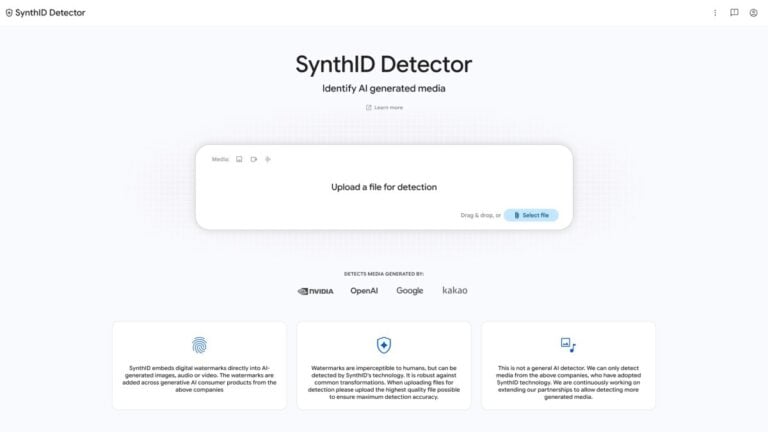
Google Launches Public SynthID Portal to Detect AI Watermarks
Google launched a global web portal at synthid.com allowing anyone to check images, videos, and audio files for...