State Officials Set Rhode Island Digital Government Summit 2026 Agenda
Registration opens Wednesday morning at the Grand Ballroom Foyer for the Rhode Island Digital Government Summit 2026, bringing together technology leaders, state administrators, and cybersecurity experts to address the public sector’s evolving infrastructure. Brian Tardiff, Chief Digital Officer for the State of Rhode Island’s Division of Enterprise Technology Strategy and Services, delivers the opening remarks at 9:00 a.m. in Grand Ballroom Salons 3 through 5, launching a packed day of panels on artificial intelligence, cloud strategy, and zero-trust security frameworks, events.govtech.com reported.
The agenda arrives at a critical juncture for state and municipal IT departments facing the dual pressures of legacy system migration and rapidly advancing automation. While agencies race to adopt cloud tools and generative AI capabilities, they must simultaneously fortify enterprise networks against sophisticated cyber threats. The summit addresses these friction points directly through concurrent technical tracks and strategy sessions designed to move state governance from paper-era foundations into real-time, cloud-native operations.
AI Integration and the Octopus Organization Model
Following the morning welcome, futurist and bestselling author Jonathan Brill takes the stage for a 9:15 a.m. keynote exploring the “Octopus Organization” model. The session examines how public sector agencies can transition away from rigid, traditional hierarchies toward decentralized teams capable of autonomous decision-making. Rather than treating artificial intelligence as a peripheral experiment, the keynote outlines methodologies for redesigning workflows to accelerate service delivery.
That conversation flows directly into an update on the state’s own technological trajectory. Brian Tardiff returns at 1:00 p.m. to moderate a detailed look at Rhode Island’s AI Action Plan in action. He is joined by Congressman Jim Langevin, Distinguished Chair of the Institute for Cybersecurity and Emerging Technologies at Rhode Island College and Chair of the Governor’s AI Task Force, alongside Timothy Henry, chair of the computer science department at Rhode Island College, and Chris Parisi, vice chair of the AI task force. The panel outlines practical steps for operationalizing responsible artificial intelligence across government agencies before a series of rapid-fire lightning talks showcases real-world municipal use cases from leaders like Newport IT Director Nick Craig and Bryant University CIO Chuck LoCurto.
Marking a Quarter Century of Digital Transformation
The summit also marks a major milestone for public administration technology. At 10:15 a.m., Zach Patton of e.Republic’s Content Studio leads a retrospective session titled “25 Years of Digital Government: How Technology, Policy and Public Service Evolved — and What Comes Next.” The discussion traces the quarter-century shift from the early 2001 era of static PDF downloads and digitized paper forms to modern, real-time resident portals backed by whole-of-state cybersecurity architectures.
This long-term evolution underpins the morning’s concurrent technical panels, which dive deep into the mechanics of enterprise risk management. In Salon 1, State Chief Information Security Officer Nathan Loura moderates an operational look at Zero Trust implementation. Panelists including Chris Abbott of Riptide Technologies, Gregg Cranshaw from the Rhode Island Department of State, OSHEAN President and CEO David Marble, and Accenture cybersecurity director Nilay Patel examine how agencies align with the NIST Cybersecurity Framework to manage third-party vendors and harden incident response protocols.
Down the hall in Salon 2, Chief Technology Officer Sanjay Gupta leads a parallel discussion on building practical cloud strategies. Joined by Providence College IT administrator Johan Calderon, Warwick IT Director Philip Carlucci, and Smartronix cloud director Ananda S. Murthy, the panel tackles the financial and architectural complexities of migrating workloads without triggering uncontrolled cloud sprawl.
Data Stewardship and Enterprise Risk Management
Data governance receives dedicated focus in the Plaza Ballroom, where Chief Data and Analytics Officer Scott Gausland moderates a data stewardship panel. Officials including Jessica Cigna from the Department of State, Sarah Cote from the Rhode Island Longitudinal Data System, Santiago Guerrero from the Department of Education, and Rebecca Lebeau from the Executive Office of Health and Human Services explore data maturity models and compliance frameworks necessary to break down institutional silos.
Later in the afternoon, risk management takes center stage during a 2:10 p.m. session moderated by Cybersecurity and Infrastructure Security Agency regional advisor Mike Tetreault.
Simulated Cyberattacks and Evening Awards
Theory gives way to practical stress-testing at 3:15 p.m. with an interactive session titled “Anatomy of an Attack.” Douglas Alexander, director of the Institute for Cybersecurity and Emerging Technologies at Rhode Island College, guides the audience through a simulated cyber incident. Participants vote on response priorities in real time, testing their collective ability to investigate evidence, contain threats, communicate with the public, and execute recovery procedures under pressure.
The conference concludes late Thursday afternoon with the presentation of the Rhode Island Excellence in Technology Awards at 4:15 p.m. Brian Tardiff delivers the closing remarks at 4:35 p.m., followed immediately by an open networking reception in the exhibit area where attendees can connect with industry vendors and state colleagues before the summit officially ends at 5:10 p.m.
Worth a look

Nevada 2026 Midterm Election: Voting details for Washoe County residents
Tuesday marks the final opportunity for eligible residents who haven't yet voted in Nevada's 2026 midterm election. Polls...

Linda Gerry, Lincoln Resident and church secretary, dies at 79
A single yellow Post-it note, stuck quietly to a computer monitor in a Lincoln home, held a familiar...

Robert H. Garner, Outdoorsman and Vietnam Veteran, Passes Away
Remembering Robert H. Garner Robert H. Garner, a lifelong outdoorsman, veteran, and family man, passed away on Tuesday,...
Temperatures climb across southern Montana and northern Wyoming
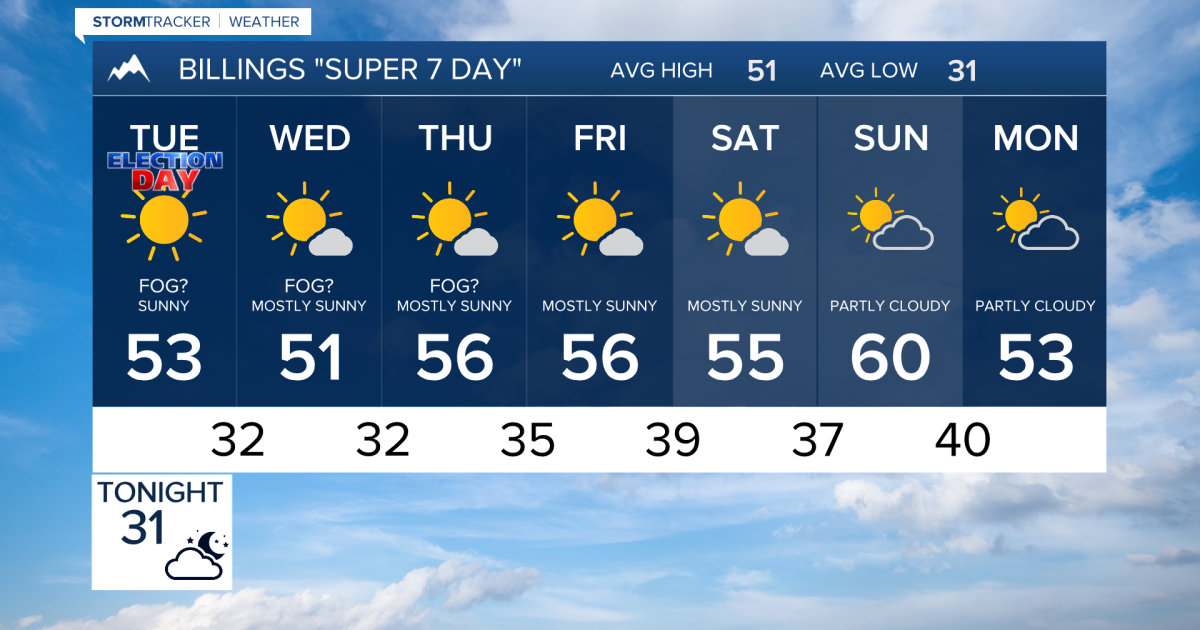
Winds Ease and Temperatures Climb Across Southern Montana and Northern Wyoming Rain and mountain snow will steadily taper...