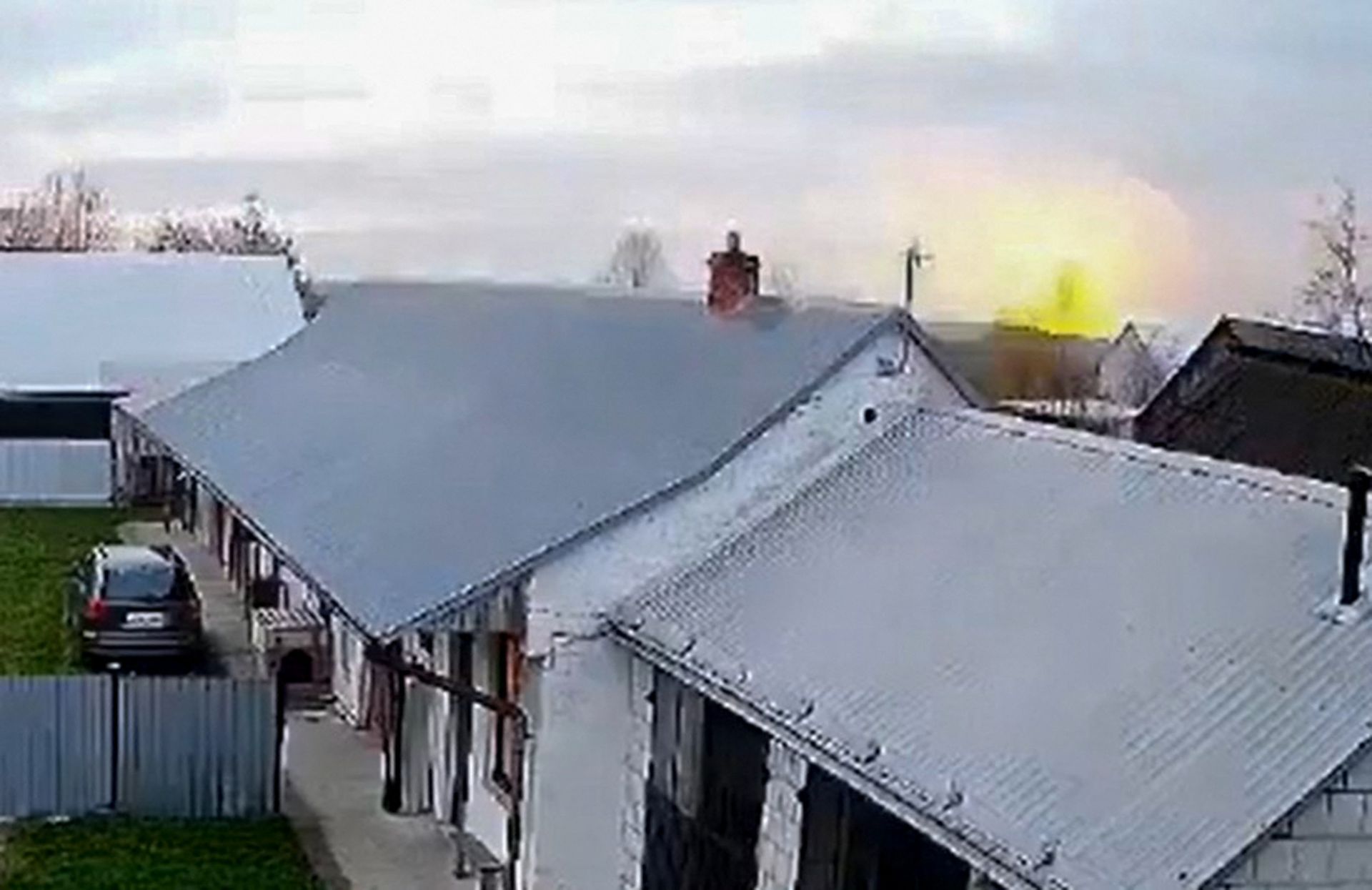
Russian missiles and a drone crashed in southeastern Poland on Friday during Moscow’s largest aerial assault on Ukraine in months, prompting Warsaw to accuse the Kremlin of an intentional provocation and NATO to deploy an AWACS airborne radar to monitor Polish airspace.
Polish authorities recovered debris at three sites — Nowy Lipowiec, Rudnik nad Sanem and Mołodycz — on Nov. 22, two days after the strikes, the Lublin District Prosecutor’s Office said. All three missiles were manufactured in recent weeks at a plant in the Russian city of Dubna, the Kyiv Independent reported, citing the prosecutor’s investigation. The impacts occurred near the “Koalicja 26.2” military exercise at Nowa Dęba, where forces from France, Lithuania, Britain and Estonia are training for a possible post-war stabilization mission in Ukraine.
One missile landed about 35 kilometres from the area where military exercises were underway. “We know that what landed on Polish soil came from Russia.” It appears that we are dealing with an intentional provocation,” Prime Minister Donald Tusk said Friday.
NATO Secretary General Mark Rutte called the incident a “grave violation” of Polish airspace and said the alliance stands “in solidarity with Poland and will continue to strengthen our ability to deter and defend.” The North Atlantic Council met in Brussels on Nov. 23 to discuss the violations, Reuters reported.
Missile details and crash sites
Polish Defense Minister Władysław Kosiniak-Kamysz confirmed that two Kh-101 cruise missiles and a jet-powered drone fell on Polish territory during the overnight barrage. One missile struck Nowy Lipowiec, roughly 62 kilometers from the Ukrainian border; a second hit Rudnik nad Sanem, about 100 kilometers from the border, the Kyiv Post reported.
The drone came down near Mołodycz, approximately 30 kilometers from the frontier, according to the Times of India.
Investigations at Nowy Lipowiec and Rudnik were completed by Nov. 22; the Mołodycz site was finalized on Nov. 23, the Lublin prosecutor’s office said.
Trudno uznać za przypadek, że czas i miejsce naruszenia polskiej przestrzeni powietrznej zbiega się z ćwiczeniami Koalicji Chętnych w Nowej Dębie. Dziś będę tam wspólnie z żołnierzami Wojska Polskiego, ministrami obrony naszych sojuszników i żołnierzami państw Koalicji…
NATO response and air defenses
Allied aircraft scrambled during the attack, including Polish F-16s, Swedish JAS 39 Gripens and a Dutch A330 Multi Role Tanker Transport, CBS News reported, citing the Polish military. A Swedish pilot flying under NATO command was authorized to engage a suspected Russian cruise missile but held fire because severe weather prevented visual identification, the Kyiv Independent reported.
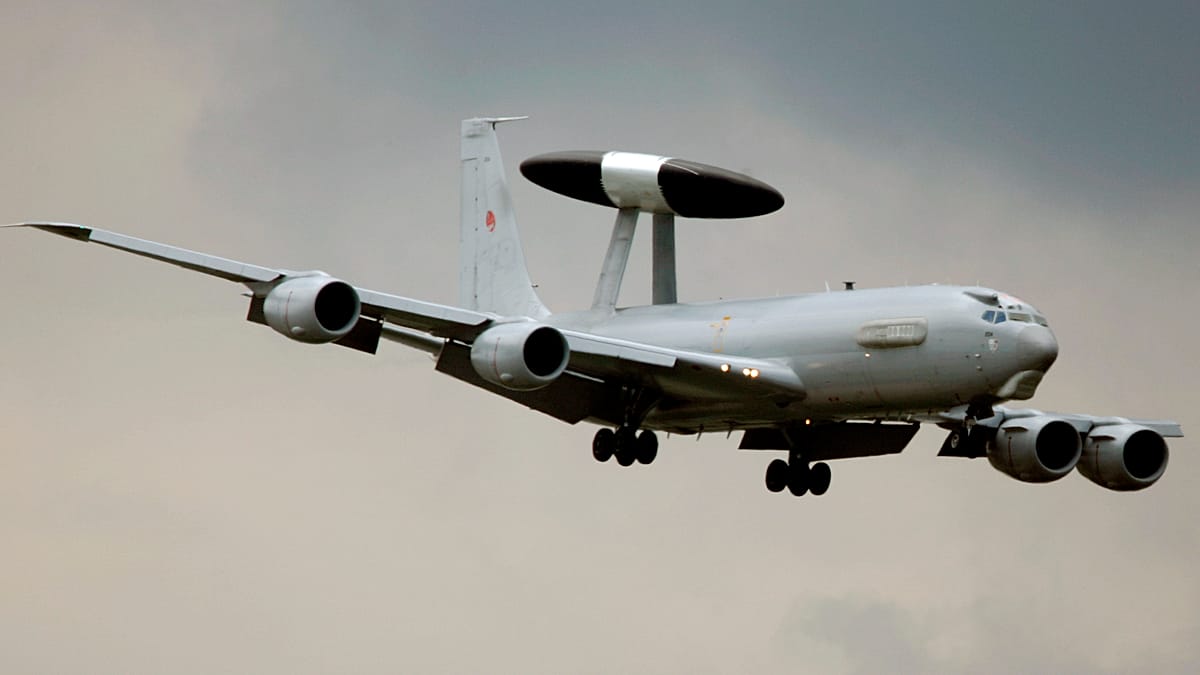
NATO has forward-deployed an AWACS aircraft from its Gelsenkirchen fleet to Poland after Gen. Alexus Grynkewich, commander of Allied Air Forces Europe, authorized the move, euronews reported.
The E-3 Sentry’s rotating radar dome provides continuous surveillance of the eastern flank.
Secretary General Rutte said Saturday in Warsaw that Grynkewich would examine potential threats and make defensive adjustments as needed, the Polish Press Agency reported, as cited by Stars and Stripes. “In the near future, we will receive strong support from our NATO allies to bolster the protection of our eastern border,” Kosiniak-Kamysz posted on X.
Escalating pattern of violations
The Nov. 20 incident exemplifies a sharp rise in Russian airspace incursions recorded by NATO this year. Through Nov. 20, NATO members recorded 25 attributed Russian violations in 2026 — more than four times the 2024 total and 43% of all such incidents over the past five years, the Conversation reported. In 2025 the count jumped to 18, a 200% year-over-year rise.
Russian MiG-31 interceptors flew over Estonia for about 12 minutes with transponders switched off, the outlet added. Moldova and Finland also reported separate Russian airspace violations on Nov. 20, the Kyiv Independent noted. Romania, Lithuania and Latvia have recorded confirmed or suspected incursions in recent months, ABC News reported. Russian officials have denied responsibility for all such incidents, ABC News said.
“While Moscow tries to initiate discussions about the 'new security architecture of Europe,' Russian missiles and drones directly undermine the existing security order in Europe,” Ukrainian Foreign Minister Andrii Sybiha said.
Massive Russian barrage on Ukraine
The missiles that reached Poland were part of a wave of more than 400 drones and 110 missiles Russia launched overnight, including 27 ballistic missiles, some carrying cluster warheads, President Volodymyr Zelenskyy said. Ukrainian air defenses intercepted 79 of the 110 missiles but lacked interceptors for the ballistic missiles, Zelenskyy said. At least eight people were killed and nearly 30 injured in Ukraine, CBS News and the Times of India reported.
Polish investigators traced the Kh-101 cruise missiles that struck Nowy Lipowiec and Rudnik nad Sanem to MKB Raduga, the defense aerospace company in Dubna specializing in design and production of missile systems, the Kyiv Independent reported citing the prosecutor’s investigation. The missiles were manufactured in recent weeks at that plant, underscoring its active role in supplying Russia’s current aerial campaign.
U.S. diplomatic track
Separately, U.S. envoy Jared Kushner said in a podcast interview that Russian President Vladimir Putin has given Washington his word not to use nuclear weapons in the war.
“He’s agreed not to use nuclear weapons, which obviously is a big thing, and he’s reassured us that that’s not his intention,” Kushner told the “MD Meets” podcast hosted by Axel Springer CEO Mathias Döpfner, according to dpa via DW.com.
Kushner also blamed a Ukrainian drone attack on Putin’s Valdai residence last December for setting back peace efforts; the CIA assessed the residence was not the intended target.
More on Poland
Spoke with @donaldtusk about the grave violations of Polish airspace overnight. NATO jets were scrambled in response. We stand in solidarity with Poland and will continue to strengthen our ability to deter and defend. This incident is clearly dangerous – a consequence of…
Au cours des 24 dernières heures, plusieurs de nos partenaires européens et de nos alliés ont été de nouveau confrontés à des incidents graves qui dénotent une agressivité nouvelle de la part de la Russie. Je tiens d'abord à marquer ma solidarité avec la Pologne,…
🇵🇱 During this morning’s Russian missile and drone attack on Ukraine, an unidentified aerial object flew deep into Polish territory, crashing near the village of Nowy Lipowiec in southeastern Poland. Security camera footage from the nearby Polish village of Chmielek to shows the… pic.twitter.com/SVkPBAmqo3
💥 A Russian Kh-101 cruise missile crashed in a field near Nowy Lipowiec in Poland’s Lublin region earlier today during a large Russian missile and drone attack on Ukraine. Polish Defense Minister Władysław Kosiniak-Kamysz confirmed the incident. The missile came down roughly… pic.twitter.com/RSKiVbPv5I

Tim Robinson Calls Burbank Police ‘Dirty Pigs’ Over K-9 Spike Tribute’
Dirty pigs made a dog do their violence! Now they celebrate their abuse of an innocent animal?

Mingyur Rinpoche to Teach Guru Rinpoche Sadhana for Khyentse Vision Project
The Khyentse Vision Project announced a live-streamed teaching by Yongey Mingyur Rinpoche on December 8, Buddhistdoor reported. The...

Macron and Merz Set Year-End Budget Deadline; Merz Links Deal to Ukraine Loan
Leaders aim to lock in a deal by 31 December before a wave of 2027 national elections, starting...

COP31 Summit Collapses in Antalya as Climate Finance Target Dropped
COP31 climate summit collapsed in Antalya, Turkey on Sunday, the first UN climate summit to fail since Copenhagen...