Trump Accepts Defiant Midterm Results as Democrats Seize Congress
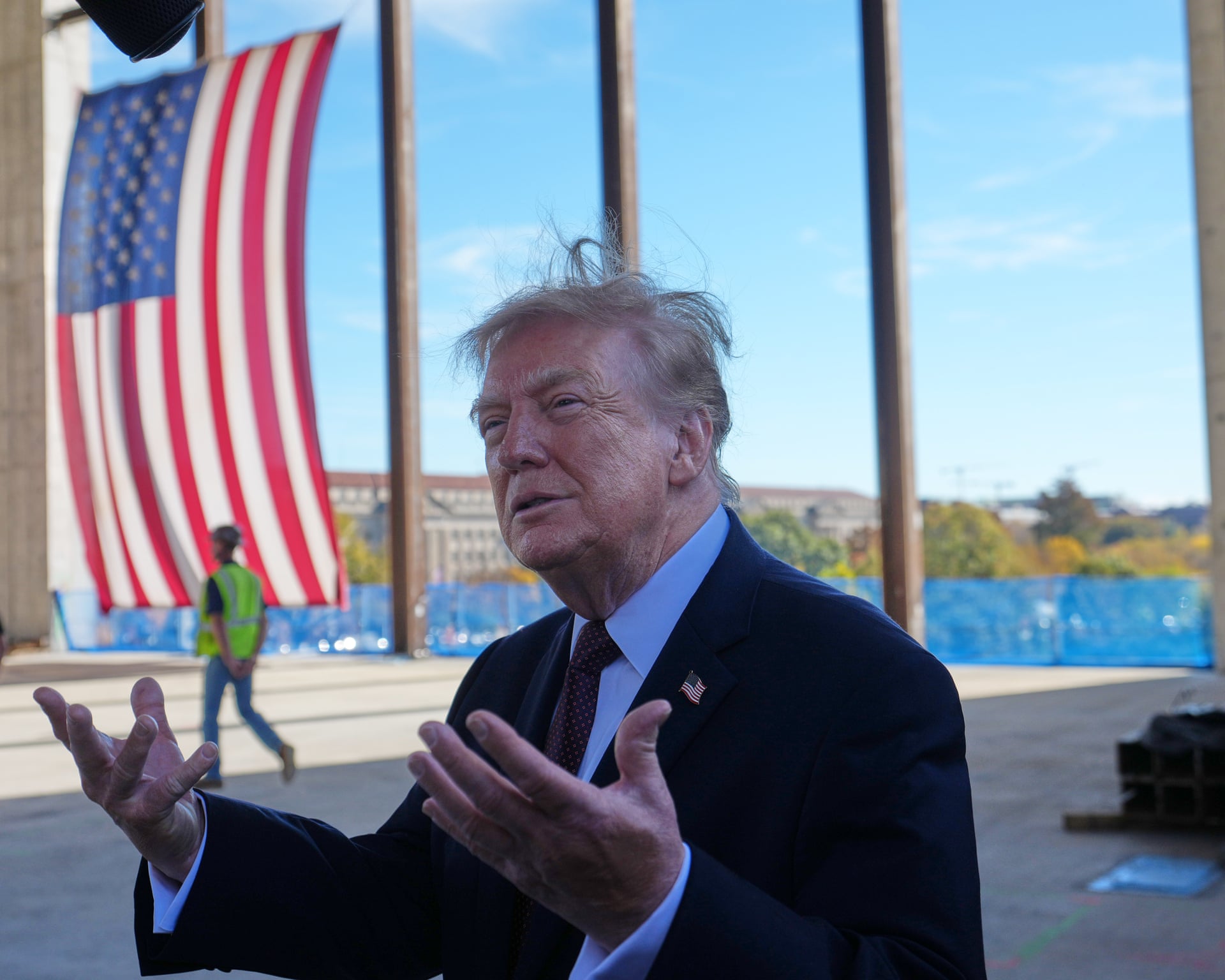
President Donald Trump accepted the results of the 2026 midterm elections after Democrats secured control of both the House and Senate in a decisive “blue wave,” according to The Guardian. Despite his administration’s aggressive efforts to sow doubt about the electoral process, the system held up against attempts at interference. “It was essentially too big to rig,” an unnamed Trump adviser told CNN. In a move that underscored the political earthquake, Trump made his first public appearance the day after the results to announce plans for his $600 million White House ballroom, a project he touted as the most beautiful in the world.
A Historic “Blue Wave” and the End of Trump’s Coattails
The election results represent a stunning repudiation of Trump’s political influence. Dozens of Republican candidates directly endorsed by Trump lost their races, raising profound questions over the power of the president’s support. As CNBC reported, Democrats regained control of Congress, shifting the balance of power for the final two years of Trump’s term. This outcome will allow the Democratic-controlled Congress to directly affect household budgets, including health insurance premiums, taxes, housing costs, and student loan bills, according to policy experts cited by CNBC. The sweep was not limited to federal races; Democrats gained hundreds of seats in state legislatures across the country, victories that will have major implications for life in America.
NEW: A White House official tells me @NewsNation the mood inside the White House is “defiant.” “President Trump was not on the ballot, and it’s proven that Trump voters show up when he is on the ballot.” “Also, candidate quality matters, and President Trump did a better job…”
They approved nearly every datacenter moratorium on the ballot. Colorado rejected a conservative effort to require police to cooperate with immigration officers. The results were a direct rebuke of Trump’s agenda, including his aggressive posture on foreign policy and his economic policies. Fox News suffered a ratings slump, and as The Guardian noted, Elon Musk’s nearly half a billion dollars in midterms spending was a significant flop. The Democrats’ success was fueled by popular anger over tech, AI, and the super rich, suggesting that life for billionaires could become much more difficult in the newly blue America.
In his first public appearance after the election, President Donald Trump stated that if he had been on the ballot, he would have won, adding that he was not able to transfer the love his supporters hold for him to other candidates.
Trump told me last night that the Iran War was partially the reason Republicans lost, but that he didn't regret it and would do it all over again. https://t.co/ONsWHtkEGn
Attributing Republican Losses to the Iran War
The Republican losses are being widely attributed to the Iran war, a conflict Trump himself admitted likely cost his party the election. “I think it’s largely true because it drove the gasoline up a little bit short term and probably that’s, probably it’s true,” he conceded in an interview with Fox News. The president framed the conflict as a necessary long-term strategy, stating, “You can’t let Iran have a nuclear weapon or everything that you see here someday might not exist.”
The fallout from the election has created friction within the Republican party. Vice President JD Vance has already distanced himself from the decision to strike at Iran, publishing a post-mortem that outlined four key priorities for winning back voters, including ending the war and focusing on the cost of living. Vance’s remarks suggest a clear attempt to realign the party with the electorate’s priorities. A Democratic-controlled Congress will likely try to constrain Trump’s future foreign adventure plans.
Trump’s reaction has been to deflect blame. He lashed out at Fox News, claiming its ratings are down because of coverage of the “Trump Deranged Dumocrats!” and accused the network of biased polling. He also pointed the finger at the quality of the candidates he endorsed, a claim echoed by a White House official who told NewsNation, “President Trump was not on the ballot, and it’s proven that Trump voters show up when he is on the ballot. Also, candidate quality matters, and President Trump did a better job promoting many of the candidates on the ballot than the candidates did themselves.”
Focusing on White House Ballroom Project
Instead of dwelling on the political setbacks, Trump chose to focus on his legacy of construction. In his first public appearance since the election, he largely ignored the results and instead gave reporters a tour of the White House East Wing ballroom project. He signed a steel beam destined for what he claims will be the most beautiful ballroom in the world, according to The Daily Mail. “It’s going to be not only one of the biggest, but it’ll be the most beautiful ballroom, I think, anywhere in the world,” he said.
“I consider it to be the most successful two-year period in the history of any president,” Mr. Trump said after admitting defeat https://t.co/GuyW9vYffr
This display of indifference to the election results stands in stark contrast to his personal financial success. While midterm results may have dented his political ego and the stock in Trump Media and Technology Group plummeted to its lowest-ever level on the Nasdaq, Forbes estimated in a September analysis that he is $2.7 billion wealthier than when he won the White House in 2024. The financial gain highlights a central paradox of Trump’s second term: a devastating political loss coupled with immense personal wealth.
The electoral map itself saw several historic shifts. In Texas, Democratic Sen.-elect James Talarico celebrated his win with Luci Baines Johnson, the daughter of former President Lyndon Baines Johnson, who once held the same seat. In Mississippi, Democratic nominee Scott Colom held a razor-thin lead over Republican Sen. Cindy Hyde-Smith, a race that could see Colom become the state’s first Black senator since Reconstruction. And in Michigan, Democrat Abdul El-Sayed defeated Republican Mike Rogers to become the first Muslim elected to the Senate, declaring in his victory speech, “Mike, enjoy your retirement. I know you got a house in Florida and two yachts.”
One of Trump's defining characteristics is his complete inability to take responsibility “The biggest issue is that I wasn’t on the ballot.” The president acknowledged that some Republicans on the ballot “could have been better.” “Some of them had a lot of flaws, and…”
More on Democrats
This won't last, but it's interesting as an initial reaction. https://t.co/BUoZywypZV pic.twitter.com/EWPYINEgSJ

Leaked Docs Reveal Russia to Supply Iran With 90 Missile Launchers
Russia secretly agreed to supply Iran with 90 advanced missile launchers for helicopters, according to leaked defense industry...
Russell Brand Found Guilty of Rape and Sexual Assault
Russell Brand has been found guilty of one count of rape and three counts of sexual assault following...

Australia Tightens Visa Rules to Easier Deport Immigrants Who Might Cause Harm
Immigrants 'Might' Do Harm: Australia Eases Deportation Powers Australia has quietly overhauled its visa character test, making it...

Hoax bomb threats force more than a dozen European flights to divert
A wave of hoax bomb threats forced more than a dozen European flights into emergency landings and military...