
Saline County has long served as a reliable Republican fortress in central Arkansas, a place where the political climate felt as settled as the local terrain.
Yet, in last week’s midterm elections, the county delivered a result that caught even seasoned observers off guard. Despite Donald Trump winning 69% of the vote here just two years ago, the county’s voters shifted 17 percentage points toward Democratic candidates. While Republicans maintained their grip on county offices and legislative seats, the results show deepening restlessness in one of the state's most conservative strongholds.
The numbers from the midterms paint a striking picture of a changing electorate. Republican nominees for the U.S. House and Senate saw their numbers drop from two years ago. In the state House, GOP Rep. RJ Hawk of Bryant narrowly fended off a challenge from Democrat Gina Thomas-Littlejohn, winning by a mere 96 votes.
This stands in stark contrast to two years prior, when Hawk defeated the same opponent by more than 2,300 votes. The shift was felt elsewhere, too, with a Republican-led effort to cut the county’s library funding failing.
Shane Broadway, chairman of the Saline County Economic Development Corporation, has spent decades observing the state’s political pulse. He says that while national narratives often focus on presidential popularity, the local reality is far more granular.
“One thing I noticed watching all of the ads [was], especially on the Democratic side, they were focusing on costs of gas, groceries, those kinds of things, and nobody ever mentioned Donald Trump on either side,” Broadway said.
A Shift in the Suburbs
The geography of the shift is telling. The northeast corner of Saline County, encompassing Bryant, Alexander, and Shannon Hills, has become a destination for families moving out of Little Rock in search of a lower cost of living. This demographic evolution is changing the political arithmetic of the area.
Lela Chism, who secured a city council seat in Shannon Hills last week, said that because these newcomers lack the entrenched “reactionary Republican voting base” found elsewhere in Saline County, the local populace is far less influenced by right-wing talking points concerning the LGBTQ+ community and immigrants.
Chism argues that the disconnect stems from a growing divide between campaign rhetoric and daily survival. “The culture stuff might hype you up and get reactionary people out to the polls because it scares them, but the policy itself isn’t popular,” Chism said.
For many voters, the primary concern remains the economy. Joshua Irby, a Democratic candidate who ran for Hammer’s Senate seat, found that constituents were less interested in sound bites and more concerned with tangible relief.
“People are just feeling like, ‘Where’s the help?’” Irby said. “Where are the people who are representing us, and what are they doing to improve this situation? I think that was the key takeaway, the biggest concern anyone and everyone had.”
The Pendulum’s Uncertain Path
Republican Sen. Kim Hammer of Benton, who won his race for secretary of state last week, acknowledged the leftward movement but framed it as a temporary protest. He suggests that the results reflect a transient dissatisfaction rather than a fundamental realignment of the county’s values.
“I think we’re going to see the pendulum swing back the other direction because people will realize we were going in the right direction” under Republican leadership, Hammer said.
Other party veterans are more cautious about reading too much into a single cycle. Richard Bearden, a former state Republican party chairman, said that it is premature to declare a permanent shift in Arkansas’ trajectory. “I don’t know that we can look at one election cycle and say, ‘Golly, the state’s trending back to being sort of a yellow-dog Democrat state that it was 20 years ago,’” Bearden said.
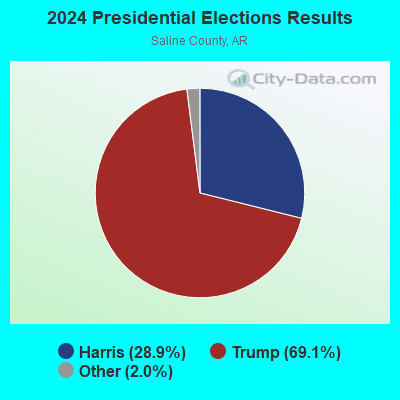
The data suggests that while the Democratic Party of Saline County is rebuilding—evidenced by more active outreach and physical headquarters space—the Republican foundation remains structurally sound.
All 13 positions on the Saline County Quorum Court remained in GOP hands, while Republicans also preserved their clean sweep of the county’s six state House seats and two Senate positions. Yet, for the first time in years, the margins of victory have forced a conversation about the limits of party loyalty when kitchen-table issues take center stage.
As the dust settles on the midterms, the message from the voters of Saline County appears to be one of pragmatism over partisanship. It is unclear whether this cycle was a brief tremor or the early stages of a genuine tectonic shift. As Broadway observed, the state’s voters “tend to have an independent streak,” and in this election, that independence manifested in a willingness to reconsider the status quo.
Keep reading
Xcel Energy Investigation Pending After Fatal Hopkins Pole Collapse
A utility pole collapsed onto a car in Hopkins, killing 31-year-old Kenny Green. Sunday marks 12 weeks since...

How El Niño Will Impact Michigan’s Winter Weather, Wildlife, and Agriculture
"You know, we'd build a snow fort in December, and it would still be there in February. And...
Ed Flynn Has a New Challenger for His Boston City Council Seat
Councilor Ed Flynn faces a fresh electoral challenge as community organizer and substitute teacher Rachel Pearson launches her...

ASMFC Votes to Reduce Menhaden Harvest and Limit Chesapeake Bay Catch
“ASMFC failed to follow its own ecosystem science when it mattered most,” Will Poston said in a statement...