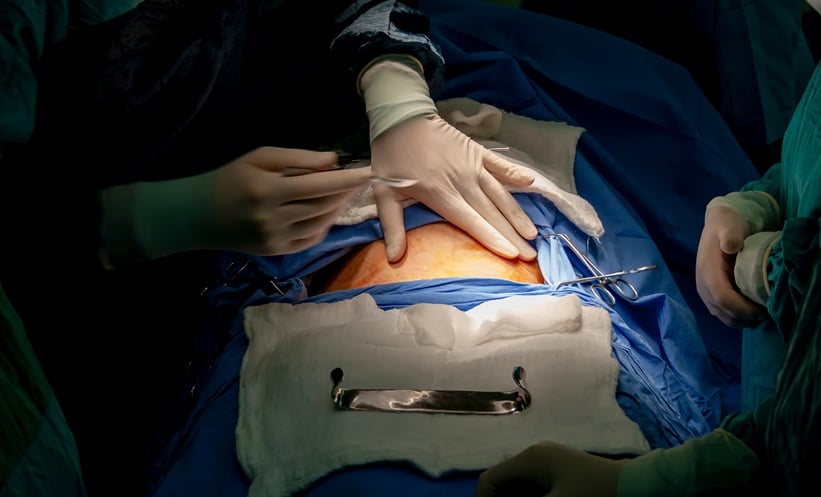
Permanent contraception choices during caesarean deliveries have shifted dramatically, with bilateral salpingectomy nearly replacing traditional tubal ligation at an Italian referral centre by 2025.
Researchers tracking consecutive caesarean deliveries at a tertiary centre in Ancona, Italy, between January 2010 and December 2025 documented how surgeons increasingly opted to remove both fallopian tubes rather than simply tie them.
Among 12,648 eligible deliveries during the study window, 801 patients requested permanent contraception. The procedure was successfully completed in 777 cases, marking a 97.0% completion rate for patient requests. Across the full timeline, 612 patients underwent bilateral tubal ligation while 165 received bilateral salpingectomy.
Salpingectomy accounts for more than just permanent birth control. The operation also serves as an opportunistic ovarian cancer prevention strategy during an existing operation. Patients received preoperative counselling throughout the study period, with technique selection reflecting patient preference, surgeon experience and preference, and operative feasibility. No institutional protocol mandated salpingectomy, and no specific educational programme was introduced to promote its use.
The practice evolved gradually rather than overnight. Salpingectomy accounted for 4.9% of completed contraceptive procedures between 2010 and 2015 before climbing to 90.9% in 2025. Statistical analysis showed the odds of its use rose by 35% per calendar year, with an odds ratio of 1.35 and a 95% confidence interval ranging from 1.28 to 1.42. The data revealed no discrete turning point in the adoption curve.
Surgeon background played a notable role in the transition. Among the 39 surgeons involved, those who completed specialist training more recently generally performed a greater proportion of salpingectomies. However, the single-centre observational design cannot establish that training directly caused the differences between individual surgeons, as detailed information on additional surgical training was unavailable.
Surgical duration increased with the newer technique. Median total operative time reached 68 minutes with salpingectomy, compared with 46 minutes for tubal ligation. After adjusting for calendar year, emergency surgery, and additional major procedures, salpingectomy remained associated with an additional 15.7 minutes in the operating room.
Requested contraception could not be completed in 24 cases due to anatomical findings, predominantly severe pelvic adhesions. Researchers found non-completion rates stayed relatively stable over time.
The findings indicate that salpingectomy can be widely integrated into caesarean deliveries without reducing the overall completion rate of requested permanent contraception. While the study assessed adoption and feasibility rather than subsequent ovarian cancer incidence, its results support further implementation research. Counselling should continue to address the irreversible nature of the procedure along with available contraceptive alternatives.
Keep reading

The Lasting Legacy of Smotrich and Ben-Gvir Amid Netanyahu’s Political Crisis
Benjamin Netanyahu faces a looming political downfall while the hardline apparatus constructed by his far-right coalition partners remains...

Nintedanib Halves Annual FVC Decline in Progressive Pulmonary Fibrosis
LUNG function declined more slowly after nintedanib initiation in progressive pulmonary fibrosis patients, according to a nationwide study...

Advancing Natural Capital Solutions at the 8th SELINA Workshop
SELINA partners gathered in Riga, Latvia, for the project's 8th Workshop between September 28 and October 1, 2026,...

Protect Babies From Serious RSV Illness: New Immunisation Programme Underway
As winter approaches, health officials are urging parents to secure free RSV immunisations for eligible infants to curb...