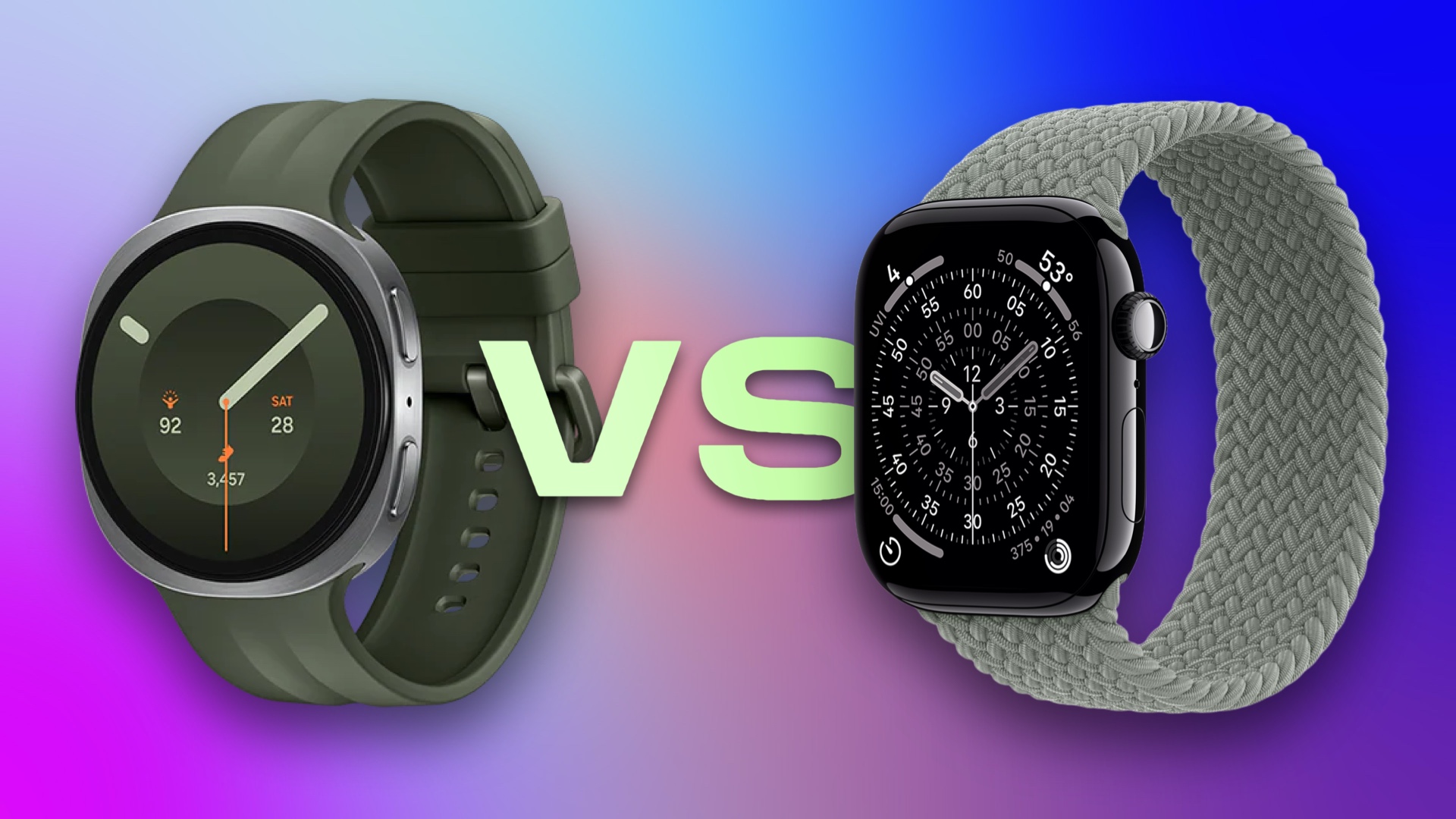
Samsung released the Galaxy Watch 9 on August 7, 2026, introducing a Qualcomm Snapdragon Wear Elite processor and AI-driven health scoring. Starting at $379.99, the wearable competes directly with the Apple Watch Series 11 by shifting focus toward preventive wellness tracking and actionable biometric data.
The battle for the wrist has shifted. It is no longer just about who can track the most steps or heartbeats, but who can act as a personal fitness trainer. Samsung’s latest entry, the Galaxy Watch 9, attempts to win this fight by distilling complex biometrics into simple, actionable scores.
While the hardware looks nearly identical to the Galaxy Watch 8, the internals have been overhauled. Samsung has ditched its older in-house Exynos silicon in favor of the Qualcomm Snapdragon Wear Elite platform. This 3nm penta-core chip is designed to make on-device AI processing and graphics feel more responsive.
AI Health Modes: Heart Health, Cardio Load, and Fitness Index
The core of the Galaxy Watch 9 is a suite of preventative health features.
Rather than leaving users to drown in raw statistics, the watch uses AI to provide feedback on the body’s current state.
One primary tool is the Heart Health score, which acts as a wide-reaching health assistant. It analyzes skin temperature, respiration rate, blood oxygen count, and sleep data to produce a consolidated cardiovascular wellness score.
By balancing exercise data with recovery metrics like resting heart rate and sleep, the watch can notify a runner whether today should be a rest day or a run day.
Then there is the Fitness Index, designed for the competitive user. This tool measures aerobic capacity across five criteria: strength, flexibility, endurance, cardio, and body composition. It then compares these metrics against other Samsung Health users of the same age and gender to show how a user stacks up against their peers.
Hardware Specs: Galaxy Watch 9 vs. Apple Watch Series 11
When placed side-by-side with the Apple Watch Series 11, the Galaxy Watch 9 holds a measurable lead in a few key hardware categories, particularly display brightness and positioning accuracy.
| Feature | Galaxy Watch 9 | Apple Watch Series 11 |
|---|---|---|
| Peak Brightness | 3,000 nits | 2,000 nits |
| GPS | L1 + L5 dual-frequency | L1 single-frequency |
| Bluetooth | v6.0 | v5.3 |
| Thickness | 8.6mm | 9.7mm |
| Starting Price | $379.99 | $399 (Aluminum) |
The Galaxy Watch 9’s Super AMOLED screen is significantly brighter, which improves visibility in harsh sunlight. It also features dual-frequency GPS, a detail that reduces location drift in dense cities where Apple’s single-frequency L1 positioning may struggle.
Weight and size vary by model. The Watch 9 comes in 40mm (31.5g) and 44mm (34g) sizes. The Series 11 offers 42mm and 46mm options, with the 46mm titanium model weighing up to 43.1g. While Apple maintains its signature rounded-rectangle design, Samsung sticks to a circular screen mounted on a “squircle” base.
Pricing and Ecosystem Lock-in
The financial gap between the two flagships is modest. The Galaxy Watch 9 debuts at $379.99, undercutting the Apple Watch Series 11’s original $399 launch price by $20.
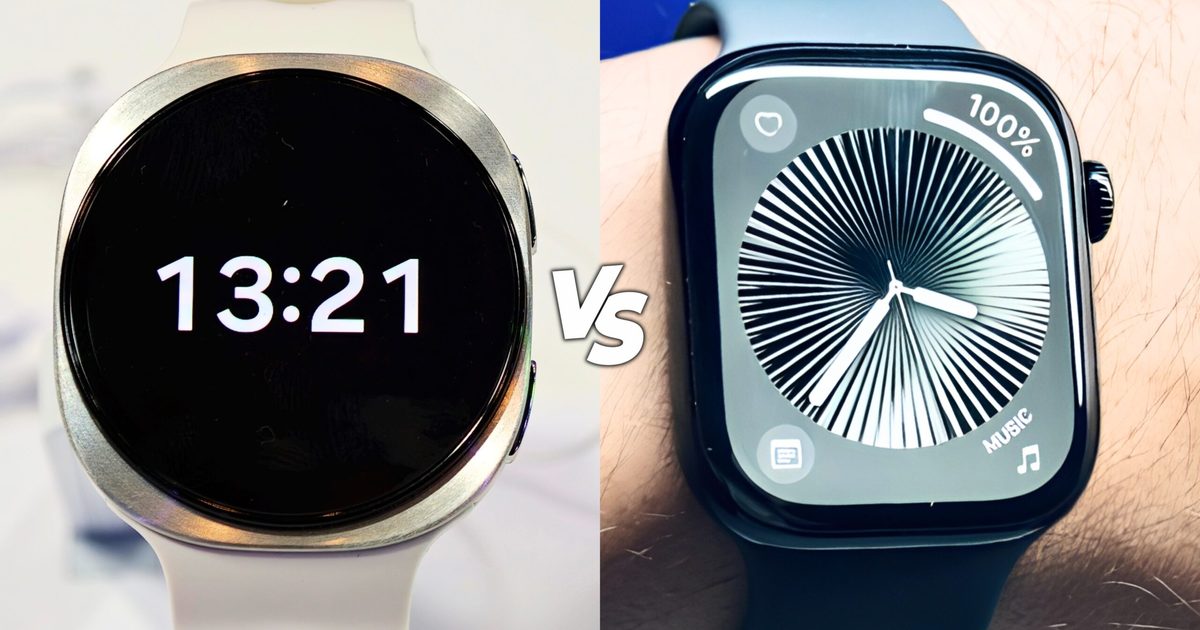
Pricing scales based on size and connectivity. For the Galaxy Watch 9, the 40mm Bluetooth model starts at $380, rising to $430 for LTE. The 44mm model costs $410 for Bluetooth and $460 for LTE. Apple’s aluminum 42mm model is $399 (GPS) and $499 (cellular), while the 46mm aluminum version adds $30 to those prices. For those seeking luxury, the titanium Apple Watch jumps to $699 for the 42mm and $749 for the 46mm, with the Hermès Series 11 starting at $1,249.

“Samsung has subtly improved its catch-all smartwatch in a series of impressive and meaningful ways.”
Katie Collins, Principal Writer, CNET
Despite the hardware specs, the decision for most buyers remains a matter of software ecosystem. An Apple Watch works exclusively with Apple devices, and the Galaxy Watch requires an Android device running Android 13.0 or higher with Google Mobile Services.
The most significant remaining uncertainty for users is the actual accuracy of these AI scores. While the features are impressive on paper, they rely on the watch’s ability to collect enough high-quality data to make informed decisions—a challenge that has plagued similar tools in the past.
iPhone 18 Pro Pre-Orders Open September 12 With A20 Pro Chip and Price Hikes
Apple's latest flagship lineup arrives with a familiar sting for buyers.

Anthropic CEO Calls for AI Slowdown, Backed by Altman and Musk
Anthropic Chief Executive Officer Dario Amodei has called on artificial intelligence firms to slow the development of the...

TCL Unveils P80 NXTPAPER AMOLED Phones and X11L TV at IFA 2026
At IFA 2026 in Berlin, TCL unveiled a massive hardware showcase featuring the P80 series of NXTPAPER AMOLED...