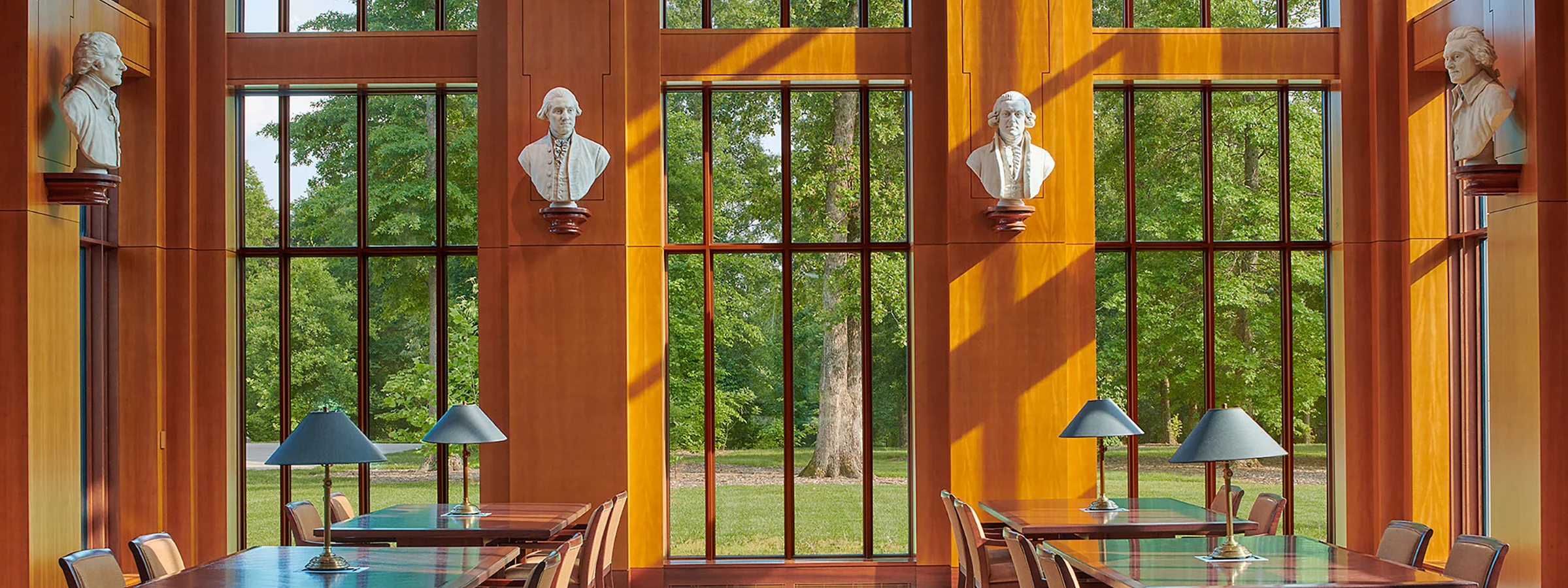
The Lambert Institute for Digital History and Innovation
George Washington’s Mount Vernon is expanding its scope of historical preservation through the establishment of the Lambert Institute for Digital History and Innovation.
This new initiative aims to bridge the gap between traditional preservation and modern technological engagement, ensuring that the legacy of the nation’s first president remains accessible in a digital-first era.
The institute’s development is closely tied to the involvement of Sanda and Jerry Lambert, prominent members of the Washington Cabinet at Mount Vernon. According to mountvernon.org, the Lamberts bring a unique combination of legal, corporate, and historical expertise to the project, which seeks to modernize how visitors and researchers interact with the site’s vast archives and physical landscape.
The initiative arrives at a time when historical institutions worldwide are grappling with the “digital divide”—the tension between maintaining the sanctity of physical landmarks and the necessity of digital immersion. By focusing on "digital history," the institute will likely use data modeling, virtual archives, and perhaps augmented reality to provide context to the Mount Vernon estate that goes beyond static museum displays.
A foundation of legal and corporate expertise
The leadership behind this push reflects a deep intersection of high-level legal practice and historical stewardship. Sanda Lambert, a former trial lawyer in the Commercial Litigation Branch of the Department of Justice, specializes in federal commercial and civil fraud litigation.
Her background in managing complex real estate holdings and her service on various boards, such as the Washington Chamber Symphony and the Sulgrave Club, provides a structural backbone for the institute’s administrative needs.
Jerry Lambert provides a complementary perspective rooted in energy law and international telecommunications. A graduate of Princeton and Yale Law School, he previously served as a Fulbright Scholar in Denmark and co-founded the Washington, D.C. law firm Peabody, Lambert & Meyers.
His experience in the corporate sector is shown by his 2001 appointment as co-chair of the Board of Global Crossing Ltd., an international telecommunications firm, where he also served on the board's executive committee.
This blend of expertise is not merely incidental. Digital innovation requires a sophisticated understanding of intellectual property, data privacy, and the massive infrastructure necessary to host high-fidelity historical data. The Lamberts' history of managing complex regulatory and corporate environments suggests the institute will be built on a strong institutional framework.
The stakes of digital preservation
For an institution like Mount Vernon, the “so what” of digital innovation is clear: relevance. As younger generations consume information through interactive and decentralized platforms, traditional “look-but-don’t-touch” museum models risk obsolescence. The Lambert Institute represents a strategic pivot toward a model where history is not just viewed, but experienced through layered digital contexts.
However, this shift is not without its critics. Some traditionalists argue that the “digitization” of history can inadvertently sanitize or distort the raw, physical reality of historical sites.
There is a valid concern that an over-reliance on digital overlays might distract from the visceral, tangible connection one feels when standing on the grounds where George Washington lived and worked. The challenge for the institute will be to use technology as a lens that clarifies the past, rather than a screen that obscures it.

The economic and civic effects are equally important. By investing in digital history, Mount Vernon is positioning itself as a leader in the “edtech” and cultural heritage sectors, potentially opening new revenue streams through digital memberships and global educational partnerships. This move could transform the site from a regional destination into a global digital classroom.
As the project moves forward, the integration of Jerry Lambert’s published insights on energy and history—including his works The Power Brokers and The Anointed—may inform how the institute approaches the technological infrastructure required to power such a massive digital undertaking. The intersection of historical narrative and the systems that power modern life is a theme that has defined much of his career.
The institute’s ultimate success will be measured by its ability to honor the physical permanence of Mount Vernon while embracing the ephemeral nature of the digital age.
University of Wyoming Earns 2026 CPN Seal of Prevention for Student Well-Being Excellence
The University of Wyoming has earned the 2026 Campus Prevention Network (CPN) Seal of Prevention, a distinction held...

Northeast Wisconsin Snowfall Thresholds Remain Unmet for 2026 Season
Green Bay and the Fox Valley have yet to record their first measurable snowfall for the 2026 season....
Tax Payment Deadline November 13 at 4:00 PM
Montgomery residents have until 4:00 p.m. this Friday, November 13, to pay their tax bills in full, according...

Denver Dunn Specializes in Complex Commercial Litigation
Denver Dunn focuses his legal practice on complex commercial litigation, according to Sidley Austin LLP. His work involves...