
As the sun rises over Jackson this morning, the political future of Mississippi remains suspended in the quiet, methodical work of county election officials.
Democrat Scott Colom, a local prosecutor, stands at the center of a historic electoral cliffhanger that has stretched well beyond Election Day. While the contest against Republican Senator Cindy Hyde-Smith remains too early for The Associated Press to call, the sheer volume of outstanding ballots has turned a quiet post-election week into a high-stakes test of the state’s administrative resolve.
Colom, who would be the first Black senator from Mississippi since the Reconstruction era, spent Friday walking through the Farish Street business district. The area, once a hub for civil rights organizing, served as a symbolic backdrop for a candidate whose campaign has forced a rare, intense focus on the state’s voting processes.
CNBC reported that while Colom has not yet secured victory, his supporters are already viewing his performance as a watershed moment for representation in the Deep South.
The Math of the Remaining Ballots
The uncertainty currently gripping the state stems from the specific logistics of Mississippi’s election law. The pool of uncounted votes consists of absentee ballots—which can arrive as late as Tuesday, five business days after the election—and affidavit ballots.
These provisional votes are cast when a voter’s name does not appear on the precinct rolls or when identification issues arise at the polling station. For those citizens, the path to having their vote counted involves a strict, time-sensitive verification process at local election offices.
The state legislature has provided no mechanism for a statewide recount, leaving the campaigns to monitor the process county by county. Should the margins remain razor-thin, the legal teams representing both Colom and Hyde-Smith are prepared to seek court orders to scrutinize specific ballot batches. With 82 counties each managing their own tally, the certification deadline of Friday, November 13, looms as the final point of resolution.
It’s so wonderful to have Scott Colom as our representative.
That sentiment, shared by Maati Jone Primm of Marshall’s Music & Bookstore, shows the emotional weight of the race for many Black Mississippians. In a state where roughly 40% of the population is Black, the lack of proportional representation at the federal level has been a persistent reality for generations. Sorie Tarawally, a 76-year-old attorney, described the 43-year-old candidate as a transformative figure, even as the formal results remain in limbo.
The Silence from the Incumbent
While the ballot counting continues, the atmosphere between the two campaigns has grown increasingly strained. Colom has publicly questioned the silence of Senator Hyde-Smith, who has not appeared in public since election night.
Though she declared victory on social media, she has yet to provide details on her campaign’s strategy for the remaining ballots. “She’s still our senator. Where is she?” Colom asked during his Friday update. “Why can’t she explain what her pathway to success is?”
Senator Hyde-Smith said her team is fully engaged in the oversight process. “We are not backing down,” she posted online Friday. "Our team is working across Mississippi to monitor the remaining ballots and protect the integrity of the process." This commitment to the finality of the count shows the intense pressure on local officials, who are currently managing a process that has drawn national scrutiny to Mississippi’s electoral mechanics.
Historical Stakes Beyond Washington
Regardless of the final tally, the outcome will not shift the current balance of power in the U.S. Senate, where Democrats already hold the majority. Yet, the local impact is seismic. For nearly 150 years, white conservatives have held a firm grip on the state’s congressional delegation.
Even as the political parties shifted—from the Democrats of the Jim Crow era to the modern Republican stronghold—the lack of Black representation at the top of the state’s political hierarchy remained constant.
Colom’s candidacy, initially dismissed by many as a long shot, gained momentum as the midterms highlighted a growing frustration with redistricting efforts that critics argue were designed to dilute Black voting power. Maryland Senator Angela Alsobrooks, who campaigned with Colom, noted that the candidate’s presence has fundamentally shifted the belief system of local voters.
“They now know that their vote matters,” she said. As the counting continues, the eyes of the nation remain fixed on Mississippi, watching a process that is as much about the mechanics of the ballot as it is about the long-term trajectory of the state’s political identity.
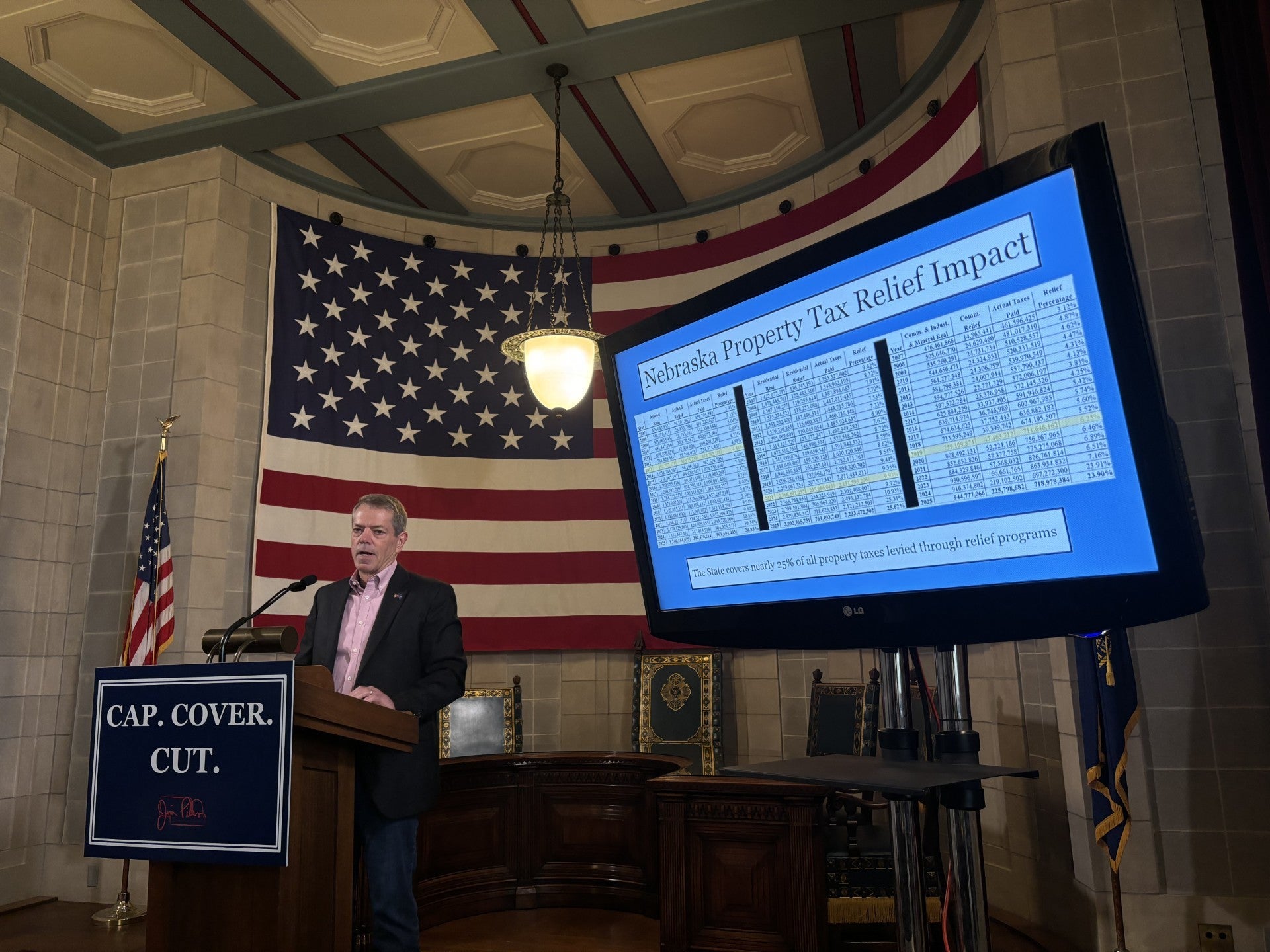
Gov. Pillen Proposes ‘Cap, Cover, Cut’ Strategy for Property Tax Reform
Following the results of Tuesday’s election, Nebraska Governor Jim Pillen changed the state's approach to property tax reform....
Patrick Mahomes Celebrates Kansas City Current NWSL Semifinal Win
Patrick Mahomes has found a moment of celebration away from the gridiron as the Kansas City Current, the...

Cincinnati Men’s Basketball Hosts Minnesota for Twyman-Stokes Classic
The Cincinnati men’s basketball team hosts the University of Minnesota at 7 p.m. this Monday at Fifth Third...

Tristan Furlow Commits to Boston College Over U.S. Naval Academy
Tristan Furlow, a standout freestyler from Newport, Rhode Island, has officially shifted his collegiate plans. According to reporting...