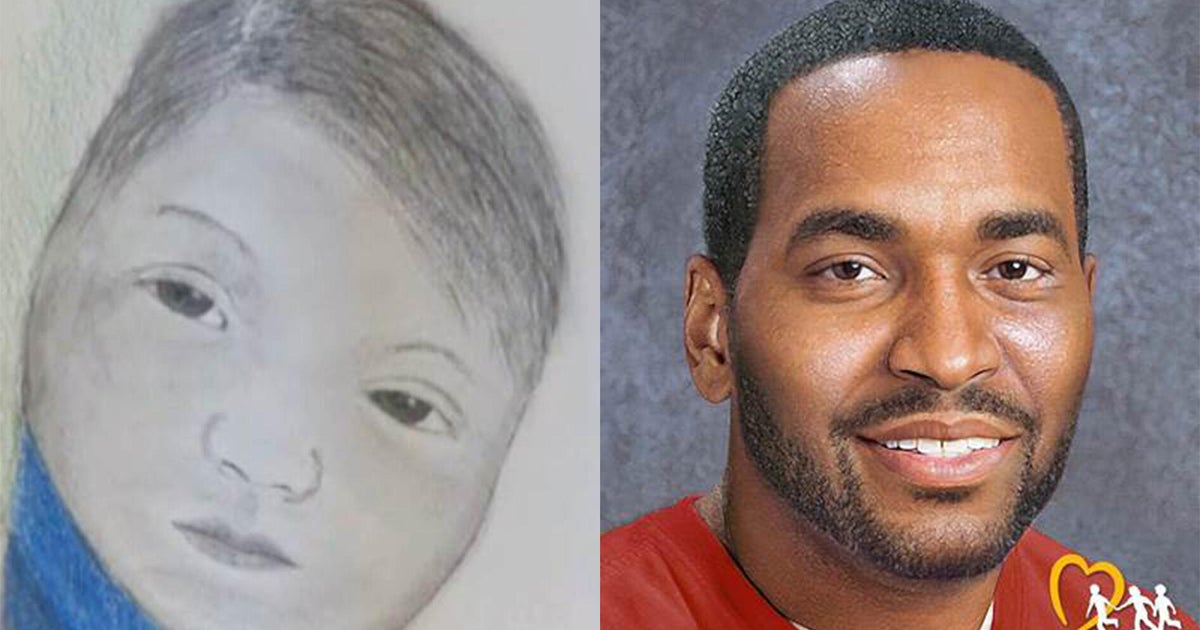
For forty-eight years, Donna Green has lived in a space between memory and mystery. In November 1978, she held her newborn son, Raymond, at Grady Memorial Hospital in Atlanta. Five days later, that life was interrupted when a woman who had befriended her at the hospital visited her home and walked away with the infant. As CBS News reported, neither the woman, who identified herself as “Lisa,” nor the child has been seen since.
The persistence of this case highlights the agonizing reality of long-term abductions, where the passage of time transforms a frantic search into a quiet, decades-long vigil. While the public often associates missing persons cases with immediate, high-visibility alerts, the reality for families like the Greens is a slow accumulation of anniversaries and unanswered questions. For the broader community, the case serves as a stark reminder of the vulnerability of families and the limitations of investigative technology in the late 1970s.
The Evolution of the Search
The investigation into Raymond Green’s disappearance has moved through different eras of law enforcement capability. When he was taken in 1978, the digital infrastructure for tracking missing persons was non-existent. Today, the National Center for Missing & Exploited Children (NCMEC) utilizes advanced forensic techniques to keep these cold cases in the public consciousness. Three years ago, the organization partnered with GSTV to broadcast details of the abduction on gas station monitors across the country, attempting to reach a mobile, national audience that might hold a piece of the puzzle.

To assist in the identification process, NCMEC has released a sketch of the infant alongside a forensic artist’s rendering of what Raymond might look like at age 44. These images are not merely updates; they are attempts to bridge the physical gap created by nearly half a century of absence. The human stakes remain absolute for his mother, who continues to advocate for the case through community events, including the annual “A Night of Courage: Resilience of Hope” held at Atlanta’s Saint Paul A.M.E. Church.
I’m still looking for that little baby that I held in my arms. I believe he’s coming home.
This sentiment, expressed by Donna Green at a press conference, captures the emotional weight of a case that has spanned generations. Yet, the legal and investigative hurdles remain significant. Cold cases involving infant abductions are notoriously difficult because the primary evidence—the identity of the perpetrator—relies on a name that may have been entirely fabricated. The woman known only as “Lisa” left behind no verifiable trail, making the search a matter of waiting for a breakthrough in genealogical testing or a deathbed confession, rather than a traditional police pursuit.
Data and the Burden of Proof
The broader context of missing children in the United States has shifted dramatically since the late 1970s. The establishment of the National Center for Missing & Exploited Children in 1984 marked a turning point in how these cases are processed, providing a centralized clearinghouse for information that did not exist when Raymond was taken. Despite these systemic improvements, thousands of long-term cases remain unsolved. The burden of this reality falls heavily on the families, who are forced to manage both the trauma of the initial event and the administrative exhaustion of keeping a case alive in the eyes of the public and law enforcement.
Critics of current cold-case protocols often point to the disparity in resources allocated to active versus historical investigations. While new technology, such as familial DNA matching, has brought closure to some families, it requires a genetic profile to be available in a searchable database. For cases like Raymond’s, where the child’s identity may have been obscured for nearly five decades, the probability of a match depends on whether the individual has ever engaged with the legal or medical systems in a way that generates a digital record.
As Saturday’s event in Atlanta approaches, the focus remains on the basic, unresolved facts. A child was taken from his home in 1978, and the community is still asked to provide any information that could lead to a resolution. Authorities continue to request that anyone with potential leads contact the Atlanta Police Department at 404-658-6666 or the NCMEC at 1-800-843-5678. The search for Raymond Green is not defined by the passage of time, but by the fact that after 48 years, the primary question—where he is—remains unanswered.
Keep reading

Virginia Morales Cedeño Obituary: A Legacy of Family and Passion
Virginia Morales Cedeño: A Life Defined by Family and Community Virginia Morales Cedeño, whose life spanned nearly a...

Phil Scott Victory Highlights Why Pre-Election Polls Failed
The 14-Point Discrepancy in Vermont’s Gubernatorial Race When the final ballots were tallied on Tuesday, the results in...

Senfronia Thompson Claims Enough Votes to Become Texas House Speaker
A Historic Shift in the Texas House State Rep. Senfronia Thompson, a fixture of the Texas Legislature since...

Marsha Blackburn wins Tennessee governorship with 45.5% of vote
A Victory in the Reddest State That Felt Like a Warning The election night party for U.S. Senator...