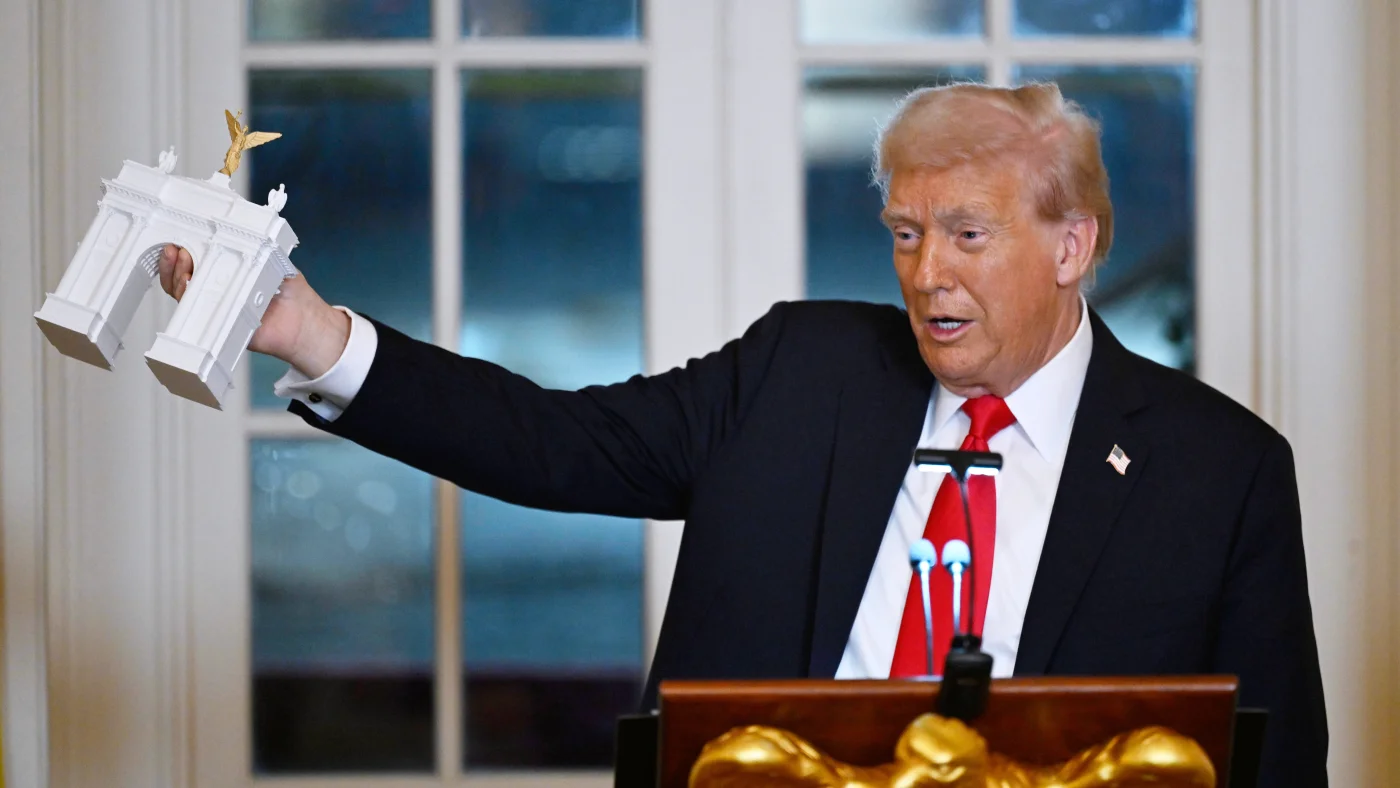
Friday brought a second federal judge to block President Trump’s proposed triumphal arch, with a Virginia jurist ruling the project is unlikely to survive a legal challenge and halting construction indefinitely.
U.S. District Judge Leonie Brinkema said from the bench in Alexandria that she didn’t see “any way” the government could prevail on the merits, according to NPR. She plans to issue a preliminary injunction sought by the Arlington County Board, which sued in October arguing the 250-foot monument would choke emergency routes, disrupt funerals at Arlington National Cemetery, and violate federal environmental law.
The ruling goes further than a Wednesday order from D.C. District Judge Tanya Chutkan, who extended a temporary restraining order only through December 3 while she weighs a separate suit brought by Vietnam War veterans and joined by the District and Virginia governments.
She was also concerned that no analysis to date seemed to take into account impacts of 320’ construction cranes on military & civilian helicopter & aircraft traffic.
The legal logic: no congressional approval, rushed review
Brinkema, a Clinton appointee, zeroed in on two flaws the administration has yet to fix. First, the White House has never sought congressional authorization for the arch, relying instead on a 1925 law that permitted a pair of much shorter columns at Memorial Circle — columns that were never built.
“It hurts your credibility with the court by focusing on that,” Brinkema told Justice Department lawyers Friday, per Reuters reporting cited by NPR. Second, she called the National Park Service’s environmental analysis a “rushed job,” particularly its treatment of construction cranes taller than the arch itself and their intrusion into the tightly constrained airspace around Ronald Reagan Washington National Airport.
The Federal Aviation Administration has said the structure would not pose a hazard if lit in a specific way, including a controversial eternal flame at its apex. But aviation safety experts warn the arch adds a layer of risk to an already congested corridor, especially if the monument eventually incorporates military capabilities — a possibility the FAA did not analyze.
Incidents impact Arlington National Cemetery area
The county’s filings paint a concrete picture of the stakes. Arlington National Cemetery conducts roughly 24 to 27 funerals every weekday, and the arch would sit directly in the historic sightline between the cemetery and the National Mall. Construction and visitor traffic, the county argues, would clog the thoroughfares that emergency vehicles depend on.
“In the last 60 days, Arlington police, fire, and emergency units have responded to approximately 200 incidents in the area surrounding the Circle, including traffic stops and assisting with unconscious persons within Arlington National Cemetery,” the county wrote in its complaint. “And the visitors the Arch is intended to attract will increase demand for those same emergency services.”
“We are pleased that the court has recognized the irreparable harm that will come to people who live and work in Arlington and stopped the massive vanity project while our case is heard and considered by the court,”
Administration response: appeal coming immediately
The Justice Department signaled it will not pause. Spokesperson Matthew Nies told NPR the government will appeal “immediately.” White House spokesperson Davis Ingle said earlier this week the administration would “continue making the case for this beautiful and fitting monument and are confident we will be fully vindicated as this litigation proceeds.”
The National Park Service defended its environmental review, which concluded with approval earlier this month, and argued that relocating the arch would defeat its symbolic purpose.

Two cases, two judges, one project on ice
The parallel proceedings create a layered blockade. Chutkan’s order in the veterans’ suit expires December 3 unless she converts it to a preliminary injunction of her own. Brinkema’s injunction, by contrast, holds until the Arlington case is resolved on the merits — a timeline that could stretch well into 2027. Nine members of the Kennedy family have moved to intervene in the D.C. case, adding political weight to the opposition.
The next marker on the calendar is December 3, when Chutkan is expected to rule on whether her temporary restraint becomes permanent. Until then, no ground can be broken at Memorial Circle.
More on Arlington National Cemetery
- Court Halts Army Plan to Detonate Five Tons of Bomb-Making Material in Iowa
- Dr. Andrew Billings Explains Sports Fandom Psychology on Brightpath
- Trump accuse le Canada d’exploitation à la Maison-Blanche après APEC (archyde.com)
- Trump administration moves to dismiss lawsuit over Alaska Senate race (newsarchyuk.com)
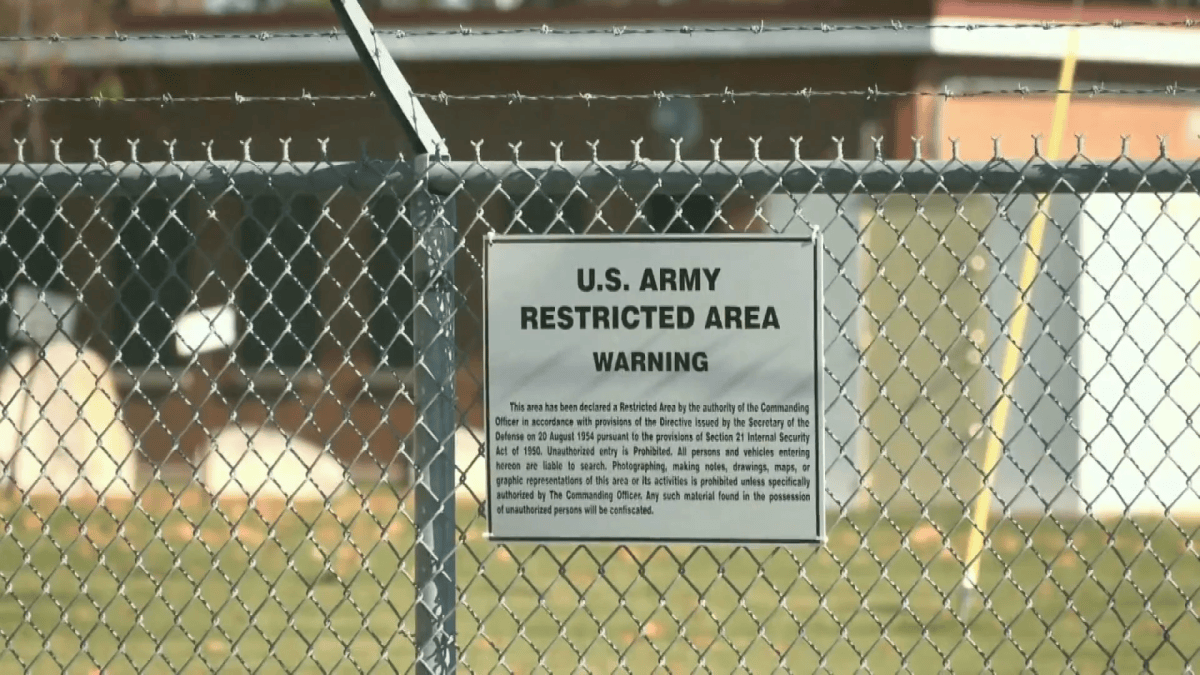
Court Halts Army Plan to Detonate Five Tons of Bomb-Making Material in Iowa
A federal appeals court halted the U.S. Army’s plan to blow up five tons of unstable bomb-making material...

Dr. Andrew Billings Explains Sports Fandom Psychology on Brightpath
In a new episode of BrightPath recorded inside Bryant-Denny Stadium, Dr. Andrew C. Billings argues that sports fandom...

Coastal Storm Threatens 100th Macy’s Parade Balloons With Wind Rules in Focus
A coastal storm threatens to ground the giant helium balloons at the 100th Thanksgiving Day Parade on Thursday,...

Lions Coaches Praise Tyleik Williams’ Play at Nose Tackle in Rookie Season
Detroit Lions defensive coordinator Kelvin Sheppard put it bluntly this week: he might not know much, but he...