
A federal judge in West Virginia ruled Wednesday that the nation’s three largest drug distributors are not liable for the opioid crisis that devastated Cabell County and Huntington, handing the communities a second defeat in a case that has wound through the courts for nearly a decade.
Senior U.S. District Judge David A. Faber found that the city and county failed to prove AmerisourceBergen, Cardinal Health and McKesson created a public nuisance by shipping massive quantities of painkillers to the region, Mountain State Spotlight reported. The ruling, detailed in a 243-page opinion, leaves a $2.5 billion abatement plan unfunded and pushes the legal fight toward a second appeal.
Faber wrote in his opinion.
The lawsuit was first filed in 2017, targeting the distributors that supplied pharmacies in an area often called the epicenter of the opioid epidemic. West Virginia health officials recorded roughly 6,000 overdose deaths statewide from 2001 through 2015, with Huntington’s overdose rate exceeding both the state and national averages, WCHS-TV reported.
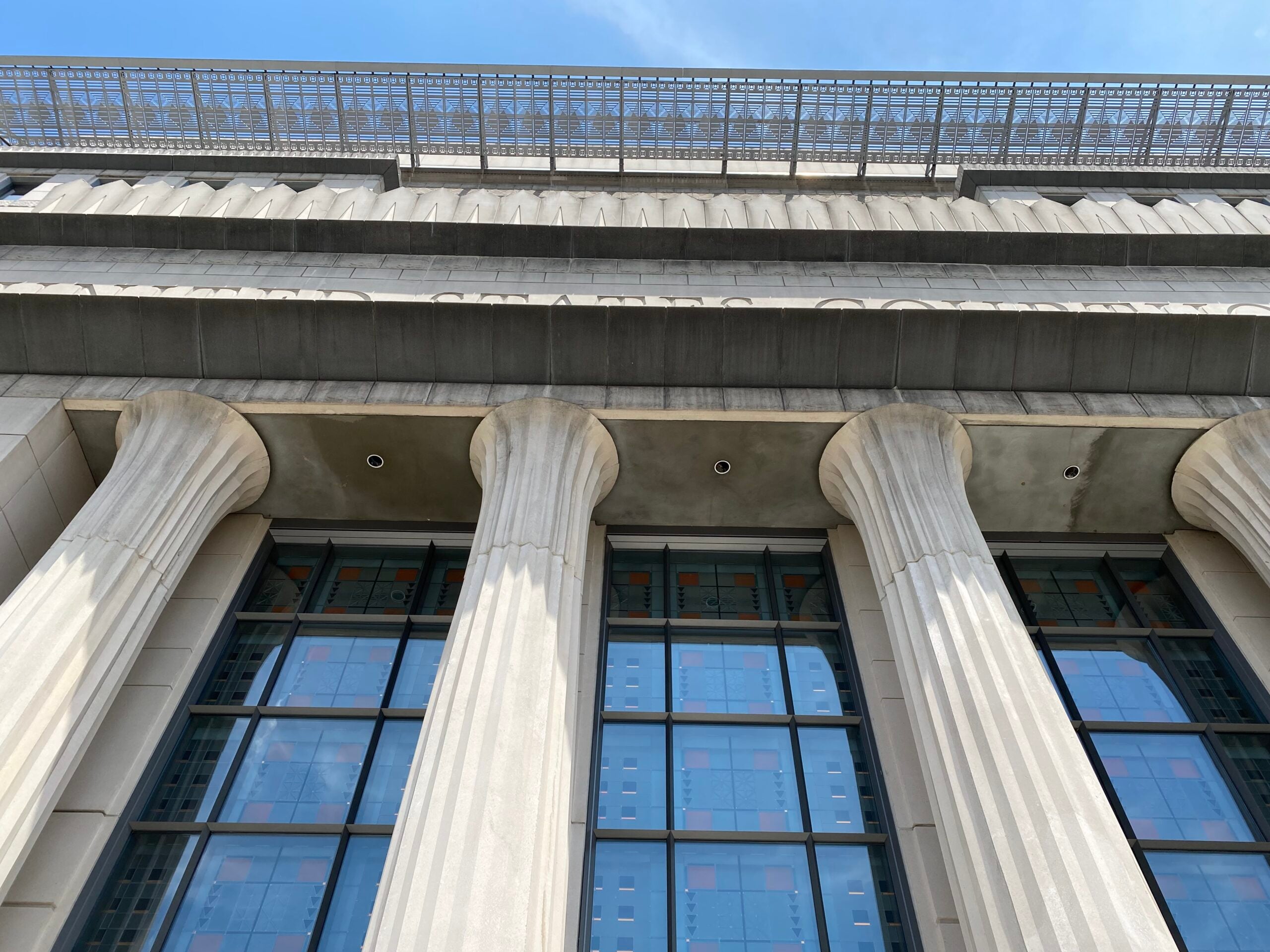
When the state high court declined to answer, the question returned to the 4th Circuit, which found the law did apply broadly to opioid cases and sent the matter back to Faber for reconsideration.
Plaintiffs’ attorney Paul Farrell argued at a hearing in May that the appellate ruling required Faber to view the case through a “different lens”—one aligning with the federal Drug Enforcement Administration’s position that distributors have an obligation under the Controlled Substances Act to block suspicious orders.
Attorneys for the distributors countered that nothing had changed; Charleston attorney Steve Ruby, representing Cardinal Health, told Faber the evidence from 70 witnesses remained the same and the plaintiffs had “no path to prevail under any legal standard,” MetroNews reported.
Faber’s latest opinion centers on the distinction between legal overprescribing and illegal diversion. He wrote that the evidence showed the volume of opioids entering the region was “overwhelmingly a feature of the evolving standard of care,” driven by doctors acting in good faith to treat pain. Distributors did not see individual prescriptions; they received bulk orders from pharmacies filling those prescriptions.
“Overprescribing—and not illegal prescribing—drove the volume of opioids coming into Cabell/Huntington,” Faber wrote. The judge said the municipalities provided no competent evidence that the companies shipped to pill mills, knew pills were being diverted, or knew how many pills “should” have been sent to the area.

AmerisourceBergen attorney Robert Nicholas characterized the plaintiffs’ evidence as “paltry, inaccurate” during the May hearing, arguing that high prescribing alone is not evidence of wrongdoing.
While rejecting liability, Faber sketched out what a permissible remedy might look like. He said a more appropriate figure would be about $330 million of the proposed $2.5 billion, strictly focused on helping people with addiction rather than prevention or other plan components.
Faber, a Charleston native born in 1942, earned a doctorate in history from the University of Cambridge in 2014, decades after his appointment to the federal bench.
He served as U.S. Attorney for the Southern District of West Virginia from 1981 to 1986 before President George H. W. Bush nominated him to the court in 1991. Faber sat as chief judge from 2002 to 2007 and has also heard cases by designation on both the Fourth and Ninth Circuit Courts of Appeals.
Farrell told MetroNews the decision was disappointing but not unexpected. He confirmed the plaintiffs will appeal once again to the 4th Circuit. “Judge Faber has done his job. He’s been asked to reconsider.”
Related reading

MATBUS Public Hearing Set Dec. 7 on Major Route Changes 2, 4, 9
MATBUS proposes major route changes to Routes 2, 4, and 9, including eliminating Route 2's 2:15 p.m. to...

Columbia Falls Eyes First Class a Title in 9 Years vs East Helena
Nine years. That is how long the Columbia Falls Wildcats have waited to stand on this precipice again,...
Lansing Hosts Community Connect Event to Distribute Free Winter Items
“We don’t want people out in the cold. Again, we want to share the warmth. We want to...
Proposal Replaces Single Home Near BSU With 13 Three-Story Townhomes
A single 1927 bungalow on 0.72 acres near Boise State could give way to 13 three-story townhomes packing...