
Josh Smunk filed a federal lawsuit Wednesday challenging the U.S. Forest Service’s assertion that a llama appearing in the background of a monetized YouTube video constitutes an illegal commercial enterprise in a designated wilderness area.
The Clark, Wyoming, outfitter and the BlueRibbon Coalition, a wilderness conservation group, sued Shoshone National Forest Supervisor Kenneth Coffin, wilderness manager William Frost, and the Forest Service in U.S. District Court for Wyoming. The complaint, reported by Cowboy State Daily, argues the agency is misapplying the Wilderness Act of 1964 to police content creation on smartphones.
The dispute began after a September 2025 elk hunt in the Shoshone National Forest. Smunk, CEO of Hooves, Horns & Hideaways, supplied three of the eight pack llamas for the trip. A participant recorded the hunt for a September 2025 Thrive Vodcast on YouTube, capturing Smunk’s llamas standing in the background. The video was later posted to YouTube and monetized by the content creator, not by Smunk.
In a March 2026 meeting about Smunk’s permit request, Frost allegedly told him the video violated the Wilderness Act because the llamas served as “props” advertising his business. “Bottom line is no commercial filming in the wilderness,” Frost wrote in an April 21 email cited in the complaint.
“You can film BUT it has to be for your personal use.” When Smunk asked whether posting on a platform capable of monetization triggered the ban even if the creator earned nothing, Frost reportedly said to avoid such platforms entirely or stick to still photos.
The Legal Fault Line
The Wilderness Act bars “commercial enterprise” in designated areas, carrying penalties of up to one year in jail and $100,000 in fines. The Forest Service contends that any monetized content — even a smartphone video earning fractions of a cent per view — transforms a wilderness visit into a commercial operation requiring a permit that is almost never granted for hunting films.
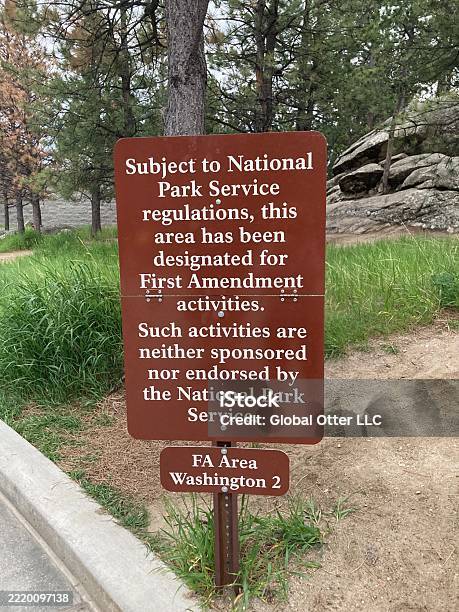
The Washington Times, which also covered the suit, quoted the agency’s position: “As soon [as] money is involved it becomes a commercial enterprise and you have to have a permit.” The paper noted these permits are issued perhaps once every few years and never for hunting content.
Smunk’s attorneys, including Wyoming-based Amy Iberlin and a team from the Texas Policy Foundation, argue Congress never intended the 1964 law to reach individuals with cellphones. “Congress never intended for federal agencies to adopt commercial-filming regulations that would reach every person with a smartphone, or that would come to meaningfully suppress core First Amendment expression,” the complaint says.
“The goal was far different, and far more circumscribed: If big companies with big operations want to use wilderness areas for their films, the government needs to be able to regulate those operations and, perhaps, obtain some return for renting out certain federal property.”
— Complaint filed in U.S. District Court for Wyoming
The plaintiffs also argue the agency is policing off-site conduct — the act of uploading and monetizing a video after leaving the forest — and engaging in content-based restrictions on speech that cannot survive strict scrutiny under the First Amendment. The Washington Times editorialized that reducing public interest in legally accessible lands is not a compelling government interest, and even if it were, a total monetization ban is not narrowly tailored.
According to the complaint, Frost acknowledged the Forest Service actively monitors social media for violating content. “As people post these types of ‘commercial’ filming products, and we find them, we do go after them,” he allegedly told Smunk.
BlueRibbon Coalition staff and members regularly film in wilderness areas using smartphones to produce educational videos that generate organizational income. Smunk typically records on a phone or small handheld camera without a crew and does not livestream. He also appears in others’ videos without control over their subsequent monetization.
“Josh is still under threat of fines, imprisonment, and banishment from public lands if the Forest Service discovers a video (referencing his llama business) on social media with monetization at any point in the future,” the complaint warns.
Shoshone National Forest, where Smunk’s hunt took place, was established in 1891 as the first federally protected National Forest in the United States. It covers nearly 2,500,000 acres in Wyoming and forms part of the Greater Yellowstone Ecosystem. The forest contains five designated wilderness areas that protect more than half of its total managed land from development.
Frost and Coffin did not respond to Cowboy State Daily’s request for comment by publication time. The court has not yet set a hearing date.

MATBUS Public Hearing Set Dec. 7 on Major Route Changes 2, 4, 9
MATBUS proposes major route changes to Routes 2, 4, and 9, including eliminating Route 2's 2:15 p.m. to...

Columbia Falls Eyes First Class a Title in 9 Years vs East Helena
Nine years. That is how long the Columbia Falls Wildcats have waited to stand on this precipice again,...
Lansing Hosts Community Connect Event to Distribute Free Winter Items
“We don’t want people out in the cold. Again, we want to share the warmth. We want to...
Proposal Replaces Single Home Near BSU With 13 Three-Story Townhomes
A single 1927 bungalow on 0.72 acres near Boise State could give way to 13 three-story townhomes packing...