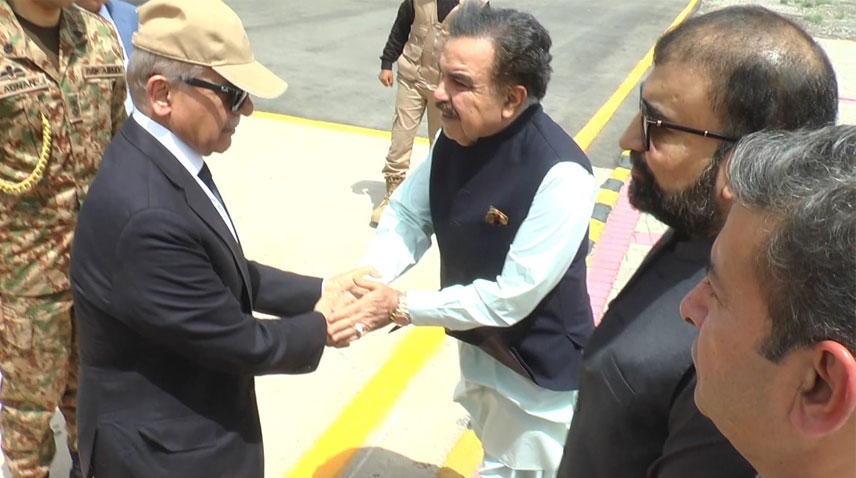
Prime Minister Shehbaz Sharif arrived in Quetta on Thursday for a high-level security meeting following a surge in militant violence that claimed 42 lives across Balochistan since July 5. The visit comes as the government and military leadership coordinate a response to recent attacks attributed to the Tehreek-e-Taliban Pakistan (TTP) and the Baloch Liberation Army (BLA). The Prime Minister’s Office (PMO) confirmed the premier’s arrival for the day-long visit to address the prevailing law-and-order situation in Pakistan’s largest but least populated province.
Strategic Security Coordination in Balochistan
Provincial Apex Committee Meeting on Security
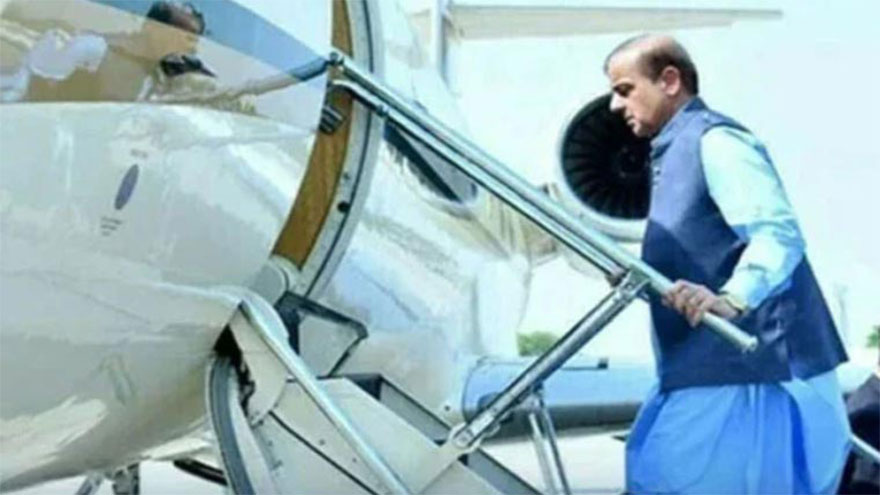
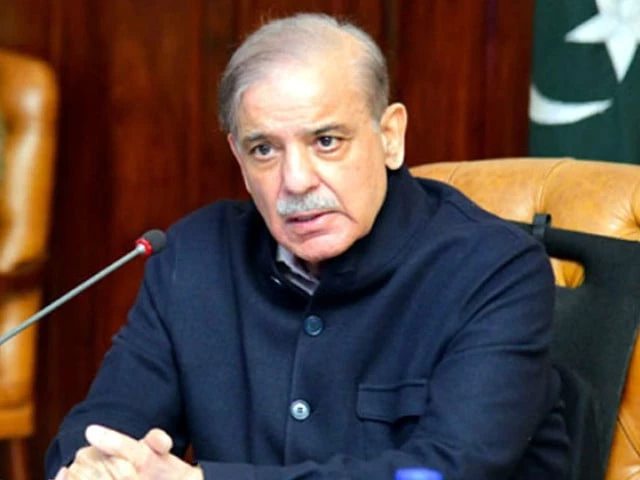
Prime Minister Sharif is chairing a meeting of the Provincial Apex Committee under the National Action Plan (NAP) to address the deteriorating law-and-order situation in the province. The meeting includes a formal review of security protocols and a briefing from relevant authorities on the current landscape. Key stakeholders in attendance include the Chief of Army Staff and the Chief of Defence Forces, Field Marshal Asim Munir, Balochistan Governor Jaffar Khan Mandokhail, Balochistan Chief Minister Mir Sarfraz Bugti, and the heads of law enforcement agencies.
The delegation accompanying the Prime Minister reflects the priority placed on this visit, featuring Economic Affairs Minister Ahad Khan Cheema, Information Minister Attaullah Tarar, and the Prime Minister’s Adviser on Political Affairs, Rana Sanaullah. The premier was welcomed at the airport by Governor Mandokhail, Chief Minister Bugti, and senior civil and military officials. The gathering is expected to produce important decisions regarding the restoration and maintenance of peace and security, with officials conducting a detailed discussion on the recent escalation of violence.
Escalation of Militant Activity and Casualties
Security Crisis and Recent Militant Attacks
The visit follows a week of intense violence in Balochistan. Military spokesperson Lt. Gen. Ahmed Sharif Chaudhry confirmed on Wednesday that 38 security personnel and four civilians have been killed in three major incidents since July 4. These incidents include an armed attack on the outskirts of Quetta on July 5, an assault on a police post in Ziarat on July 6, and an ambush of an army convoy in Bela on Wednesday. In response to these events, the military reports that security forces have neutralized 54 militants during various counterterror operations.
Addressing a press briefing in Rawalpindi, Inter-Services Public Relations (ISPR) Director General Lt. Gen. Ahmed Sharif Chaudhry warned terrorists and their facilitators to expect no “rationality and proportionality” as security forces continue to hunt down the perpetrators of the attacks. The military has stated that the recent attacks underscore a worsening security environment in a region that borders both Afghanistan and Iran.
Geopolitical Tensions and Cross-Border Accusations
Allegations of Foreign Involvement
The security situation is further complicated by official accusations of external interference. Military officials have explicitly identified the TTP and the BLA as the primary groups responsible for the violence. Lt. Gen. Chaudhry blamed India for supporting both militant groups and alleged that Afghanistan was allowing its territory to be used for attacks against Pakistan. He further characterized the violence as the “handiwork of India and those forces with India who cannot tolerate Pakistan’s respect, prosperity and stability.”
While Pakistan has historically blamed both India and Afghanistan for allowing their territory to be used for militant operations, both nations have denied these claims. India denies Pakistan’s allegations that it supports the BLA and TTP, while Afghanistan has repeatedly said it does not allow militants to operate from its soil. Pakistan has carried out military operations and cross-border airstrikes in Afghanistan since last year, a policy that has strained ties between the two nations and triggered fierce border clashes.
Provincial Leadership Stance on Counter-Insurgency
State Response and Future Security Measures
Chief Minister Sarfraz Bugti has adopted an uncompromising posture regarding the insurgency. Following a meeting in Ziarat held after nine policemen were martyred in a terrorist attack, Bugti issued a statement warning that “anyone challenging the writ of the state will face only defeat and destruction.” The Chief Minister reaffirmed that indiscriminate operations against terrorists and their facilitators will continue until the last militant is eliminated, emphasizing that those who raise arms against the state will find no refuge in Balochistan. Bugti further noted that there will be no compromise on the peace, stability, and development of the province, and that every conspiracy against the region will be crushed with strength, determination, and national unity.
Find more reporting in our News section.
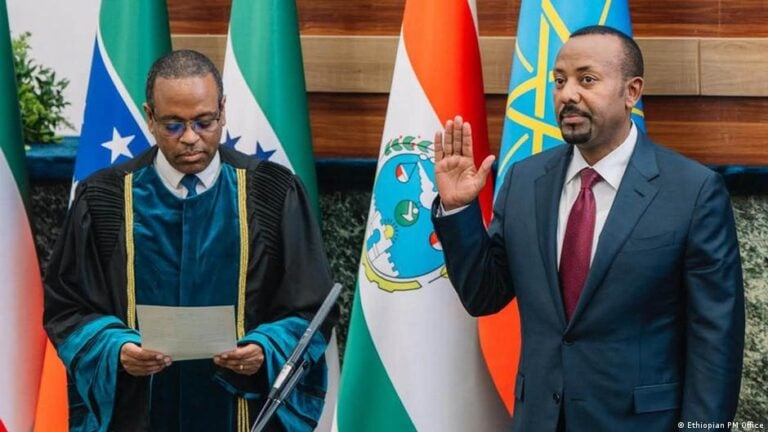
Abiy Ahmed Sworn In as Prime Minister With Focus on Red Sea Access
Prime Minister Abiy Ahmed was sworn into a new five-year term on Monday, October 5, 2026, following his...
Pope Leo XIV Rejects Death Penalty as Attack on Human Dignity
Pope Leo XIV has rejected the death penalty as an attack on human dignity, posting on X that...

SpaceX Launches 21 U.S. Space Force Satellites After Delay
Following a five-day delay from an earlier countdown abort, a SpaceX Falcon 9 rocket successfully launched 21 data...

Queen Camilla Recalls Secret Teenage Reading of Lady Chatterley’s Lover
Queen Camilla has revealed she secretly read Lady Chatterley's Lover under her pillow by torchlight as a teenager...