
Simon Winchester dies at 82 after a lifetime of global storytelling
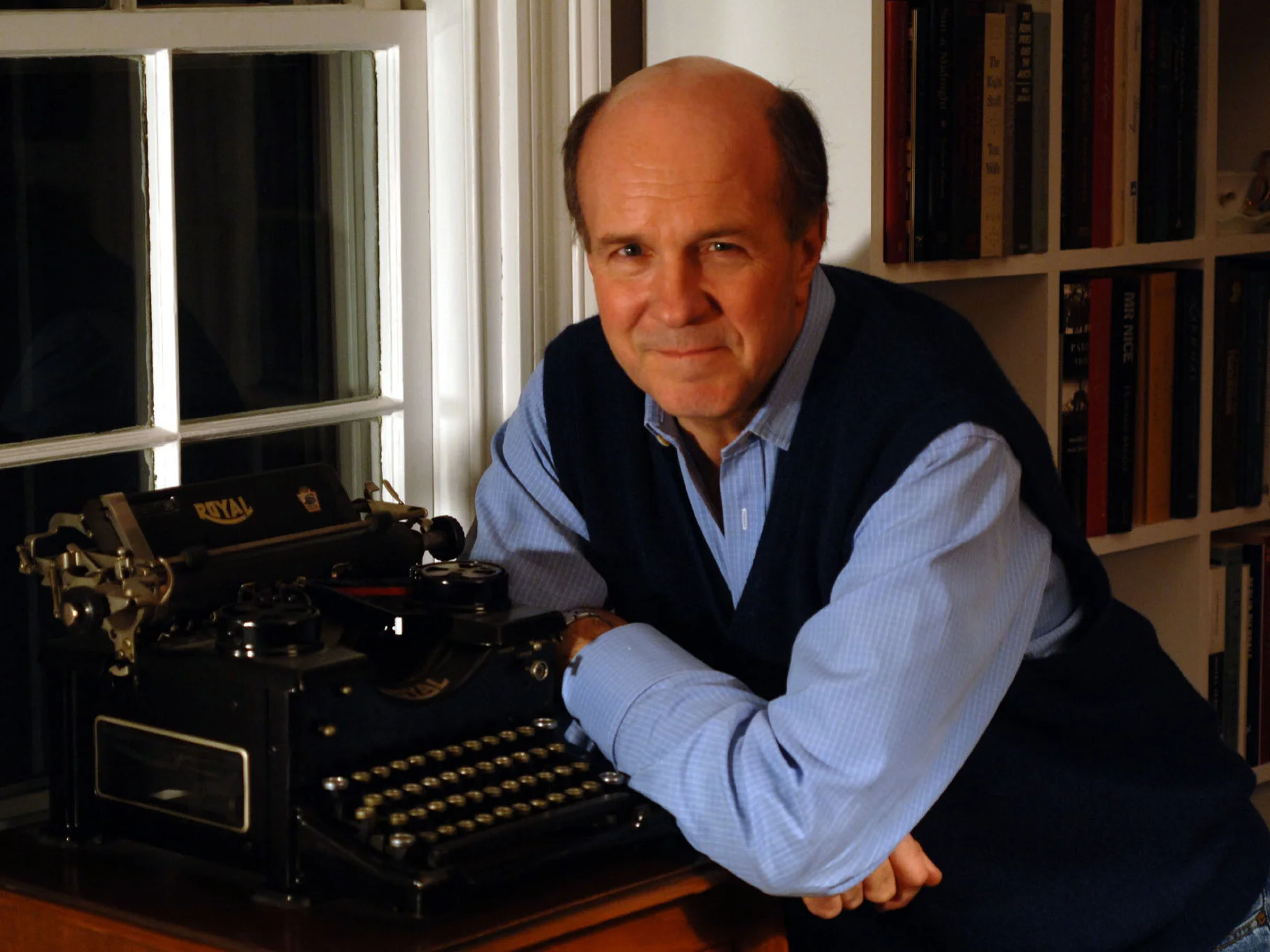
The world of investigative journalism and non-fiction literature lost one of its most distinctive voices this week. Simon Winchester, the prolific author and reporter who transitioned from covering high-stakes political scandals to writing dozens of international bestsellers, has died at the age of 82. According to reports from North Country Public Radio and Little Rock Public Radio, Winchester was a man whose career was defined by a refusal to settle for mere analysis, preferring instead the deep, textured resonance of a well-told story.
Winchester’s professional journey took him from the front lines of global conflict to the quietest corners of human inquiry. His reporting was not merely observational; it was lived. He covered the Watergate scandal in Washington, D.C., and the civil rights tensions of Bloody Sunday in Derry, Northern Ireland. During the Falklands War, his commitment to the story led to a three-month imprisonment after Argentine authorities accused him of spying for the British government—an allegation he often met with self-deprecating humor, noting his own inability to keep a secret.
Beyond the newsroom, Winchester established himself as a master of the wide-angle lens, exploring the complexities of the human experience through a vast array of subjects. His bibliography spanned the physical and the metaphysical, including works on earthquakes, the history of cities, the mechanics of the English language, and the depths of the human mind and soul. He possessed a unique ability to find the profound within the elemental, once writing of the Atlantic Ocean that “it was a brave man who ate the first oyster.”
The rejection of mere analysis
For Winchester, the distinction between a reporter and a storyteller was a matter of fundamental integrity. He famously resisted the trend toward sterile, data-driven commentary. In a memory shared by a former colleague who encountered him decades ago while covering indigenous rights activism in Gresham, Wisconsin, Winchester was described as a man who viewed “analysis” as little more than “gabble.”
That colleague recalls seeing Winchester in a small-town rooming house, dressed in a Sherlock Holmes-style hat and a tweed cape, dictating elegant prose to a London editor over a payphone in the middle of the night. It was this dedication to narrative flow and character that allowed him to elevate standard journalism into something more enduring. He didn’t just report on events; he sought to explain the human stakes behind them.
This approach to truth-seeking extended to his later years as he grappled with the rapid advancement of technology. In his 2024 book, Knowing What We Know, Winchester addressed the mounting tension between human intellect and the rise of machine intelligence. While many view the current era through a lens of fear, Winchester offered a perspective that was surprisingly buoyant.
A vision for the future of human thought
As modern exit polls and social discourse reflect a growing anxiety over the role of Artificial Intelligence, Winchester’s final writings serve as a philosophical counterweight. He recognized the looming “existential intellectual crisis” that occurs when machines begin to acquire knowledge and perform the cognitive heavy lifting traditionally reserved for people. He asked a question that remains central to our current technological moment: if machines do our thinking for us, what is the necessity of our own existence?
However, he did not stop at the crisis. He proposed an alternative future where the automation of knowledge might actually liberate the human spirit. Winchester suggested that the “mental leisure” provided by AI might grant humanity the unprecedented space required to perform the tasks that machines cannot truly replicate: to suppose, to ponder, to ruminate, and to dream.
“What if mental leisure gives us the time and space to suppose, ponder, ruminate, consider, assess, wonder, contemplate, imagine, dream?… And by doing so perhaps come to know not simply what we do know, but what we should know, in order to be fully human.”
His final thesis was that by offloading the rote mechanics of information retrieval, humans might finally have the capacity to pursue the deeper, more essential forms of understanding that define our species. He left behind a legacy that suggests the value of a human being lies not in the data they hold, but in the wonder they are capable of feeling.
Worth a look
University of Idaho Receives $579,000 for Specialty Crop Research
University of Idaho researchers secure $579,000 for specialty crop innovation Researchers at the University of Idaho College of...

Georgia man hit with $17,500 cruise ship medical bill
“Since this has happened, I wake up every morning with the weight of the $17,500 on my shoulders,”...

South Carolina Stingrays Defeat Orlando Solar Bears 4-1
“We have to play hard, we have to be detailed,” Stingrays defenseman Jérémie Biakabutuka said, reflecting on the...

Georgian Court Lions secure CACC title with 2-1 win over Bridgeport
Georgian Court Lions Secure CACC Title with Comeback Win Over Bridgeport The Georgian Court Lions men's soccer team...