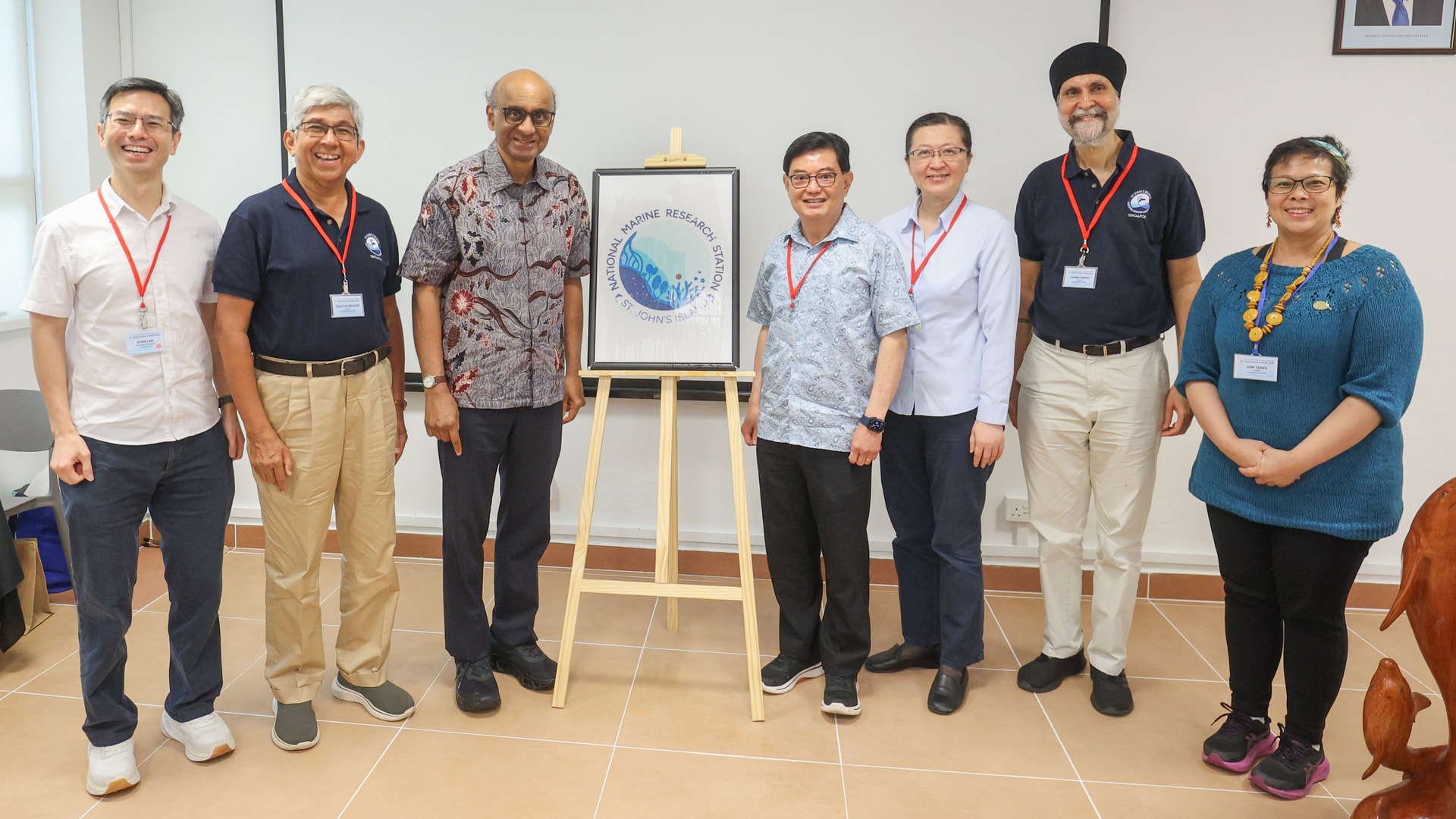
Singapore’s only offshore marine laboratory relaunched on Tuesday as the National Marine Research Station, leading a new regional network that spans five ASEAN countries as marine heatwaves grow more frequent.
The Straits Times reported the change was marked by President Tharman Shanmugaratnam at the start of Marine Science Week, the facility’s 10th anniversary.
The South-east Asia Marine Research Stations Network, or SEAMaRS, currently links over 10 core member institutions across Indonesia, Malaysia, the Philippines, Thailand and Singapore, Mirage News reported. As the network’s lead and Secretariat host, the station will establish working groups focused on joint research, shared infrastructure, capacity building and harmonised data practices.
“Our oceans are seamlessly interconnected and marine currents and ecosystems do not stop at national borders,” said Dr Jani Tanzil, Director of NMRS. “Going forward, NMRS will not only support the best science needed to safeguard Singapore’s marine environment but will also act as an operational nexus for Southeast Asia.”
A replacement for the 18-year-old RV Galaxea is in the pipeline, featuring a larger deck, a moonpool, a safer diving platform for rough weather and a dinghy for shallow coastal work, according to Mirage News. Two imaging instruments — the Imaging FlowCytobot for continuous phytoplankton monitoring and the FlowCam Macro for larger plankton — will replace manual microscopy to track sudden environmental shifts such as harmful algal blooms.
The expansion aligns with Singapore’s $37 billion Research, Innovation and Enterprise 2030 plan. National Research Foundation chairman Heng Swee Keat said the initiative is timely as Singapore prepares to assume the ASEAN chairmanship in 2027. “I hope that (the initiative) will build not just a network of research stations but something more enduring – a regional marine science community, united by a shared responsibility to understand, protect and sustain our seas,” he said.
Established in 2002 as the National University of Singapore’s Tropical Marine Science Institute marine laboratory, the facility was relaunched in 2016 as the St John’s Island National Marine Laboratory to serve as national research infrastructure for local marine scientists. In 2026, it was renamed the National Marine Research Station to reflect its expanded role spearheading the South-east Asia Marine Research Stations Network across Indonesia, Malaysia, the Philippines, Thailand and Singapore.
As the SEAMaRS lead and Secretariat host since its 2026 relaunch, the station establishes working groups for joint research, shared infrastructure, capacity building and harmonised data practices. Director Dr Jani Tanzil said NMRS will act as an operational nexus for Southeast Asia while supporting science to safeguard Singapore’s marine environment, marking its transition from national infrastructure to regional network leader.
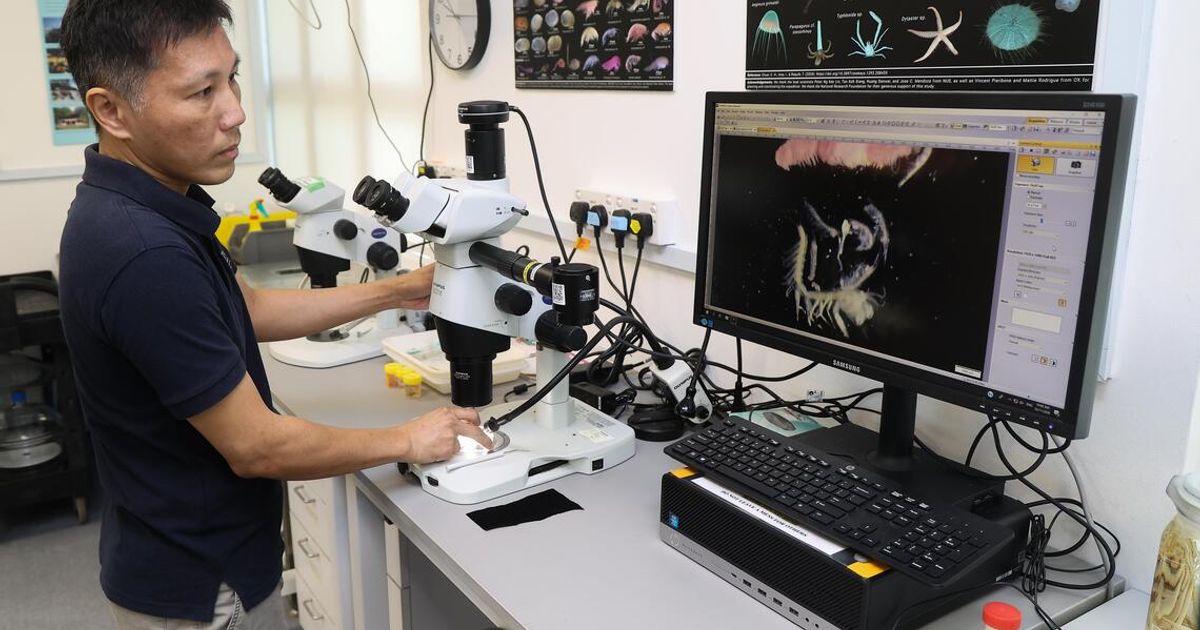
Since its designation as a National Research Infrastructure in 2016, station-based scientists have discovered more than 20 species new to science, including the sea anemone Gymnophelia sakijang and the box jellyfish Chironex blakangmati.
The facility’s coral culture lab supports the 100k Corals Initiative, a national programme to plant 100,000 corals over the next decade; more than 2,500 have been reared so far. Research shows less than 40% of Singapore’s original coral reef area, about 10 sq km, remains today.
Keep reading

Eritrean Man Jailed 13 Years for Rape Seven Years After Deportation Warning
A man jailed for rape in March remained in the UK for seven years after a judge warned...

Patrick Stewart Death Certificate Reveals Water Cremation Choice
Patrick Stewart's death certificate revealed the actor chose alkaline hydrolysis — known as water cremation — for his...

Chinese Vice Premier Ding Xuexiang Calls for Joint Efforts With Netherlands on Supply Chains
Chinese Vice Premier Ding Xuexiang met Dutch Foreign Minister Tom Berendsen in Beijing on Wednesday and called for...

German Prosecutors Probe Senior Garda Inspector Over Alleged Assault of Irish Woman in Hotel Room
German prosecutors in Saxony-Anhalt have opened a criminal investigation into a senior Garda inspector over an alleged assault...