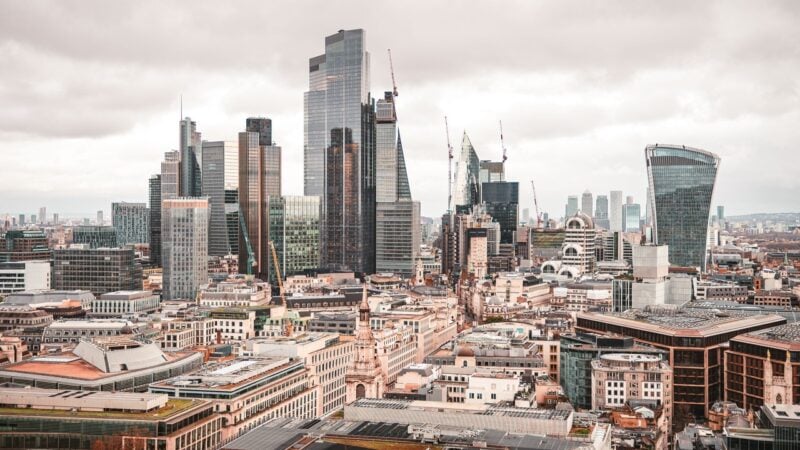
A missile strike damaged the headquarters of Saudi Arabia’s $900 billion sovereign wealth fund on Thursday, marking the second direct hit on a strategic economic asset in the kingdom this month.
The Public Investment Fund Tower, an 80-story landmark in the King Abdullah Financial District, sustained facade damage and blown-out windows across several floors, witnesses told AFP. Coalition spokesman Turki al-Malki described the cause as falling missile debris, though the strike followed a volley of cruise missiles and drones launched by Yemen’s Iran-backed Houthis toward the capital, France 24 reported.
“Initial assessment indicates the impact of debris, with material damage currently being surveyed,” al-Malki said. The tower houses the engine of Crown Prince Mohammed bin Salman’s Vision 2030 diversification plan, making the hit a symbolic escalation in a conflict that reignited in July after a four-year ceasefire collapsed.
Saudi air defenses intercepted two cruise missiles over Riyadh on Wednesday and five ballistic missiles over the southern border regions on Thursday, the coalition said. The interceptions came hours after Saudi-backed forces launched a major air campaign across Houthi-held territory in Yemen, strikes the rebels said killed at least 17 people.
Riyadh's PIF Tower was damaged in a strike, according to Reuters. Saudi-led coalition: A Houthi missile threat caused debris and material damage.
Escalation Follows Saudi Withdrawal From Strategic Strait
The current spiral began with a Saudi-backed force withdrawal from positions around the Bab el-Mandeb Strait last week, a move that handed the Iran-aligned rebels control over a chokepoint vital for global oil shipments. Yemen’s government called it a redeployment to defend Aden and ease the siege of Taiz; the Houthis immediately captured the abandoned coastal territory.
Since the July breakdown, the Houthis have imposed a naval blockade in the Red Sea and targeted Saudi oil tankers. Thursday’s strike on the PIF Tower followed a November 8 attack that damaged a facility belonging to state oil giant Aramco, establishing a pattern of targeting the kingdom’s economic crown jewels.
Regional Conflict Widens Beyond Yemen
The Riyadh barrage coincided with a dramatic regional expansion. Iran’s military claimed responsibility for a drone attack on Ali Al Salem Air Base in Kuwait, which hosts U.S. forces, calling it retaliation for American strikes a day earlier. Iranian state media also claimed attacks on vessels in the Gulf and naval mine deployments.
Saudi Civil Defense issued alerts for Jazan, Najran, Khamis Mushait, and Sharurah on Wednesday before giving the all-clear. The coalition said it destroyed a ballistic missile launch platform in Dhamar, roughly 60 miles south of Sanaa, which it identified as the origin point for the Riyadh strikes, France 24 reported.

U.S. Diplomacy and Market Calculus
The explosion in Riyadh came shortly after the Saudi Press Agency reported a meeting between Crown Prince Mohammed bin Salman and U.S. Central Command chief Adm. Brad Cooper to discuss military cooperation. Market implied probabilities tracked by Crypto Briefing show a 23 percent chance of Houthi forces entering Saudi territory by year-end, while the likelihood of a nationwide Saudi airspace closure sits at 5.5 percent.
Saudi authorities are reportedly preparing for the conflict to extend into 2027, postponing peace talks until allied Yemeni forces recapture lost ground. The Houthis have not claimed responsibility for Thursday’s tower strike, though their military spokesman Yahya Saree has previously claimed attacks on Riyadh’s airport and financial district.
BREAKING: Saudi Arabia's 80-story Public Investment Fund (PIF) Tower in Riyadh's financial district sustained facade damage and blown-out windows following a Houthi missile threat, sources told Reuters and AFP; only property damage was reported. pic.twitter.com/k1VP2mEeo3
Human Cost and Unresolved Questions
An October attack on King Khalid International Airport killed 14 people and injured hundreds, suspending flights for two weeks. No casualties were reported from Thursday’s financial district strike, but the extent of structural damage to the PIF Tower remains under survey. The coalition maintains the damage resulted from intercepted missile debris; witnesses describe a direct impact on the building’s upper facade.
The Public Investment Fund Tower, completed in 2021, stands as the tallest building in Riyadh at 385 meters and the second-tallest in Saudi Arabia. Construction began in 2010 on what was then an undeveloped stretch of northern Riyadh, with the tower reaching its full height in 2014 before final completion seven years later.
It anchors the King Abdullah Financial District, a planned urban zone linked by underground roads and shaded pedestrian pathways designed to connect King Khalid International Airport to the historic city center to the south.
The 80-story tower provides 190,000 square meters of office space and houses the sovereign wealth fund that drives Vision 2030. Its faceted double-skin facade earned the 2021 “Best Tall Building Facade Engineering” award from the Council on Tall Buildings and Urban Habitat. The building also features an observation deck and the ThyssenKrupp TWIN elevator system, with two cabs operating independently in a single shaft.
The Saudi-led coalition said Thursday it struck a Houthi shoe and textile factory in Sanaa run by the Alyateem Development Foundation; Houthi media confirmed the strike. The cycle of retaliation shows no sign of breaking.
Worth a look

Snap Releases Easy Lens CLI for AI Lens Creation
Snapchat moved Lens creation into the AI coding tools developers already use, rolling out Easy Lens CLI on...

Trump, Xi, Putin Hold First Trilateral Summit; No Breakthrough on Arms Control, Ukraine, Iran
The first trilateral summit between the leaders of the world's three largest nuclear powers produced no breakthrough on...

Egyptian Author Wins National Book Award, Denied U.S. Visa
proud to celebrate Huna. said the National Book Foundation, announcing expanded eligibility.

Brain Stacking Replaces Doomscrolling With Analog Hobbies, But Experts Say Cognitive Benefits Are Oversold
“You’re allowed to enjoy a crossword puzzle without making it a treatment plan,” said Amy Baglietto, a psychotherapist...